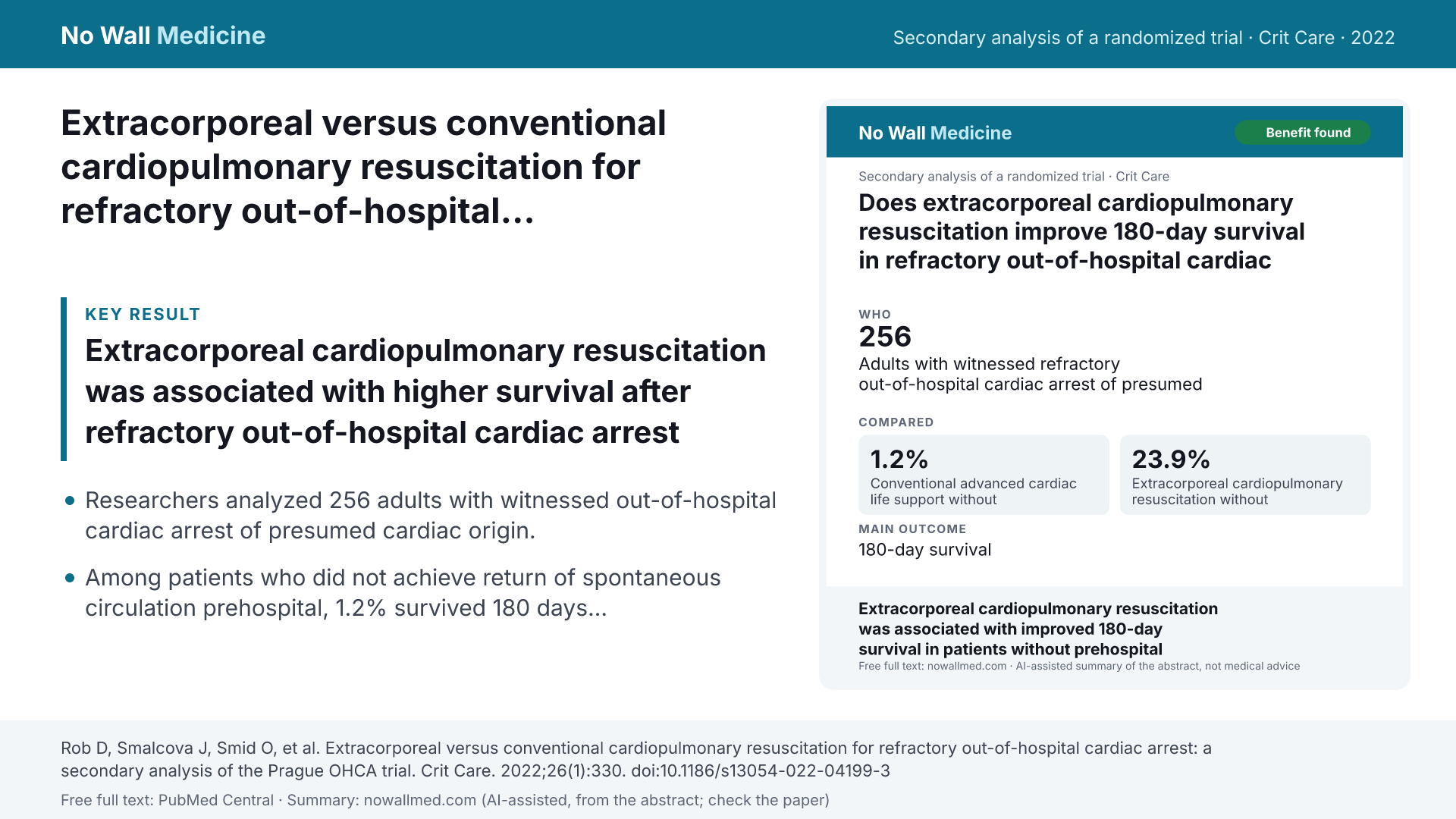
Extracorporeal cardiopulmonary resuscitation was associated with higher survival after refractory out-of-hospital cardiac arrest
Extracorporeal versus conventional cardiopulmonary resuscitation for refractory out-of-hospital cardiac arrest: a secondary analysis of the Prague OHCA trial
Secondary analysis of a randomized trialBenefit found
Does extracorporeal cardiopulmonary resuscitation improve 180-day survival in refractory out-of-hospital cardiac arrest?
Who
256
Adults with witnessed refractory out-of-hospital cardiac arrest of presumed cardiac origin
Compared
1.2%Conventional advanced cardiac life support without prehospital ROSC
23.9%Extracorporeal cardiopulmonary resuscitation without prehospital ROSC
Main outcome
180-day survival
Result: hazard ratio 0.21 (95% CI 0.14-0.31)
Bottom line: Extracorporeal cardiopulmonary resuscitation was associated with improved 180-day survival in patients without prehospital return of spontaneous circulation.
Crit Care · 2022-10-27Download image
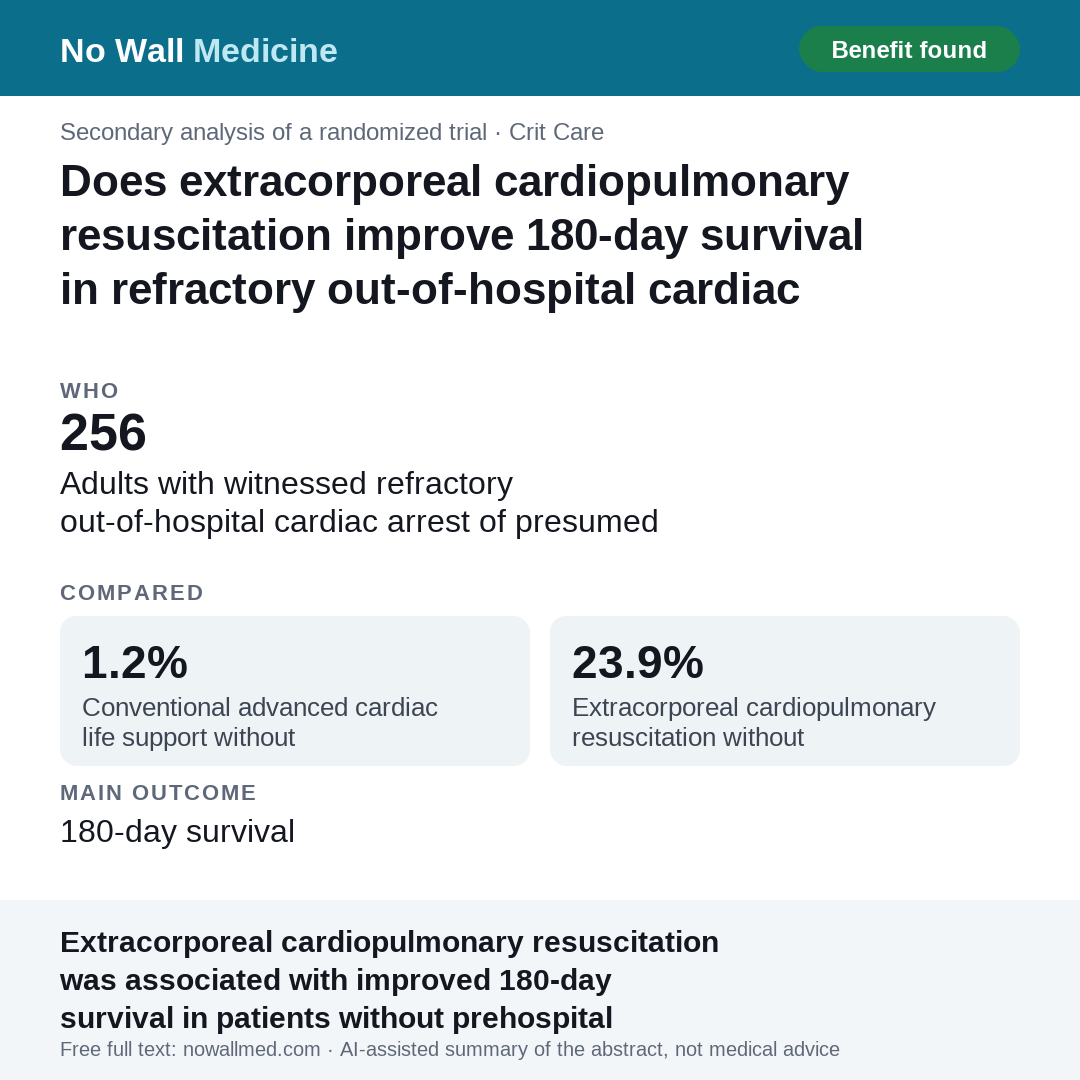
Clinical question: Does extracorporeal cardiopulmonary resuscitation improve 180-day survival in refractory out-of-hospital cardiac arrest?
Why it matters: Survival rates remain low for patients experiencing refractory out-of-hospital cardiac arrest using conventional advanced cardiac life support.
Key points
- Researchers analyzed 256 adults with witnessed out-of-hospital cardiac arrest of presumed cardiac origin.
- Among patients who did not achieve return of spontaneous circulation prehospital, 1.2% survived 180 days with conventional advanced cardiac life support compared to 23.9% with extracorporeal cardiopulmonary resuscitation.
- After adjusting for various factors, extracorporeal cardiopulmonary resuscitation was associated with a lower risk of death at 180 days (HR 0.21, 95% CI 0.14-0.31; P < 0.001).
Headline and key points written with AI from the paper’s abstract, with every number checked against it. Read the paper before relying on them.
Was this summary helpful?
Subject terms
Cite this article
Rob D, Smalcova J, Smid O, et al. Extracorporeal versus conventional cardiopulmonary resuscitation for refractory out-of-hospital cardiac arrest: a secondary analysis of the Prague OHCA trial. Crit Care. 2022. doi:10.1186/s13054-022-04199-3
Spotted a mistake? Suggest a correction