Extracurricular psychiatry programs may improve medical students' attitudes and interest in the specialty
Extracurricular psychiatry enrichment programmes for undergraduate medical students: systematic review
Systematic review and narrative synthesisBenefit found
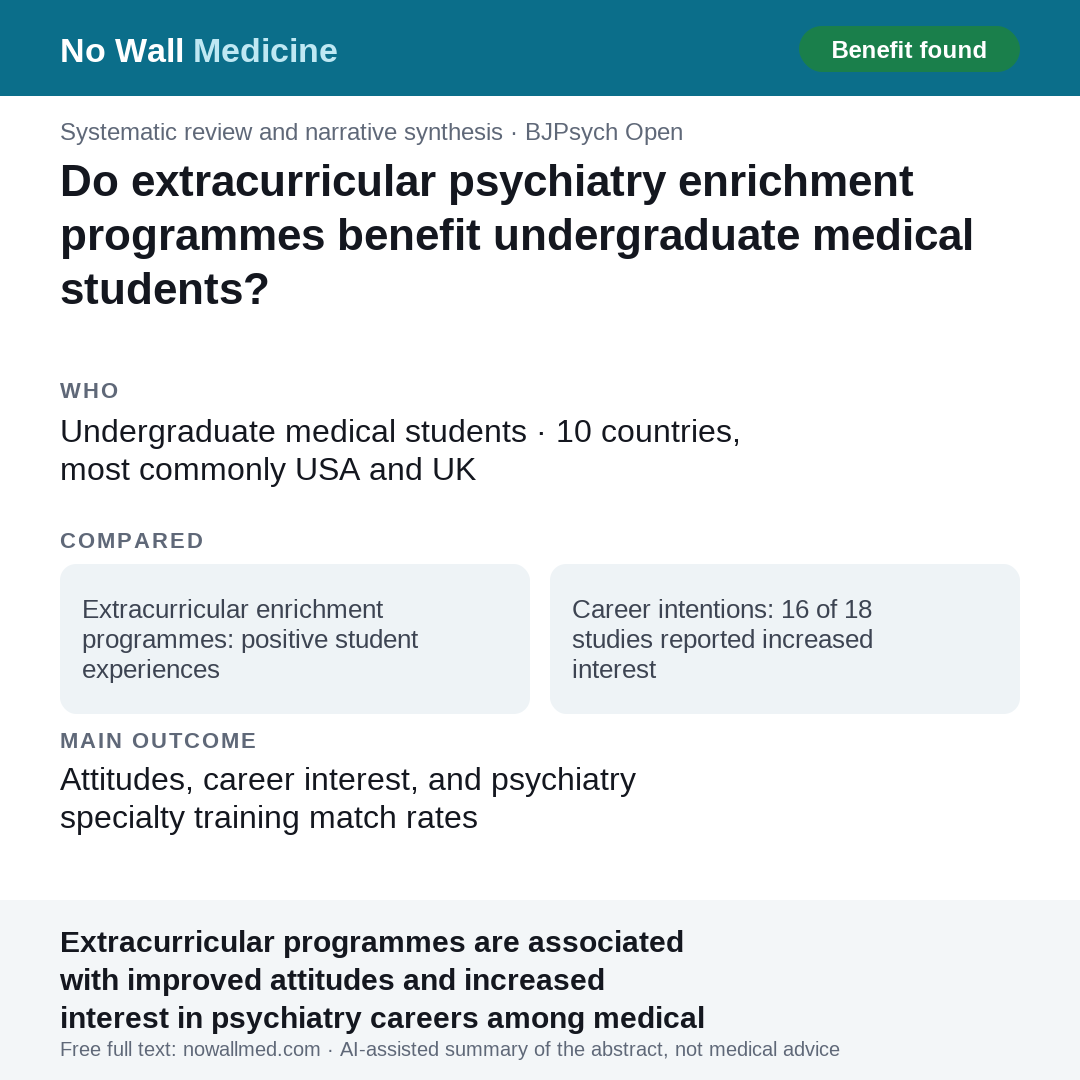
Do extracurricular psychiatry enrichment programmes benefit undergraduate medical students?
Who
Undergraduate medical students · 10 countries, most commonly USA and UK
Compared
Extracurricular enrichment programmes: positive student experiences
Career intentions: 16 of 18 studies reported increased interest
Main outcome
Attitudes, career interest, and psychiatry specialty training match rates
Bottom line: Extracurricular programmes are associated with improved attitudes and increased interest in psychiatry careers among medical students.
Limitation: Small, self-selected samples with short-term follow-up and predominantly self-reported outcomes.
BJPsych Open · 2026-09-28Download image
Clinical question: Do extracurricular psychiatry enrichment programmes benefit undergraduate medical students?
Why it matters: Many medical students have limited exposure to psychiatry during their undergraduate training.
Key points
- Researchers reviewed 27 studies from 10 countries to evaluate how extracurricular psychiatry programs affect undergraduate medical students.
- Most studies showed improved attitudes toward psychiatry and mental illness, with 16 of 18 studies reporting increased interest in the career.
- Six studies reported higher rates of students successfully matching into psychiatry specialty training after participating in these programs.
Limitation the authors note: The evidence base is limited by small, self-selected samples, short-term follow-up, and a reliance on self-reported outcomes.
Headline and key points written with AI from the paper’s abstract, with every number checked against it. Read the paper before relying on them.
Spotted a mistake? Suggest a correction