Lifestyle intervention in caregiver-child pairs linked to better diet quality and microbial metabolite changes
Facilitating a high-quality dietary pattern induces shared microbial responses linking diet quality, blood pressure, and microbial sterol metabolism in caregiver-child dyads
Randomized, controlled trialBenefit found
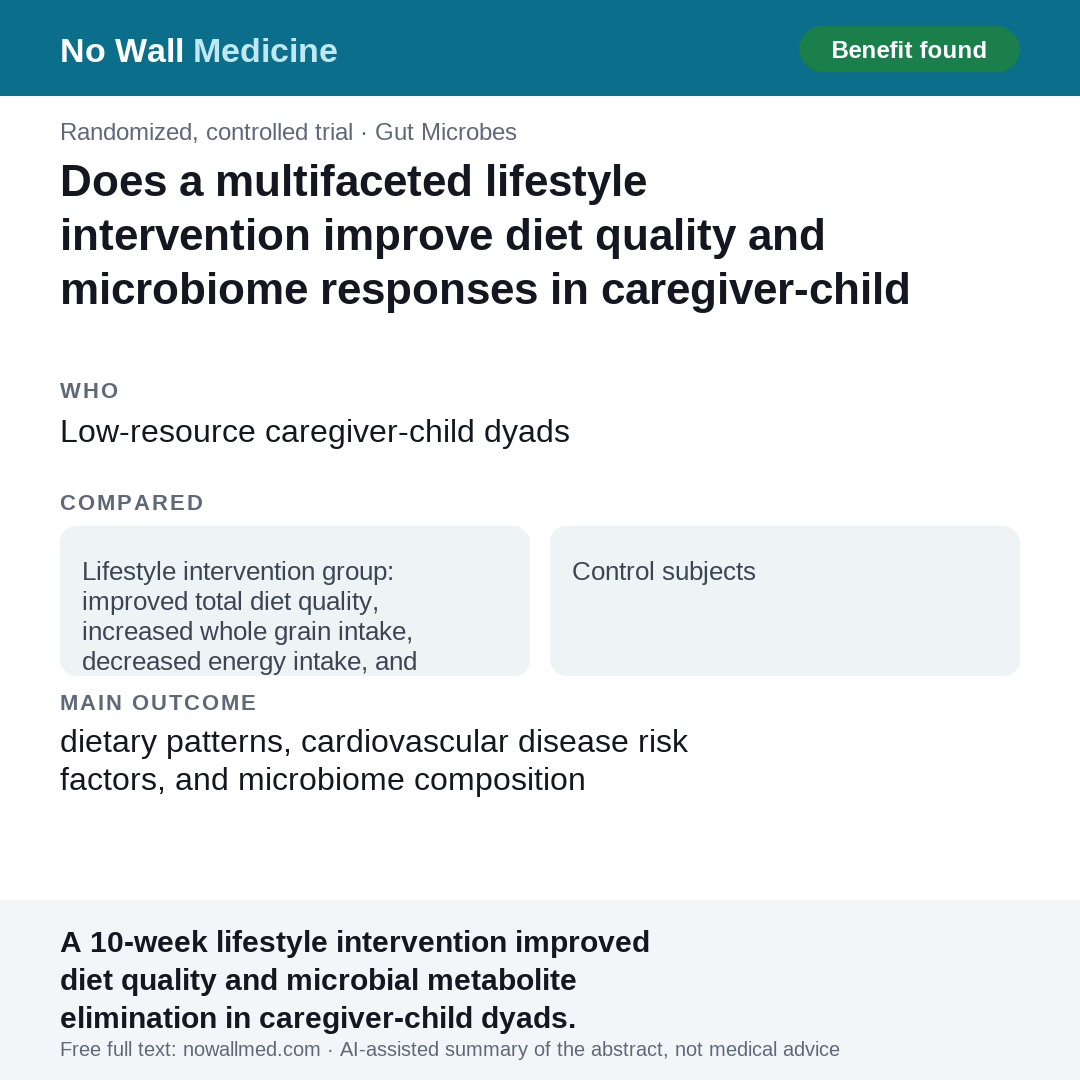
Does a multifaceted lifestyle intervention improve diet quality and microbiome responses in caregiver-child dyads?
Who
Low-resource caregiver-child dyads
Compared
Lifestyle intervention group: improved total diet quality, increased whole grain intake, decreased energy intake, and enhanced fecal elimination of lithocholic acid
Control subjects
Main outcome
dietary patterns, cardiovascular disease risk factors, and microbiome composition
Bottom line: A 10-week lifestyle intervention improved diet quality and microbial metabolite elimination in caregiver-child dyads.
Gut Microbes · 2022-12-02Download image
Clinical question: Does a multifaceted lifestyle intervention improve diet quality and microbiome responses in caregiver-child dyads?
Why it matters: It is unknown how multifaceted lifestyle interventions affect the relationship between diet quality, gut bacteria, and blood pressure in caregiver-child pairs.
Key points
- Low-resource caregiver-child dyads participated in a 10-week randomized, controlled, multifaceted lifestyle intervention involving nutrition and physical activity education.
- The intervention group showed improved total diet quality, increased whole grain intake, decreased energy intake, and enhanced fecal elimination of the microbe-derived metabolite lithocholic acid.
- Microbiome composition was associated with total diet quality, whole grain intake, and lithocholic acid elimination, including bacteria like Subdoligranulum and Bifidobacterium.
Headline and key points written with AI from the paper’s abstract, with every number checked against it. Read the paper before relying on them.
Was this summary helpful?
Subject terms
Cite this article
Hill EB, Chen L, Bailey MT, Singh Khalsa A, Maltz R, Kelleher K. Facilitating a high-quality dietary pattern induces shared microbial responses linking diet quality, blood pressure, and microbial sterol metabolism in caregiver-child dyads. Gut Microbes. 2022. doi:10.1080/19490976.2022.2150502
Spotted a mistake? Suggest a correction
Top studies every Monday
The week’s key trials and guidelines in your specialties, plus any topics you follow. By email, free.
Get the weekly digest