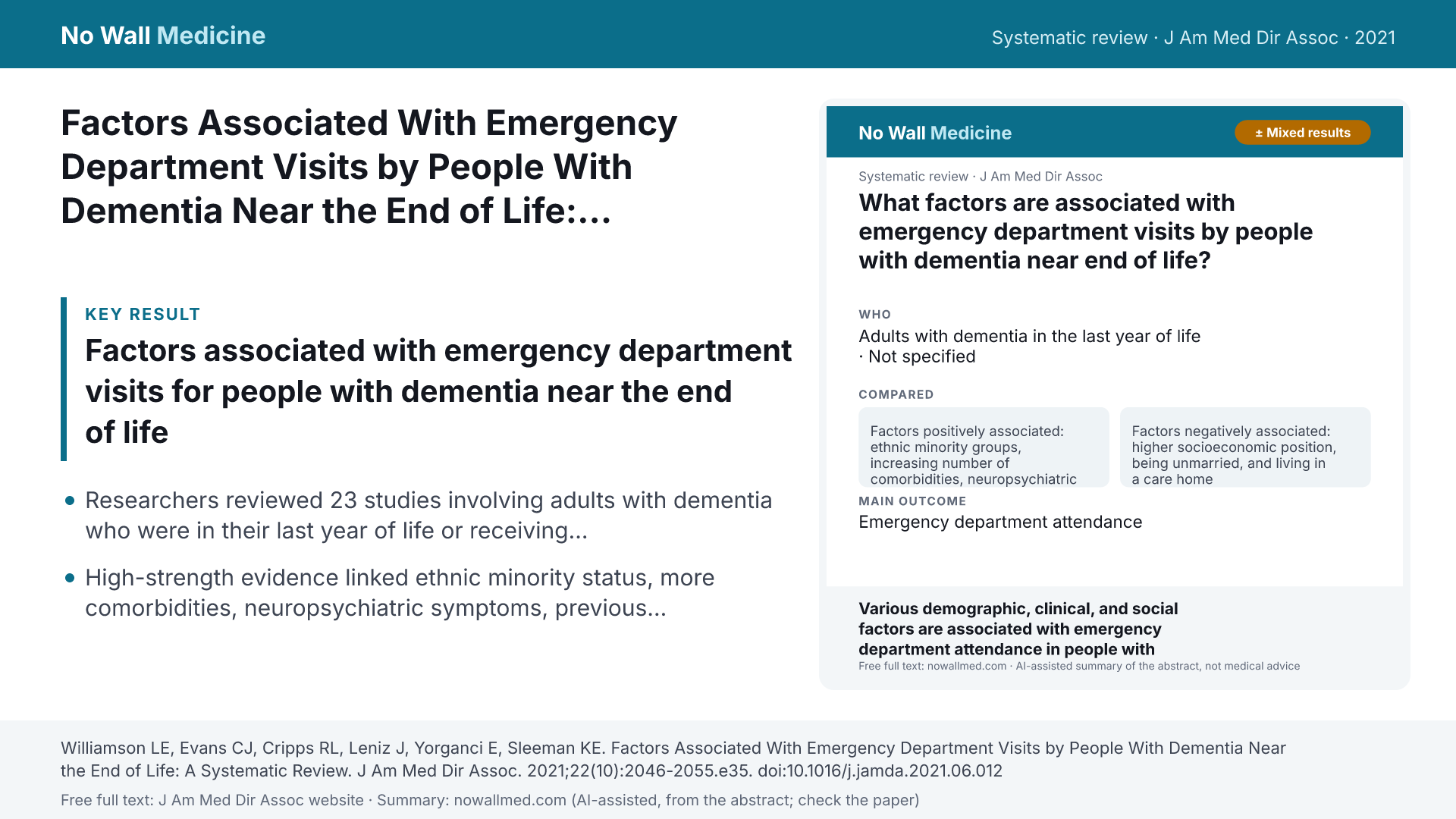
Factors associated with emergency department visits for people with dementia near the end of life
Factors Associated With Emergency Department Visits by People With Dementia Near the End of Life: A Systematic Review
Systematic reviewMixed results
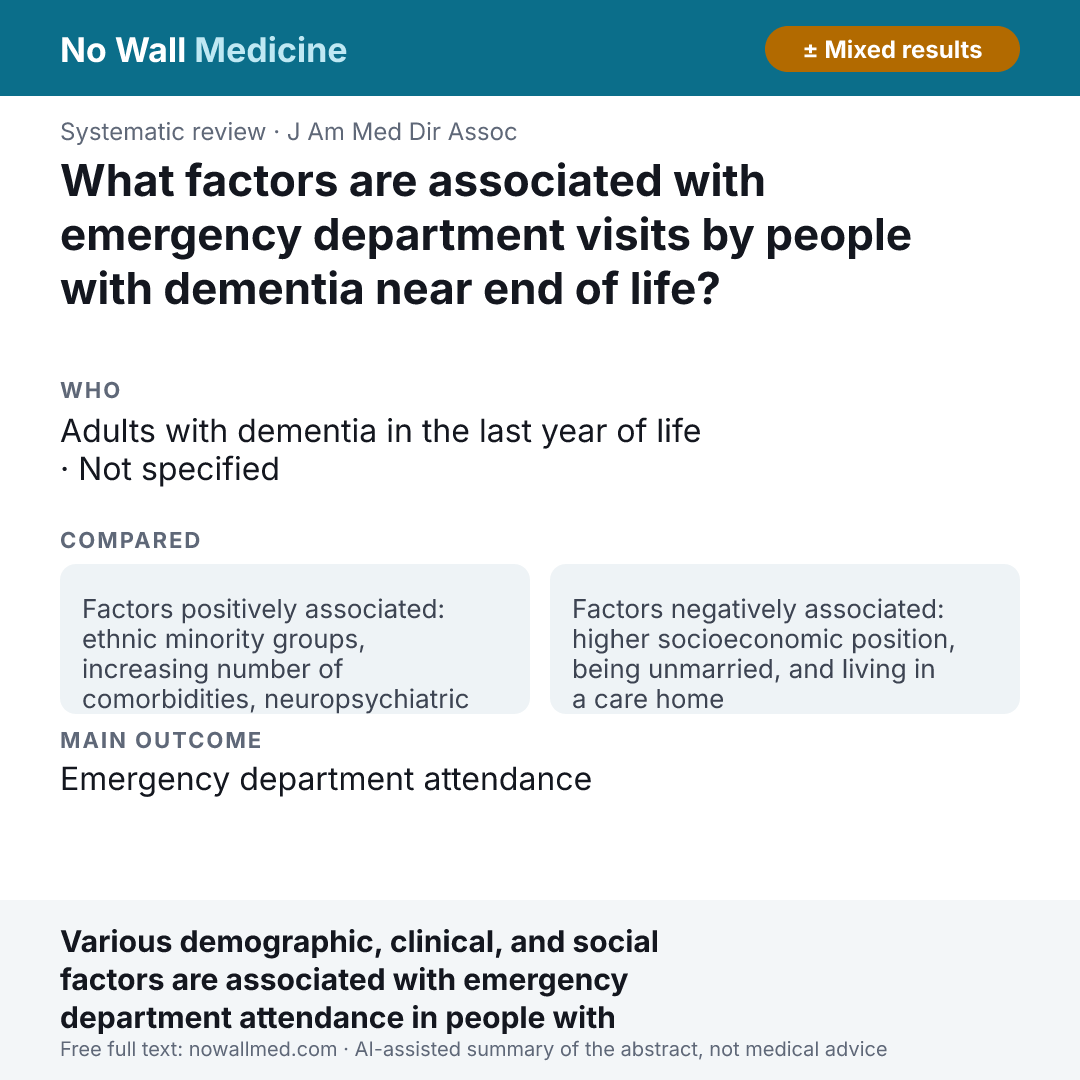
What factors are associated with emergency department visits by people with dementia near end of life?
Who
Adults with dementia in the last year of life · Not specified
Compared
Factors positively associated: ethnic minority groups, increasing number of comorbidities, neuropsychiatric symptoms, previous hospital transfers, and rural living
Factors negatively associated: higher socioeconomic position, being unmarried, and living in a care home
Main outcome
Emergency department attendance
Bottom line: Various demographic, clinical, and social factors are associated with emergency department attendance in people with dementia near end of life.
Limitation: Only low-strength evidence was available for factors associated with repeat emergency department attendance.
J Am Med Dir Assoc · 2021-07-14 · PROSPERO CRD42020193271
Headline and visual abstract written with AI from the paper’s abstract, with every number checked against it. Read the paper before relying on them.
Was this summary helpful?
Subject terms
Cite this article
Williamson LE, Evans CJ, Cripps RL, Leniz J, Yorganci E, Sleeman KE. Factors Associated With Emergency Department Visits by People With Dementia Near the End of Life: A Systematic Review. J Am Med Dir Assoc. 2021;22(10):2046-2055.e35. doi:10.1016/j.jamda.2021.06.012
Spotted a mistake? Suggest a correction