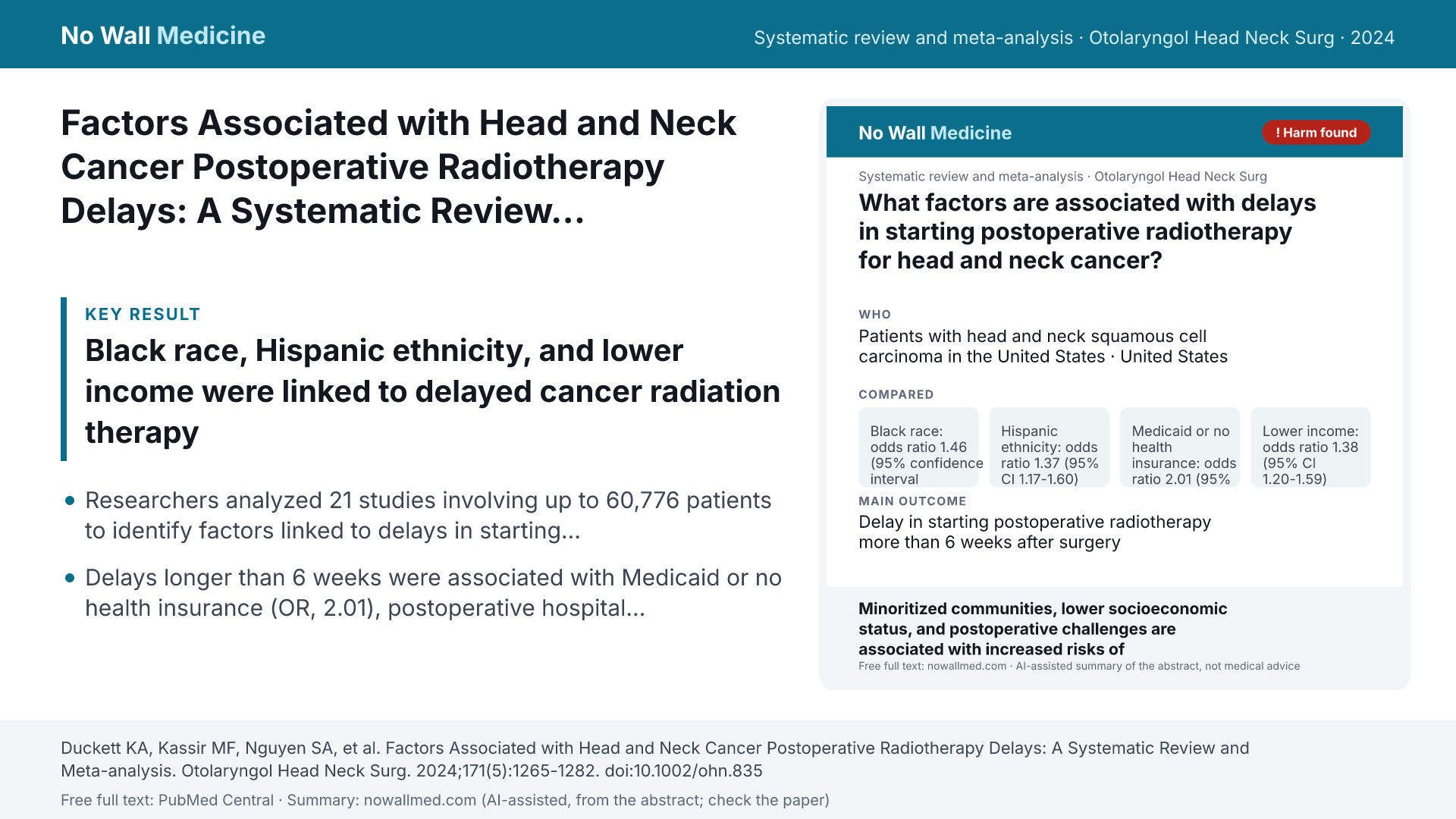
Black race, Hispanic ethnicity, and lower income were linked to delayed cancer radiation therapy
Factors Associated with Head and Neck Cancer Postoperative Radiotherapy Delays: A Systematic Review and Meta-analysis
Systematic review and meta-analysisHarm found
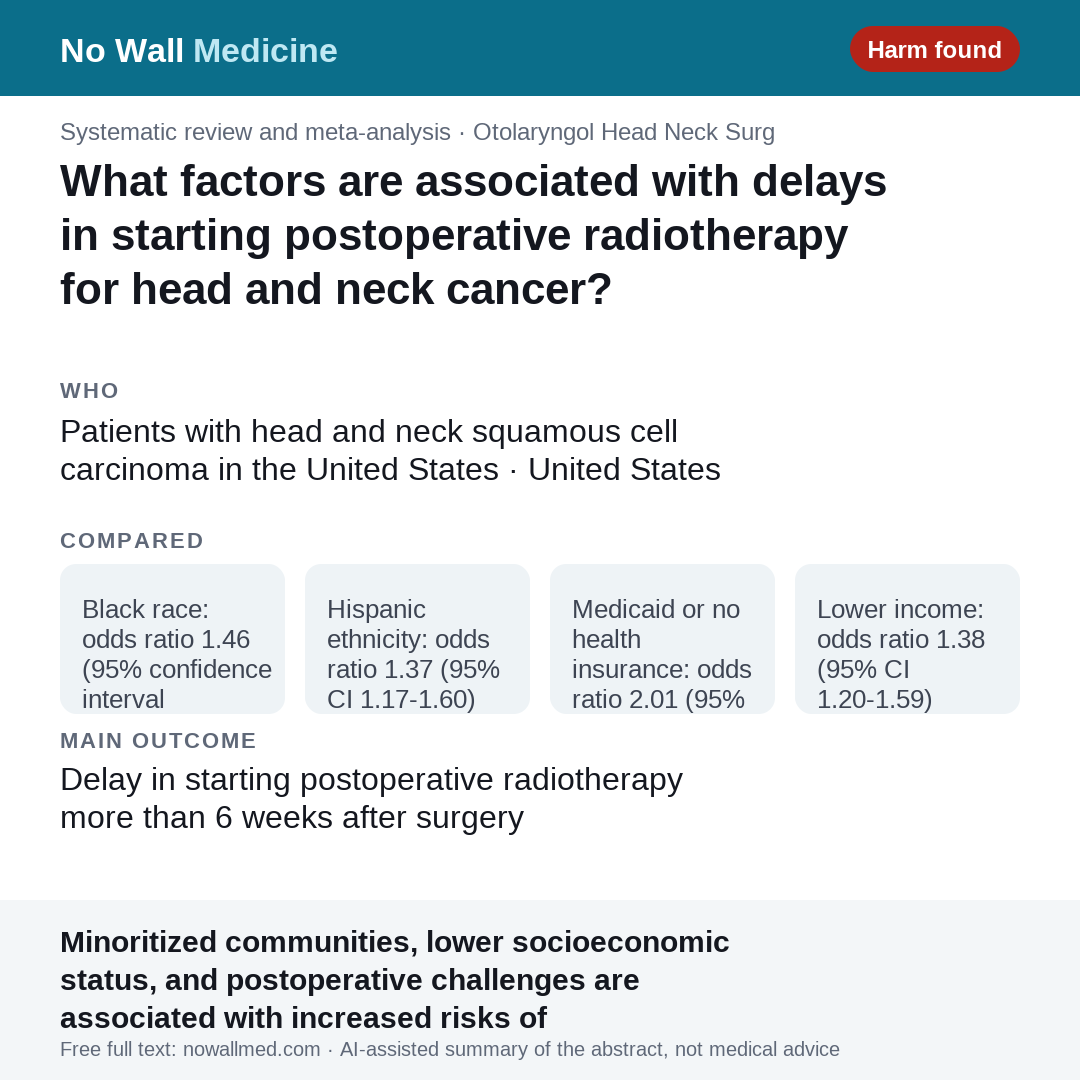
What factors are associated with delays in starting postoperative radiotherapy for head and neck cancer?
Who
Patients with head and neck squamous cell carcinoma in the United States · United States
Compared
Black race: odds ratio 1.46 (95% confidence interval 1.28-1.67)
Hispanic ethnicity: odds ratio 1.37 (95% CI 1.17-1.60)
Medicaid or no health insurance: odds ratio 2.01 (95% CI 1.90-2.13)
Lower income: odds ratio 1.38 (95% CI 1.20-1.59)
Main outcome
Delay in starting postoperative radiotherapy more than 6 weeks after surgery
Bottom line: Minoritized communities, lower socioeconomic status, and postoperative challenges are associated with increased risks of radiotherapy delays.
Otolaryngol Head Neck Surg · 2024-06-06Download image
Clinical question: What factors are associated with delays in starting postoperative radiotherapy for head and neck cancer?
Why it matters: It was unknown which demographic, clinical, or social factors were associated with delays in starting radiation therapy within the recommended 6-week window for head and neck cancer.
Key points
- Researchers analyzed 21 studies involving up to 60,776 patients to identify factors linked to delays in starting postoperative radiation therapy after head and neck cancer surgery.
- Delays longer than 6 weeks were associated with Medicaid or no health insurance (OR, 2.01), postoperative hospital stays longer than 7 days (OR, 2.92), and Black race (OR, 1.46).
- Other factors associated with radiation delays included Hispanic ethnicity (OR, 1.37), lower income (OR, 1.38), and 30-day hospital readmission (OR, 1.37).
Headline and key points written with AI from the paper’s abstract, with every number checked against it. Read the paper before relying on them.
Was this summary helpful?
Subject terms
Cite this article
Duckett KA, Kassir MF, Nguyen SA, et al. Factors Associated with Head and Neck Cancer Postoperative Radiotherapy Delays: A Systematic Review and Meta-analysis. Otolaryngol Head Neck Surg. 2024. doi:10.1002/ohn.835
Spotted a mistake? Suggest a correction