Preeclampsia, low birth weight, cardiac disease, and infection are linked to neonatal blood clots
Factors Associated With Thromboembolism in Neonates: A Systematic Review and Meta-Analysis
Systematic review and meta-analysisBenefit found
What factors are associated with venous thromboembolism in neonates?
Who
3366507
Neonates up to 44 weeks of corrected gestational age
Compared
Preeclampsia: odds ratio 2.66 (95% CI 1.70-4.16)
Low birth weight: odds ratio 2.05 (95% CI 1.41-3.00)
Cardiac disease: odds ratio 5.90 (95% CI 1.16-30.05)
Infection: odds ratio 2.90 (95% CI 1.88-4.48)
Main outcome
Factors associated with venous thrombosis
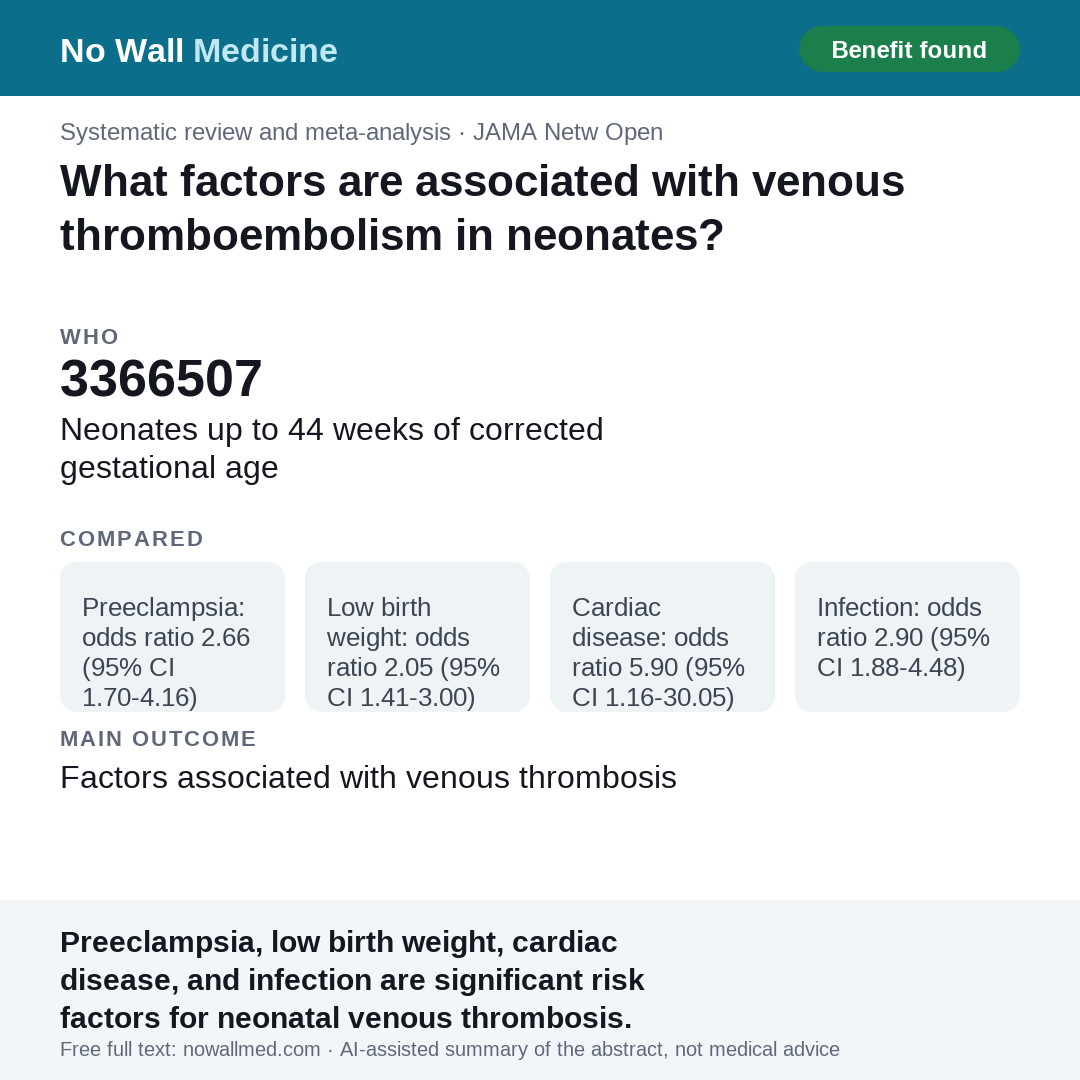
Bottom line: Preeclampsia, low birth weight, cardiac disease, and infection are significant risk factors for neonatal venous thrombosis.
Limitation: Heterogeneity between studies, lack of thrombosis outcome definition, and limited studies addressing common conditions.
JAMA Netw Open · 2026-05-01Download image
Clinical question: What factors are associated with venous thromboembolism in neonates?
Why it matters: No risk assessment model currently exists to enable early identification of neonates at high risk of venous thromboembolism.
Key points
- Researchers analyzed 60 studies involving 3,366,507 neonates to identify factors associated with venous thromboembolism, which is the formation of blood clots in veins.
- Significant risk factors included cardiac disease (OR, 5.90; 95% CI, 1.16-30.05), infection (OR, 2.90; 95% CI, 1.88-4.48), preeclampsia (OR, 2.66; 95% CI, 1.70-4.16), and low birth weight (OR, 2.05; 95% CI, 1.41-3.00).
- Other factors like maternal diabetes, prematurity, and mechanical ventilation showed inconsistent results across the included studies.
Limitation the authors note: The authors identified heterogeneity between studies, a lack of thrombosis outcome definitions, and limited studies addressing common conditions and medications.
Headline and key points written with AI from the paper’s abstract, with every number checked against it. Read the paper before relying on them.
Topics
Cite this article
Pelland-Marcotte MC, Pérez Herrera NM, Boileau E, van Ommen H, Bhat R. Factors Associated With Thromboembolism in Neonates: A Systematic Review and Meta-Analysis. JAMA Netw Open. 2026. doi:10.1001/jamanetworkopen.2026.10908
Spotted a mistake? Suggest a correction