Mindfulness training was associated with improvements in depression, anxiety, and fatigue in motor neuron disorders
Feasibility, Acceptability, and Efficacy of Mindfulness Training in People With Upper Motor Neuron Disorders: A Systematic Review
Systematic review of 44 studiesBenefit found
Are mindfulness-based interventions effective for people with upper motor neuron disorders?
Who
Adults with multiple sclerosis, brain injury, spinal cord injury, or amyotrophic lateral sclerosis
Compared
Mindfulness-based intervention participants: greater relative improvement
Control participants
Main outcome
depression, anxiety, fatigue, and health-related quality of life
Bottom line: Mindfulness-based interventions are feasible, acceptable, and show promising improvements in depression, anxiety, fatigue, and quality of life.
Limitation: None of the studies included in this review studied dose response.
Arch Phys Med Rehabil · 2022-06-26Download image
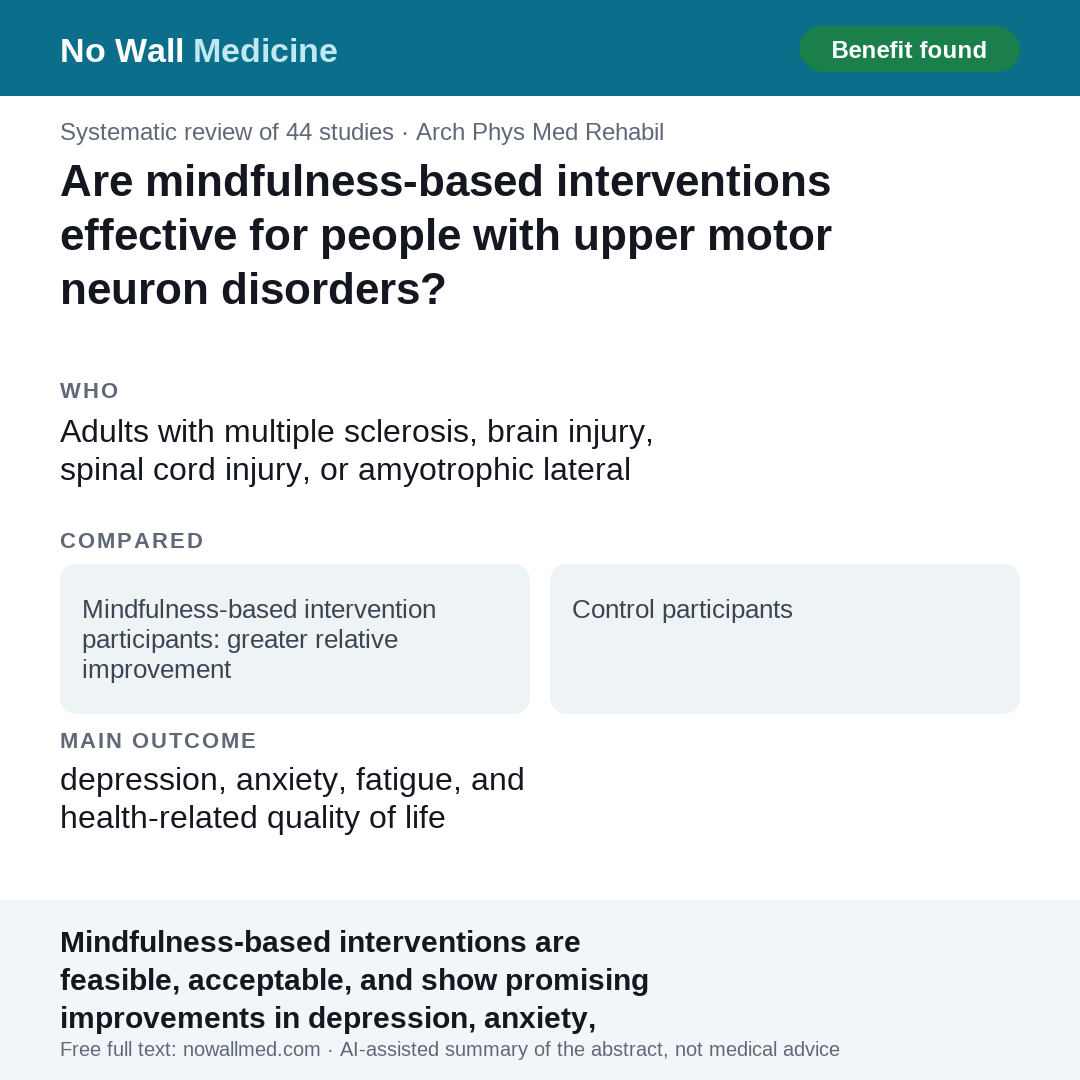
Clinical question: Are mindfulness-based interventions effective for people with upper motor neuron disorders?
Why it matters: The effectiveness and feasibility of mindfulness-based interventions for managing psychological and physical symptoms in people with upper motor neuron disorders were not fully understood.
Key points
- Researchers reviewed 44 studies involving adults with multiple sclerosis, brain injury, spinal cord injury, or amyotrophic lateral sclerosis.
- Mindfulness-based interventions showed greater relative improvement in depression, anxiety, fatigue, and quality of life compared to control groups.
- Participants had an average completion rate of 85%±14% and an 80%±16% retention rate at follow-up.
Limitation the authors note: None of the studies included in this review studied dose response.
Headline and key points written with AI from the paper’s abstract, with every number checked against it. Read the paper before relying on them.
Was this summary helpful?
Subject terms
Cite this article
Korupolu R, Malik A, Ratcliff C, Robinson-Whelen S, Taylor HB. Feasibility, Acceptability, and Efficacy of Mindfulness Training in People With Upper Motor Neuron Disorders: A Systematic Review. Arch Phys Med Rehabil. 2022. doi:10.1016/j.apmr.2022.05.020
Spotted a mistake? Suggest a correction
Top studies every Monday
The week’s key trials and guidelines in your specialties, plus any topics you follow. By email, free.
Get the weekly digest