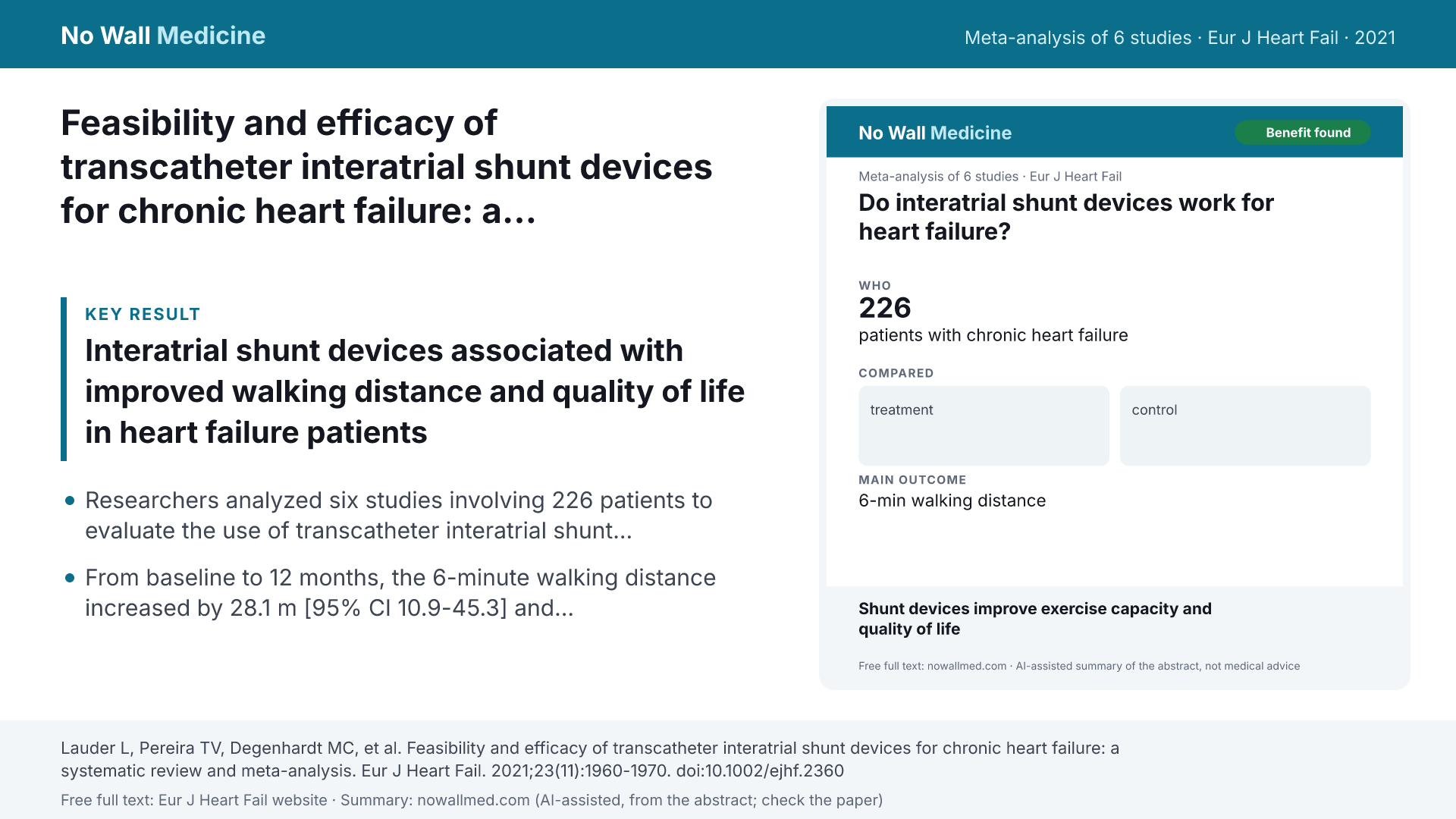
Interatrial shunt devices associated with improved walking distance and quality of life in heart failure patients
Feasibility and efficacy of transcatheter interatrial shunt devices for chronic heart failure: a systematic review and meta-analysis
Meta-analysis of 6 studiesBenefit found
Do interatrial shunt devices work for heart failure?
Who
226
patients with chronic heart failure
Compared
treatment
control
Main outcome
6-min walking distance
Bottom line: Shunt devices improve exercise capacity and quality of life
Eur J Heart Fail · 2021-11-05 · Save PNG
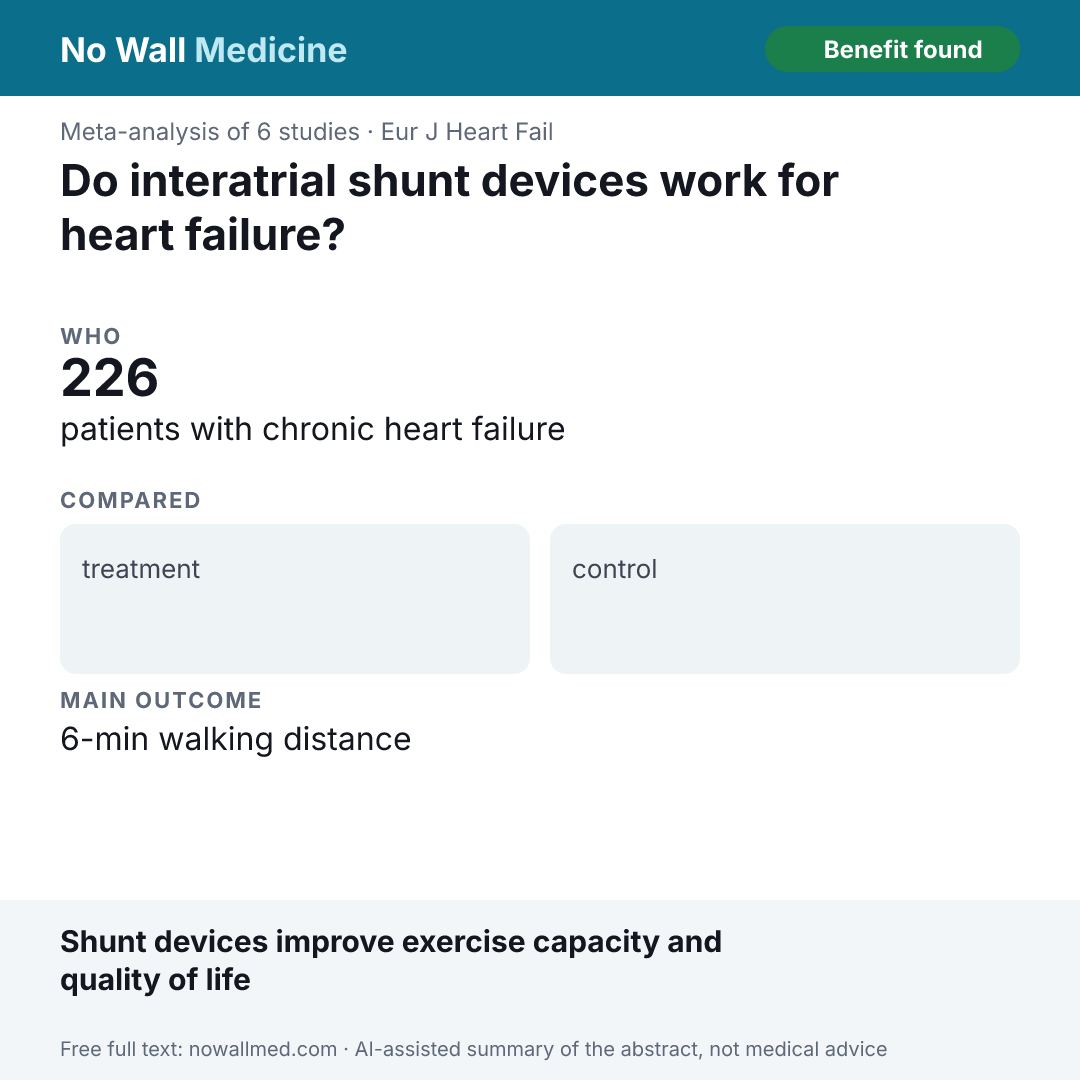
Clinical question: Do interatrial shunt devices work for heart failure?
Key points
- Researchers analyzed six studies involving 226 patients to evaluate the use of transcatheter interatrial shunt devices, which create a small opening between the heart's upper chambers, for chronic heart failure.
- From baseline to 12 months, the 6-minute walking distance increased by 28.1 m [95% CI 10.9-45.3] and health-related quality of life improved by 17.7 points [95% CI 10.8-24.6].
- The summary risk of serious adverse device-related effects was 8% [95% CI 1-20] at 12 months, while pulmonary capillary wedge pressure, a measure of pressure in the lungs, decreased by 2.0 mmHg [95% CI -3.6 to -0.4].
Headline and key points written with AI from the paper’s abstract, with every number checked against it. Read the paper before relying on them.
Was this summary helpful?
Subject terms
Headline, design, result, key points, caveat and citation as plain text.
Cite this article
Lauder L, Pereira TV, Degenhardt MC, et al. Feasibility and efficacy of transcatheter interatrial shunt devices for chronic heart failure: a systematic review and meta-analysis. Eur J Heart Fail. 2021;23(11):1960-1970. doi:10.1002/ejhf.2360
Spotted a mistake? Suggest a correction