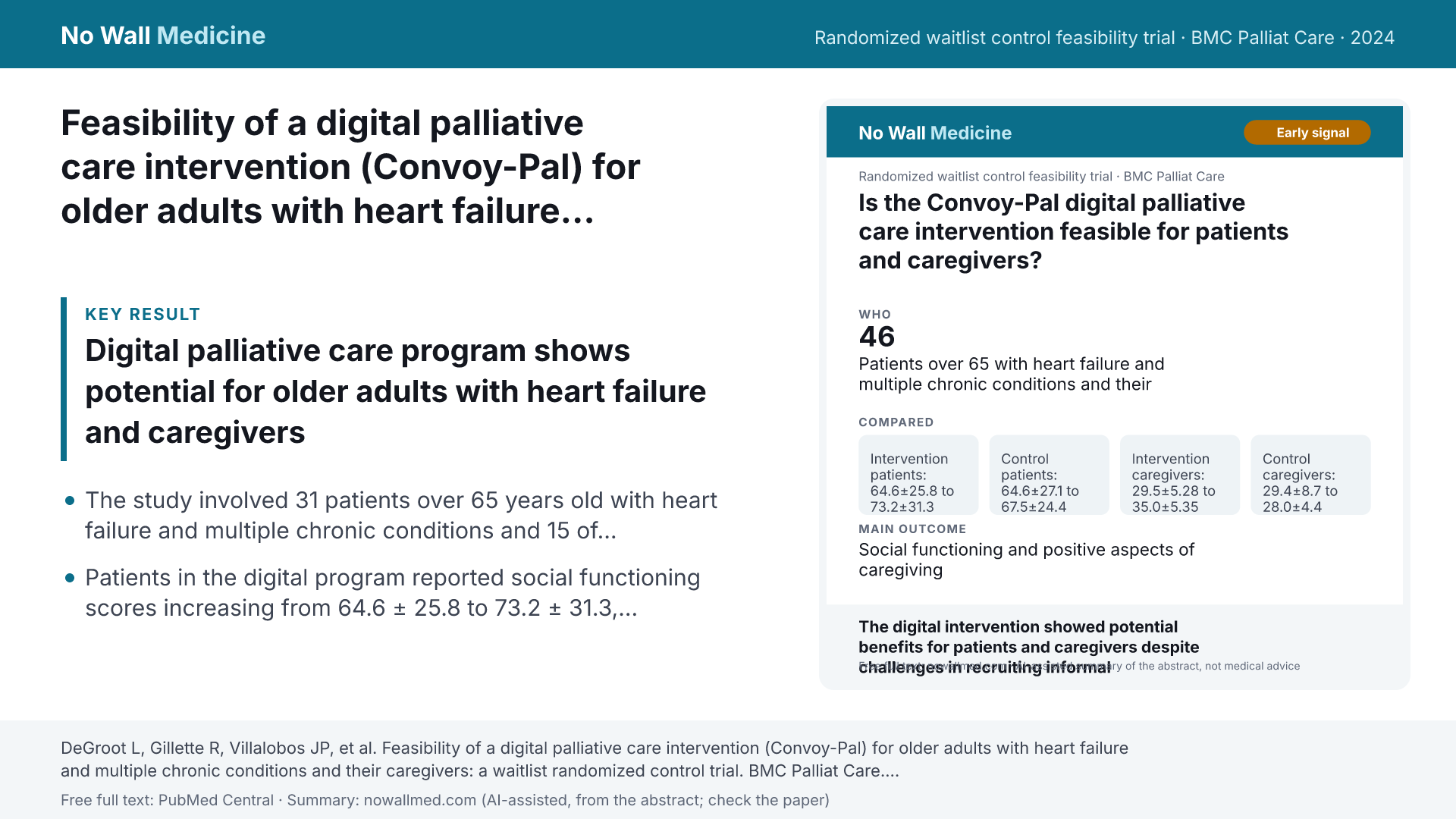
Digital palliative care program shows potential for older adults with heart failure and caregivers
Feasibility of a digital palliative care intervention (Convoy-Pal) for older adults with heart failure and multiple chronic conditions and their caregivers: a waitlist randomized control trial
Randomized waitlist control feasibility trialEarly signal
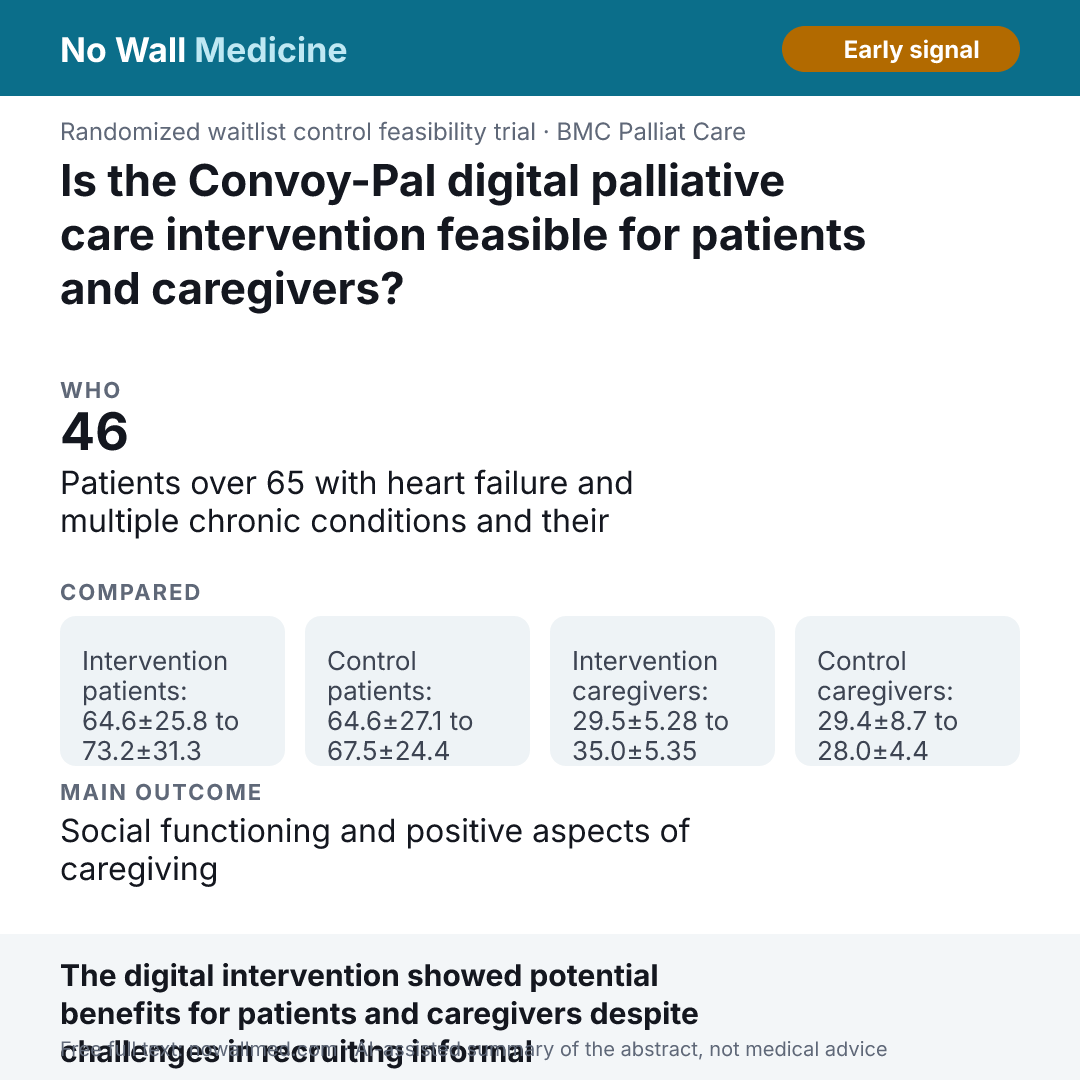
Is the Convoy-Pal digital palliative care intervention feasible for patients and caregivers?
Who
46
Patients over 65 with heart failure and multiple chronic conditions and their caregivers
Compared
Intervention patients: 64.6±25.8 to 73.2±31.3
Control patients: 64.6±27.1 to 67.5±24.4
Intervention caregivers: 29.5±5.28 to 35.0±5.35
Control caregivers: 29.4±8.7 to 28.0±4.4
Main outcome
Social functioning and positive aspects of caregiving
Bottom line: The digital intervention showed potential benefits for patients and caregivers despite challenges in recruiting informal caregivers.
BMC Palliat Care · 2024-10-01 · Save PNG
Clinical question: Is the Convoy-Pal digital palliative care intervention feasible for patients and caregivers?
Why it matters: Digital health systems are often designed for individual patients and frequently exclude the caregivers who help manage health for older adults with multiple chronic conditions.
Key points
- The study involved 31 patients over 65 years old with heart failure and multiple chronic conditions and 15 of their caregivers.
- Patients in the digital program reported social functioning scores increasing from 64.6 ± 25.8 to 73.2 ± 31.3, while caregivers reported positive perceptions of caregiving increasing from 29.5 ± 5.28 to 35.0 ± 5.35.
- Retention rates were 79% for intervention patients, 57% for intervention caregivers, and 60% for control participants.
Limitation the authors note: Recruiting informal caregivers proved challenging.
Headline and key points written with AI from the paper’s abstract, with every number checked against it. Read the paper before relying on them.
Was this summary helpful?
Subject terms
Headline, design, result, key points, caveat and citation as plain text.
Cite this article
DeGroot L, Gillette R, Villalobos JP, et al. Feasibility of a digital palliative care intervention (Convoy-Pal) for older adults with heart failure and multiple chronic conditions and their caregivers: a waitlist randomized control trial. BMC Palliat Care. 2024;23(1):234. doi:10.1186/s12904-024-01561-w
Spotted a mistake? Suggest a correction