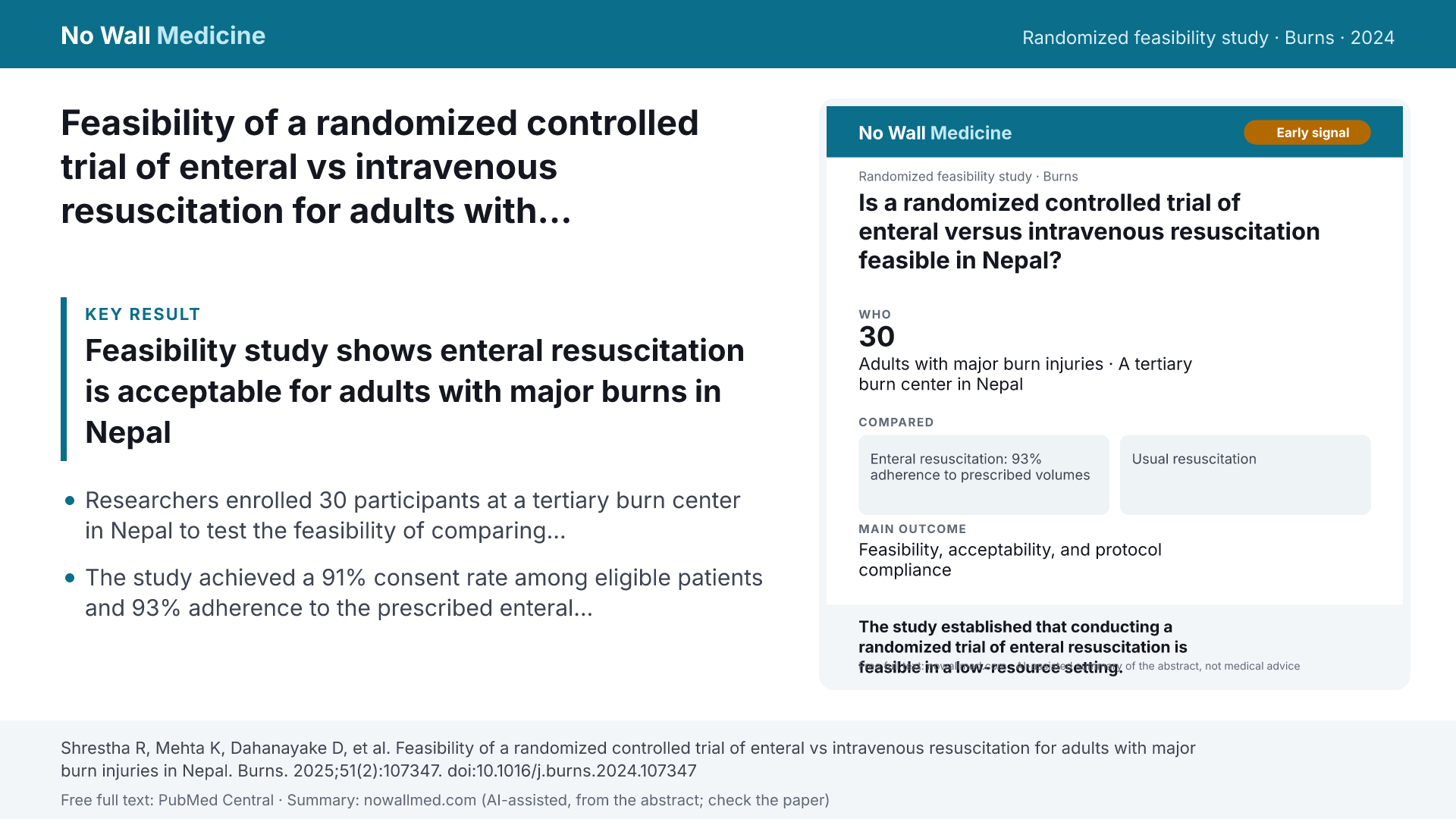
Feasibility study shows enteral resuscitation is acceptable for adults with major burns in Nepal
Feasibility of a randomized controlled trial of enteral vs intravenous resuscitation for adults with major burn injuries in Nepal
Randomized feasibility studyEarly signal
Is a randomized controlled trial of enteral versus intravenous resuscitation feasible in Nepal?
Who
30
Adults with major burn injuries · A tertiary burn center in Nepal
Compared
Enteral resuscitation: 93% adherence to prescribed volumes
Usual resuscitation
Main outcome
Feasibility, acceptability, and protocol compliance
Bottom line: The study established that conducting a randomized trial of enteral resuscitation is feasible in a low-resource setting.
Burns · 2024-12-27 · Save PNG
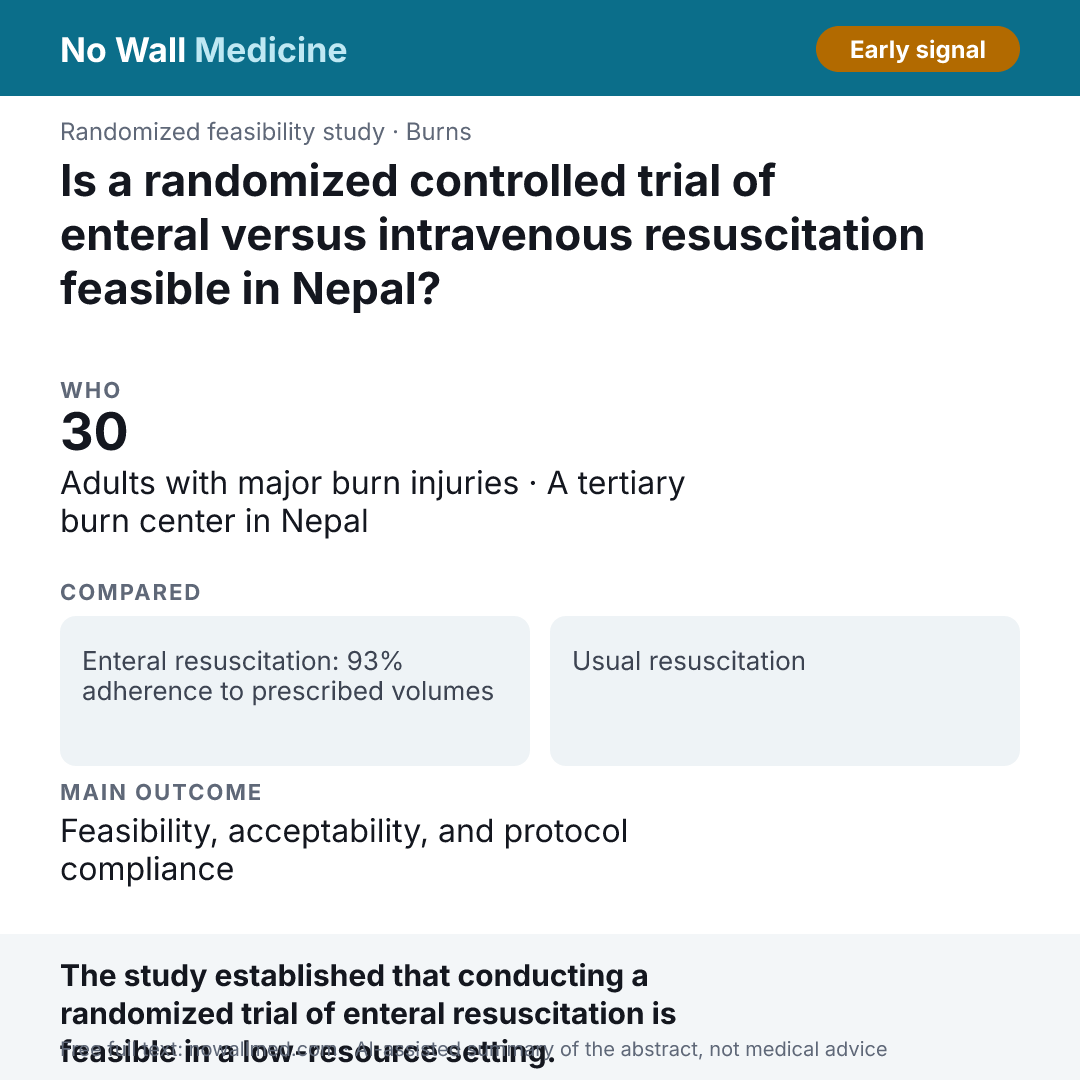
Clinical question: Is a randomized controlled trial of enteral versus intravenous resuscitation feasible in Nepal?
Why it matters: Real-world effectiveness studies and evidence-based protocols for enteral resuscitation are lacking, which hinders its implementation in low-resource settings.
Key points
- Researchers enrolled 30 participants at a tertiary burn center in Nepal to test the feasibility of comparing enteral resuscitation, which uses the gut, to intravenous resuscitation.
- The study achieved a 91% consent rate among eligible patients and 93% adherence to the prescribed enteral resuscitation volumes.
- No participants dropped out during the study period, demonstrating high retention and protocol adherence.
Headline and key points written with AI from the paper’s abstract, with every number checked against it. Read the paper before relying on them.
Was this summary helpful?
Subject terms
Headline, design, result, key points, caveat and citation as plain text.
Cite this article
Shrestha R, Mehta K, Dahanayake D, et al. Feasibility of a randomized controlled trial of enteral vs intravenous resuscitation for adults with major burn injuries in Nepal. Burns. 2025;51(2):107347. doi:10.1016/j.burns.2024.107347
Spotted a mistake? Suggest a correction