Gut microbe composition does not predict levels of TMAO produced after eating different diets
Fecal Microbiome Composition Does Not Predict Diet-Induced TMAO Production in Healthy Adults
Randomized crossover studyNo clear difference
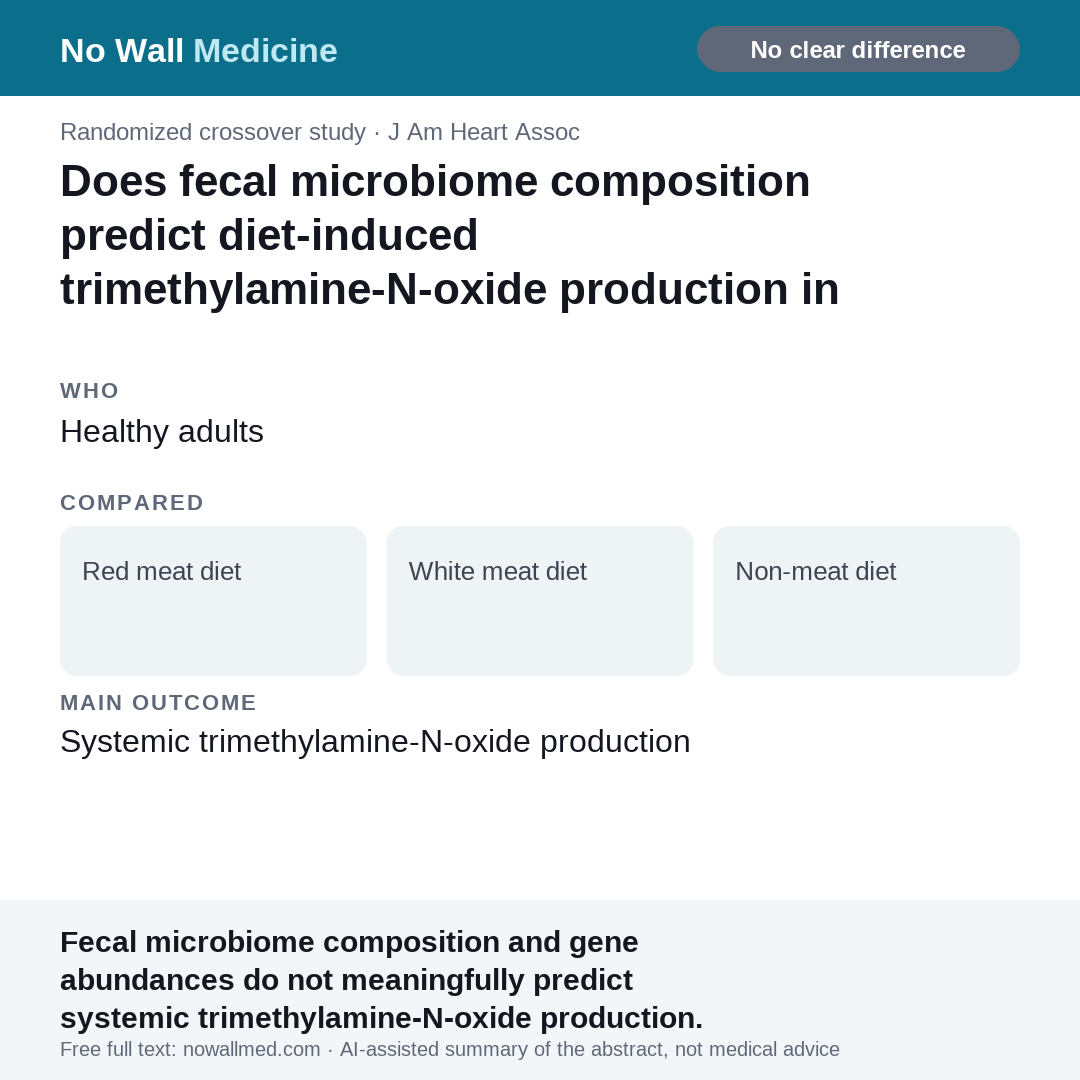
Does fecal microbiome composition predict diet-induced trimethylamine-N-oxide production in healthy adults?
Who
Healthy adults
Compared
Red meat diet
White meat diet
Non-meat diet
Main outcome
Systemic trimethylamine-N-oxide production
Bottom line: Fecal microbiome composition and gene abundances do not meaningfully predict systemic trimethylamine-N-oxide production.
J Am Heart Assoc · 2021-10-29Download image
Clinical question: Does fecal microbiome composition predict diet-induced trimethylamine-N-oxide production in healthy adults?
Why it matters: It is unknown whether the amount of specific gut microbes or their genes can predict the production of trimethylamine-N-oxide, a molecule linked to cardiovascular disease.
Key points
- Researchers studied healthy participants who followed three different diets consisting of red meat, white meat, or non-meat for 4 weeks each.
- The abundance of bacterial genes known to contribute to trimethylamine-N-oxide (TMAO) production did not improve models used to estimate TMAO levels.
- The presence of trimethylamine lyase genes was only weakly correlated with the actual activity of the enzymes they encode during fecal culture.
Headline and key points written with AI from the paper’s abstract, with every number checked against it. Read the paper before relying on them.
Was this summary helpful?
Subject terms
Cite this article
Ferrell M, Bazeley P, Wang Z, Levison BS, Li XS, Jia X. Fecal Microbiome Composition Does Not Predict Diet-Induced TMAO Production in Healthy Adults. J Am Heart Assoc. 2021. doi:10.1161/JAHA.121.021934
Spotted a mistake? Suggest a correction
Top studies every Monday
The week’s key trials and guidelines in your specialties, plus any topics you follow. By email, free.
Get the weekly digest