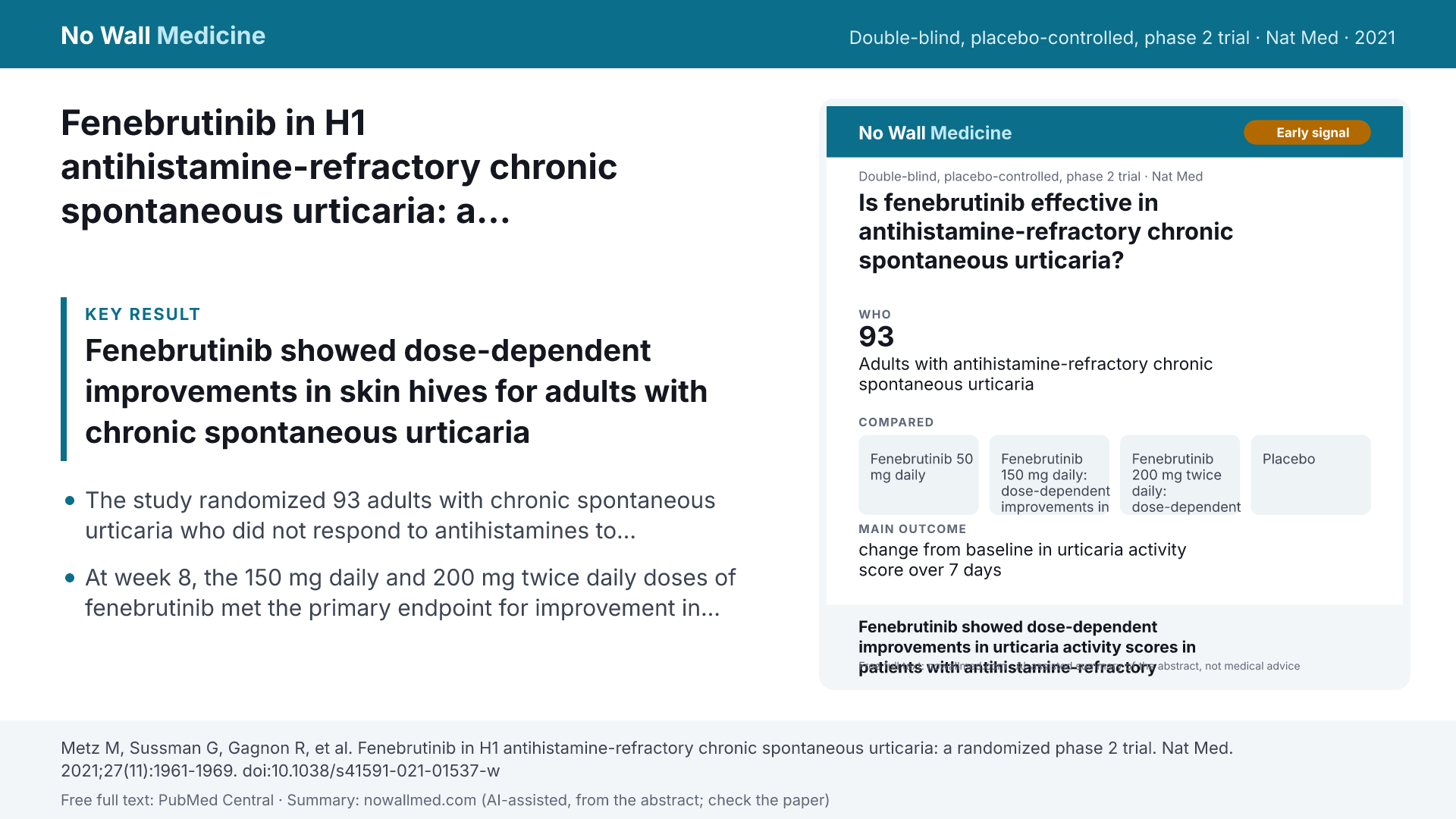
Fenebrutinib showed dose-dependent improvements in skin hives for adults with chronic spontaneous urticaria
Fenebrutinib in H1 antihistamine-refractory chronic spontaneous urticaria: a randomized phase 2 trial
Double-blind, placebo-controlled, phase 2 trialEarly signal
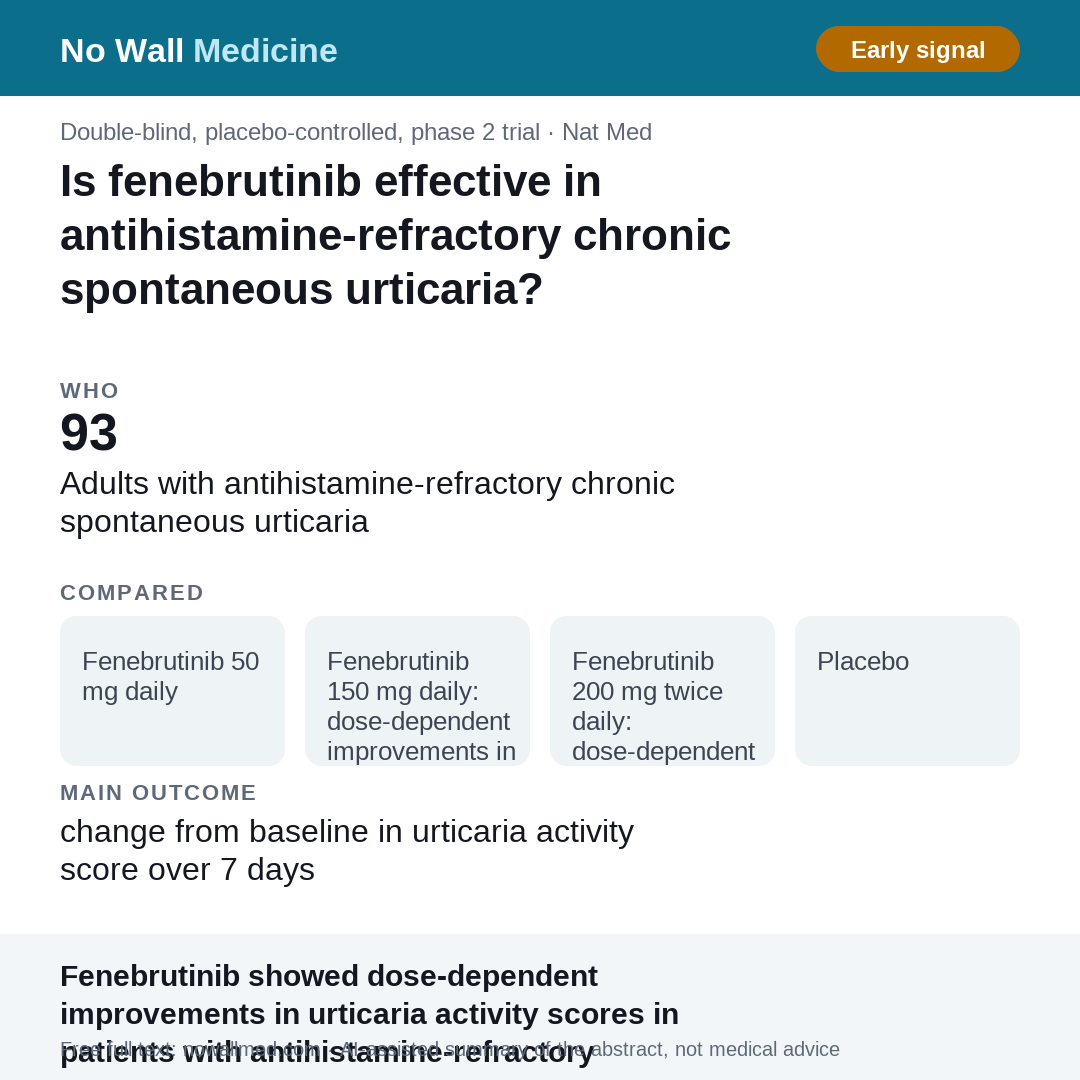
Is fenebrutinib effective in antihistamine-refractory chronic spontaneous urticaria?
Who
93
Adults with antihistamine-refractory chronic spontaneous urticaria
Compared
Fenebrutinib 50 mg daily
Fenebrutinib 150 mg daily: dose-dependent improvements in UAS7 at week 8
Fenebrutinib 200 mg twice daily: dose-dependent improvements in UAS7 at week 8
Placebo
Main outcome
change from baseline in urticaria activity score over 7 days
Bottom line: Fenebrutinib showed dose-dependent improvements in urticaria activity scores in patients with antihistamine-refractory chronic spontaneous urticaria.
Nat Med · 2021-11-08Download image
Clinical question: Is fenebrutinib effective in antihistamine-refractory chronic spontaneous urticaria?
Why it matters: It was unknown if inhibiting Bruton's tyrosine kinase, an enzyme involved in mast cell activation, could be effective for patients with chronic spontaneous urticaria who do not respond to antihistamines.
Key points
- The study randomized 93 adults with chronic spontaneous urticaria who did not respond to antihistamines to receive fenebrutinib at 50 mg daily, 150 mg daily, 200 mg twice daily, or a placebo.
- At week 8, the 150 mg daily and 200 mg twice daily doses of fenebrutinib met the primary endpoint for improvement in the 7-day urticaria activity score compared to placebo.
- Asymptomatic and reversible grade 2 and 3 elevations in liver transaminase, which are markers of liver enzyme levels, occurred in 2 patients in both the 150 mg daily and 200 mg twice daily groups.
Headline and key points written with AI from the paper’s abstract, with every number checked against it. Read the paper before relying on them.
Was this summary helpful?
Subject terms
Cite this article
Metz M, Sussman G, Gagnon R, et al. Fenebrutinib in H1 antihistamine-refractory chronic spontaneous urticaria: a randomized phase 2 trial. Nat Med. 2021. doi:10.1038/s41591-021-01537-w
Spotted a mistake? Suggest a correction