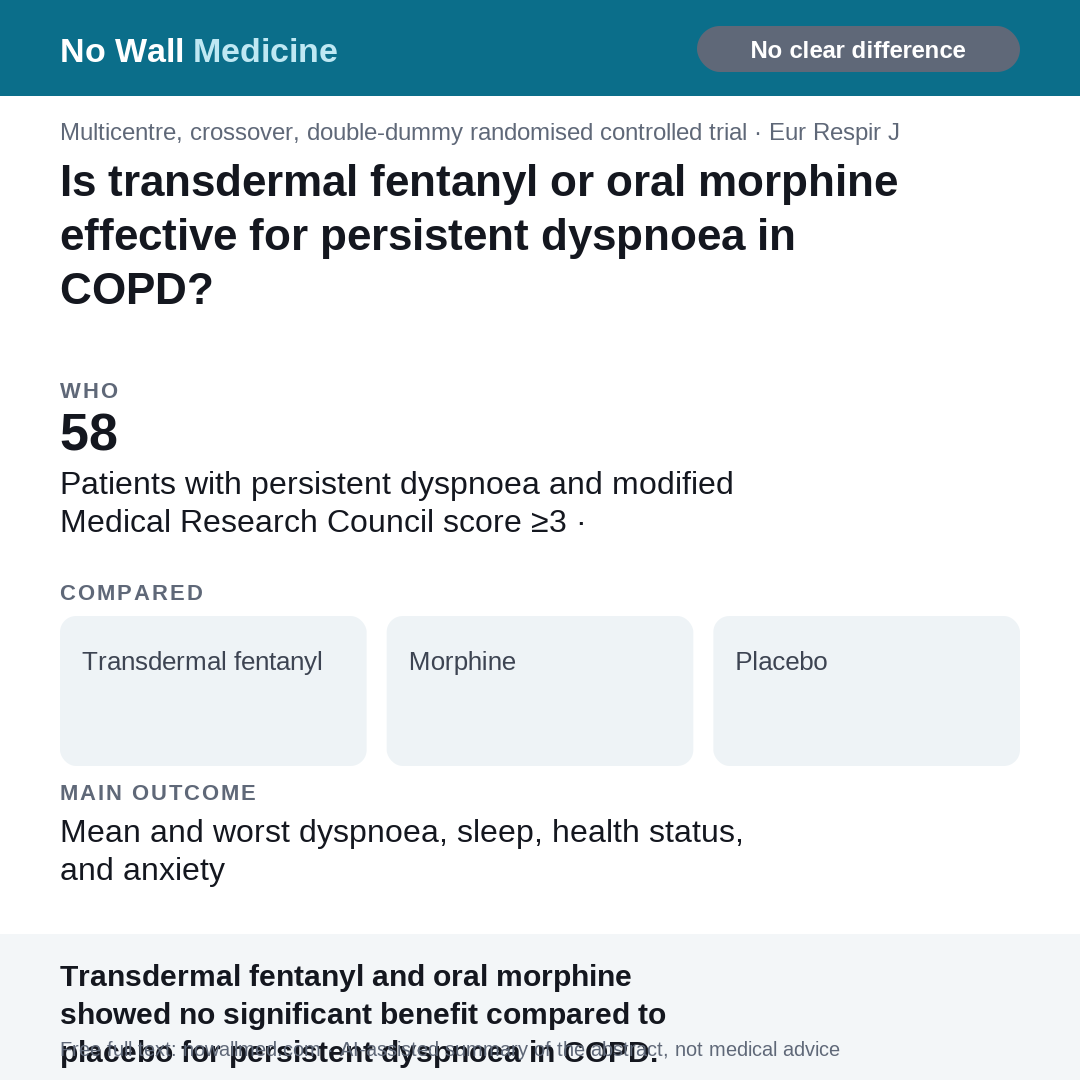
Clinical question: Is transdermal fentanyl or oral morphine effective for persistent dyspnoea in COPD?
Why it matters: While morphine is suggested in palliative care guidelines, recent trials have shown no clinical benefit and concerns regarding adverse events for treating shortness of breath.
Key points
Researchers studied 58 participants with chronic obstructive pulmonary disease (COPD) and compared transdermal fentanyl, oral morphine, and a placebo.
Neither fentanyl nor morphine showed significant differences compared to placebo for shortness of breath, sleep, health status, anxiety, or side effects.
The study was completed by 37 participants, while 13 people discontinued due to exacerbations and 7 due to side effects.
Headline and key points written with AI from the paper’s abstract, with every number checked against it. Read the paper before relying on them.
Safety and efficacy of inhaled itraconazole in adults with asthma and allergic bronchopulmonary aspergillosis (PUR1900-ABPA): a randomised, double-blind, parallel group, placebo-controlled, multicentre, phase 2 trial