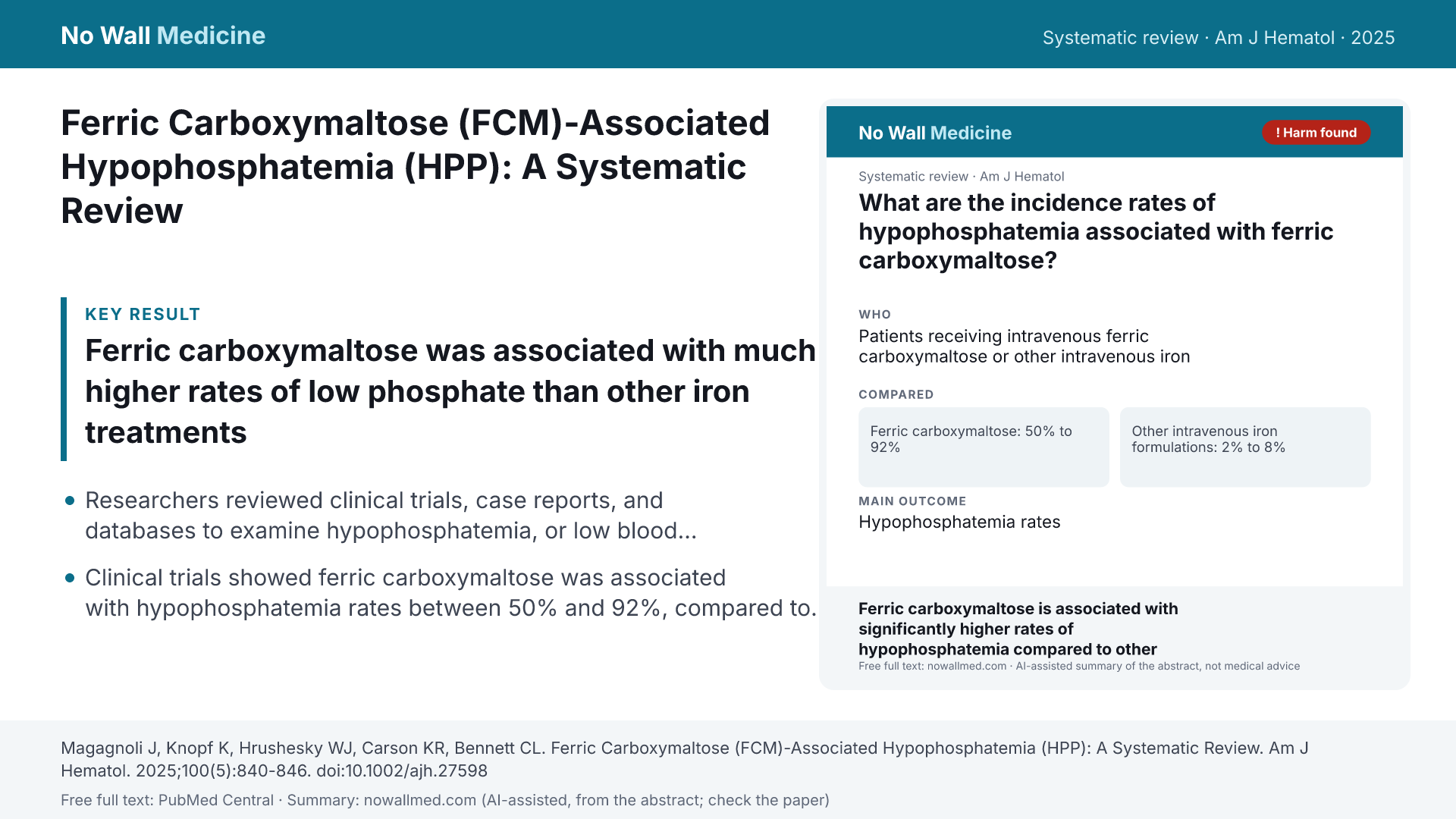
Ferric carboxymaltose was associated with much higher rates of low phosphate than other iron treatments
Ferric Carboxymaltose (FCM)-Associated Hypophosphatemia (HPP): A Systematic Review
Systematic reviewHarm found
What are the incidence rates of hypophosphatemia associated with ferric carboxymaltose?
Who
Patients receiving intravenous ferric carboxymaltose or other intravenous iron
Compared
Ferric carboxymaltose: 50% to 92%
Other intravenous iron formulations: 2% to 8%
Main outcome
Hypophosphatemia rates
Bottom line: Ferric carboxymaltose is associated with significantly higher rates of hypophosphatemia compared to other intravenous iron formulations.
Am J Hematol · 2025-02-11Download image
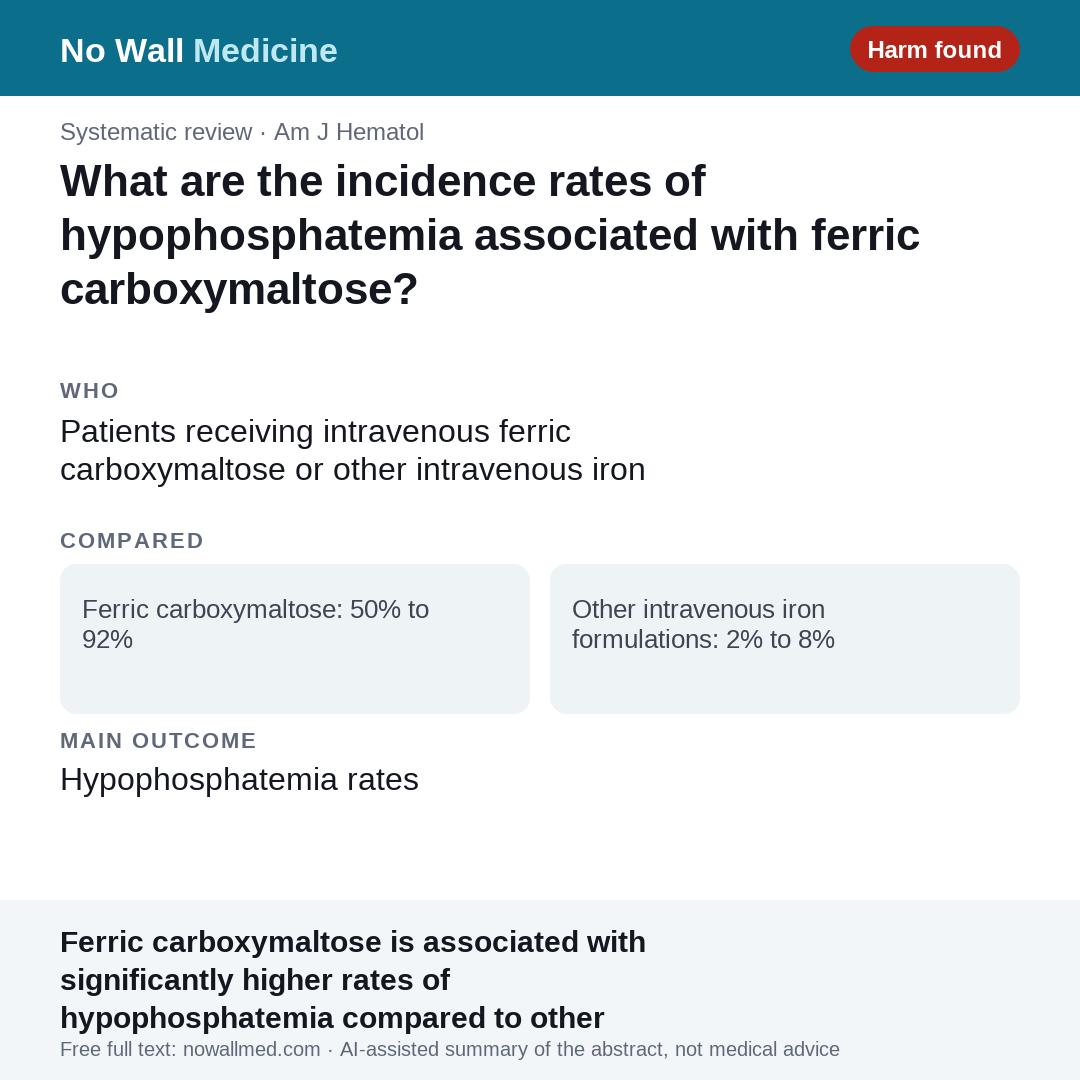
Clinical question: What are the incidence rates of hypophosphatemia associated with ferric carboxymaltose?
Why it matters: The clinical manifestations and incidence rates of hypophosphatemia associated with ferric carboxymaltose had not been reviewed.
Key points
- Researchers reviewed clinical trials, case reports, and databases to examine hypophosphatemia, or low blood phosphate, following ferric carboxymaltose administration.
- Clinical trials showed ferric carboxymaltose was associated with hypophosphatemia rates between 50% and 92%, compared to 2% to 8% for other intravenous iron formulations.
- Common symptoms associated with low phosphate levels included general weakness, fatigue, bone pain, muscle pain, osteomalacia, and fractures.
Headline and key points written with AI from the paper’s abstract, with every number checked against it. Read the paper before relying on them.
Was this summary helpful?
Subject terms
Cite this article
Magagnoli J, Knopf K, Hrushesky WJ, Carson KR, Bennett CL. Ferric Carboxymaltose (FCM)-Associated Hypophosphatemia (HPP): A Systematic Review. Am J Hematol. 2025. doi:10.1002/ajh.27598
Spotted a mistake? Suggest a correction