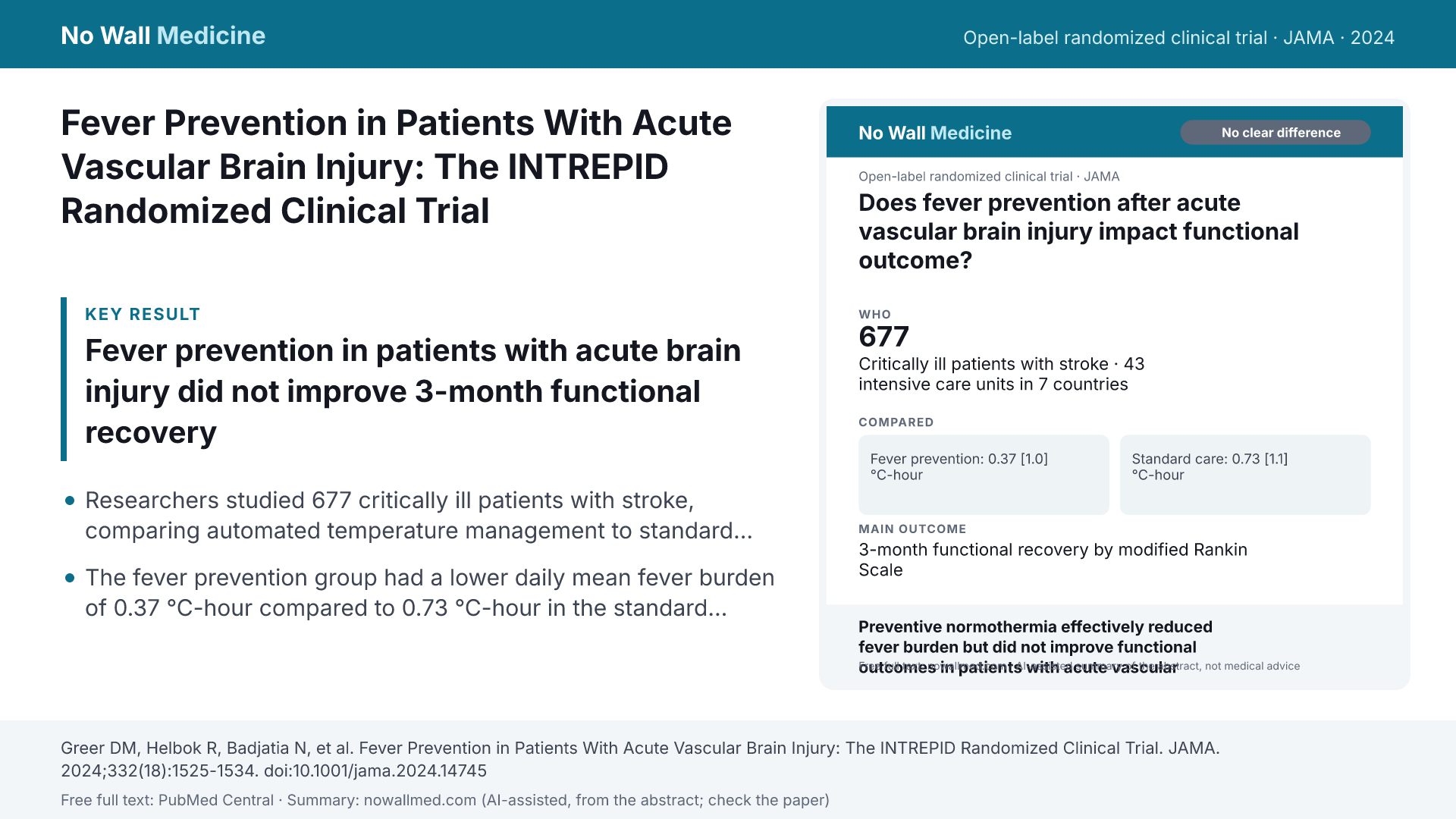
Fever prevention in patients with acute brain injury did not improve 3-month functional recovery
Fever Prevention in Patients With Acute Vascular Brain Injury: The INTREPID Randomized Clinical Trial
Open-label randomized clinical trialNo clear difference
Does fever prevention after acute vascular brain injury impact functional outcome?
Who
677
Critically ill patients with stroke · 43 intensive care units in 7 countries
Compared
Fever prevention: 0.37 [1.0] °C-hour
Standard care: 0.73 [1.1] °C-hour
Main outcome
3-month functional recovery by modified Rankin Scale
Result: odds ratio 1.09 (95% CI 0.81 to 1.46)
Bottom line: Preventive normothermia effectively reduced fever burden but did not improve functional outcomes in patients with acute vascular brain injury.
JAMA · 2024-09-25 · Save PNG
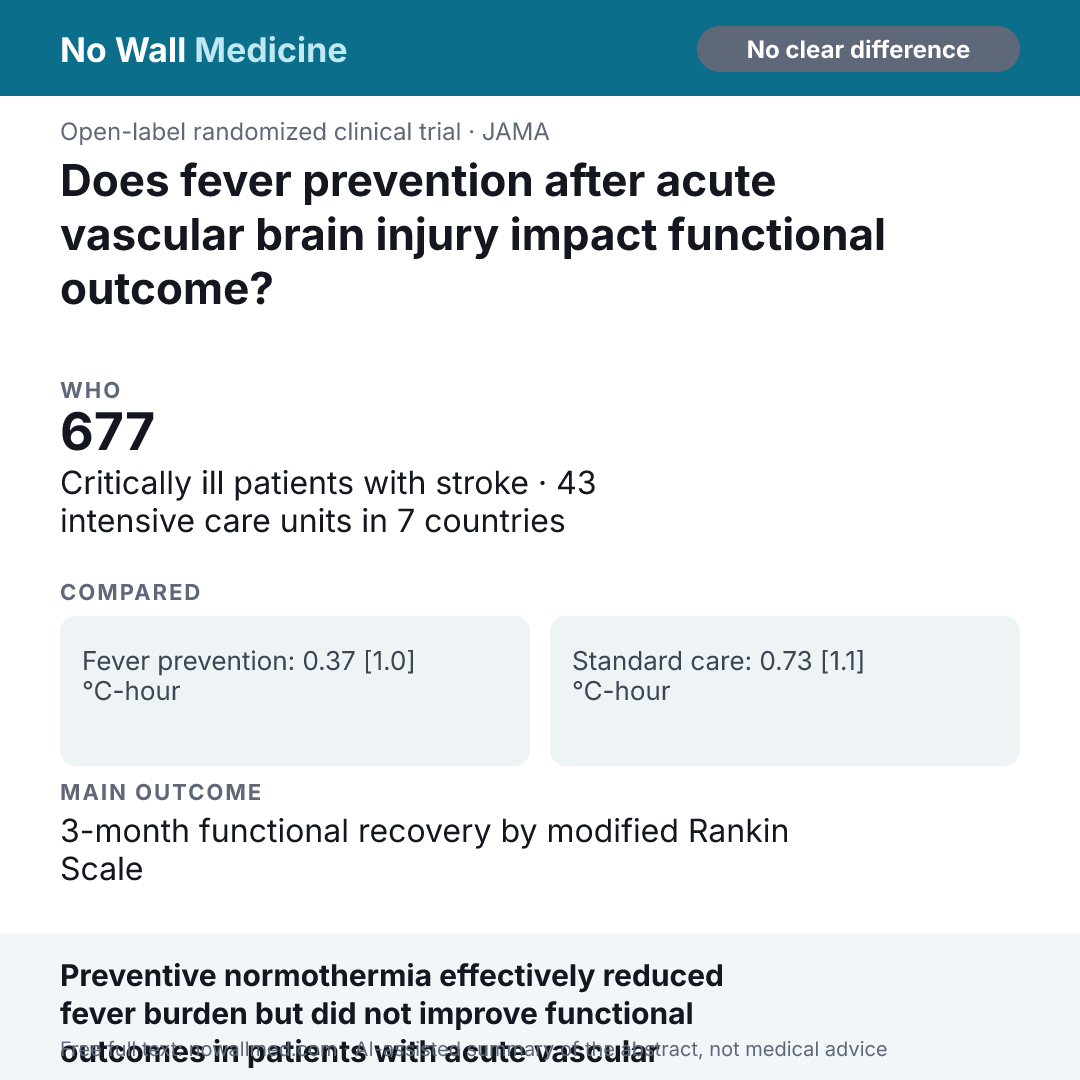
Clinical question: Does fever prevention after acute vascular brain injury impact functional outcome?
Key points
- Researchers studied 677 critically ill patients with stroke, comparing automated temperature management to standard tiered fever treatment.
- The fever prevention group had a lower daily mean fever burden of 0.37 °C-hour compared to 0.73 °C-hour in the standard care group.
- There was no significant difference in functional recovery at 3 months, with a median modified Rankin Scale score of 4.0 for both groups.
Headline and key points written with AI from the paper’s abstract, with every number checked against it. Read the paper before relying on them.
Was this summary helpful?
Subject terms
Headline, design, result, key points, caveat and citation as plain text.
Cite this article
Greer DM, Helbok R, Badjatia N, et al. Fever Prevention in Patients With Acute Vascular Brain Injury: The INTREPID Randomized Clinical Trial. JAMA. 2024;332(18):1525-1534. doi:10.1001/jama.2024.14745
Spotted a mistake? Suggest a correction