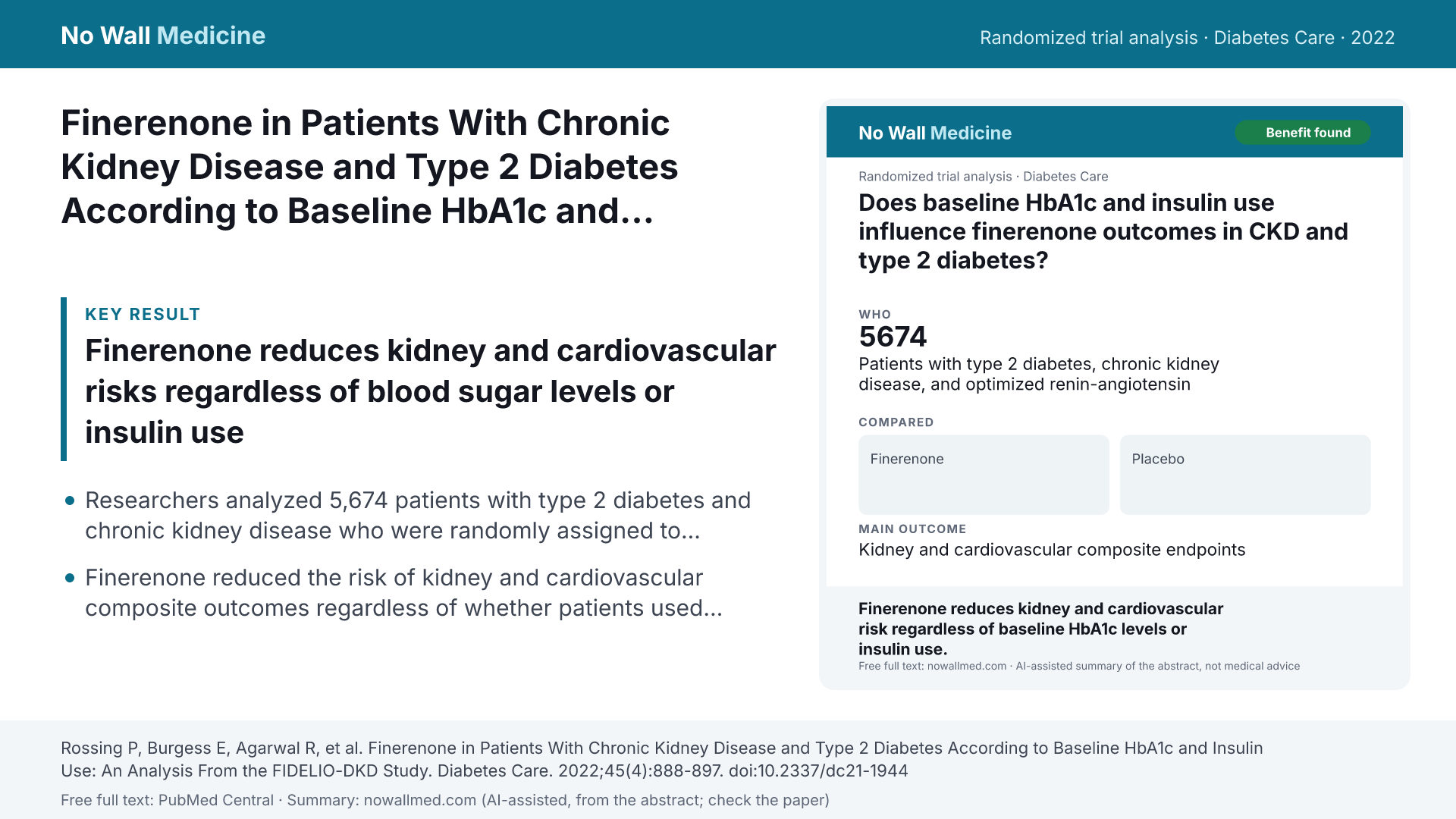
Finerenone in Patients With Chronic Kidney Disease and Type 2 Diabetes According to Baseline HbA1c and Insulin Use: An Analysis From the FIDELIO-DKD Study
Key result: Finerenone reduces kidney and cardiovascular risks regardless of blood sugar levels or insulin use
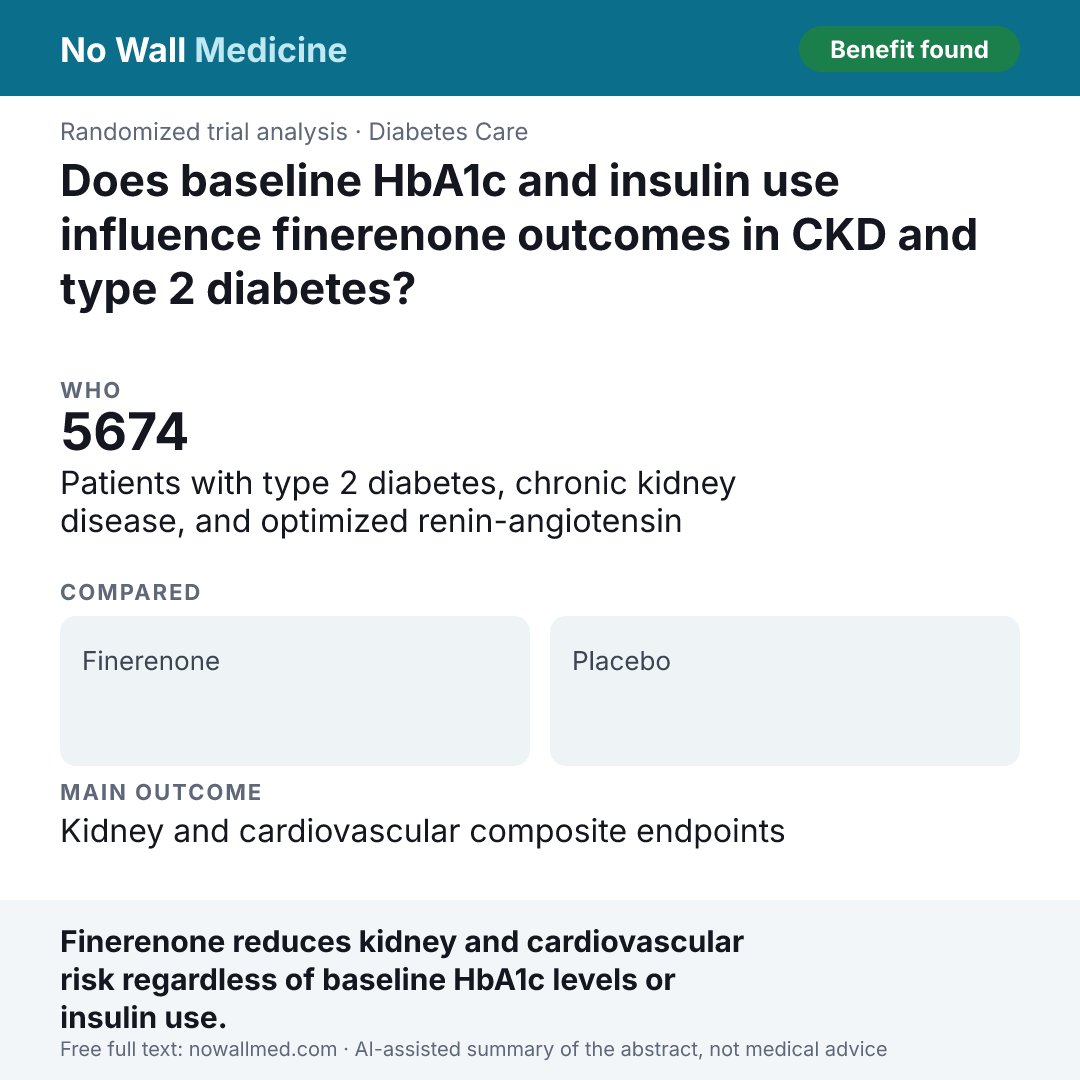
Randomized trial analysisBenefit found
Does baseline HbA1c and insulin use influence finerenone outcomes in CKD and type 2 diabetes?
Who
5674
Patients with type 2 diabetes, chronic kidney disease, and optimized renin-angiotensin system blockade
Compared
Finerenone
Placebo
Main outcome
Kidney and cardiovascular composite endpoints
Bottom line: Finerenone reduces kidney and cardiovascular risk regardless of baseline HbA1c levels or insulin use.
Diabetes Care · 2022-01-22 · Save PNG
Key points
- Researchers analyzed 5,674 patients with type 2 diabetes and chronic kidney disease who were randomly assigned to receive finerenone or a placebo.
- Finerenone reduced the risk of kidney and cardiovascular composite outcomes regardless of whether patients used insulin or had baseline HbA1c levels below or above 7.5% (58 mmol/mol).
- While baseline HbA1c did not affect kidney event risk, cardiovascular risk was associated with higher HbA1c levels.
Discussion prompts
- Would these patients look like yours? Who was left out?
- Is the main outcome one that matters to patients?
- Is the difference large enough to change what you do?
Cite: Rossing P, Burgess E, Agarwal R, et al. Finerenone in Patients With Chronic Kidney Disease and Type 2 Diabetes According to Baseline HbA1c and Insulin Use: An Analysis From the FIDELIO-DKD Study. Diabetes Care. 2022;45(4):888-897. doi:10.2337/dc21-1944
Free full text: PubMed Central · Summary and visual abstract: nowallmed.com/a/finerenone-in-patients-with-chronic-kidney-disease-and-type-2-acfed/ (AI-assisted from the abstract; check the paper before relying on it).