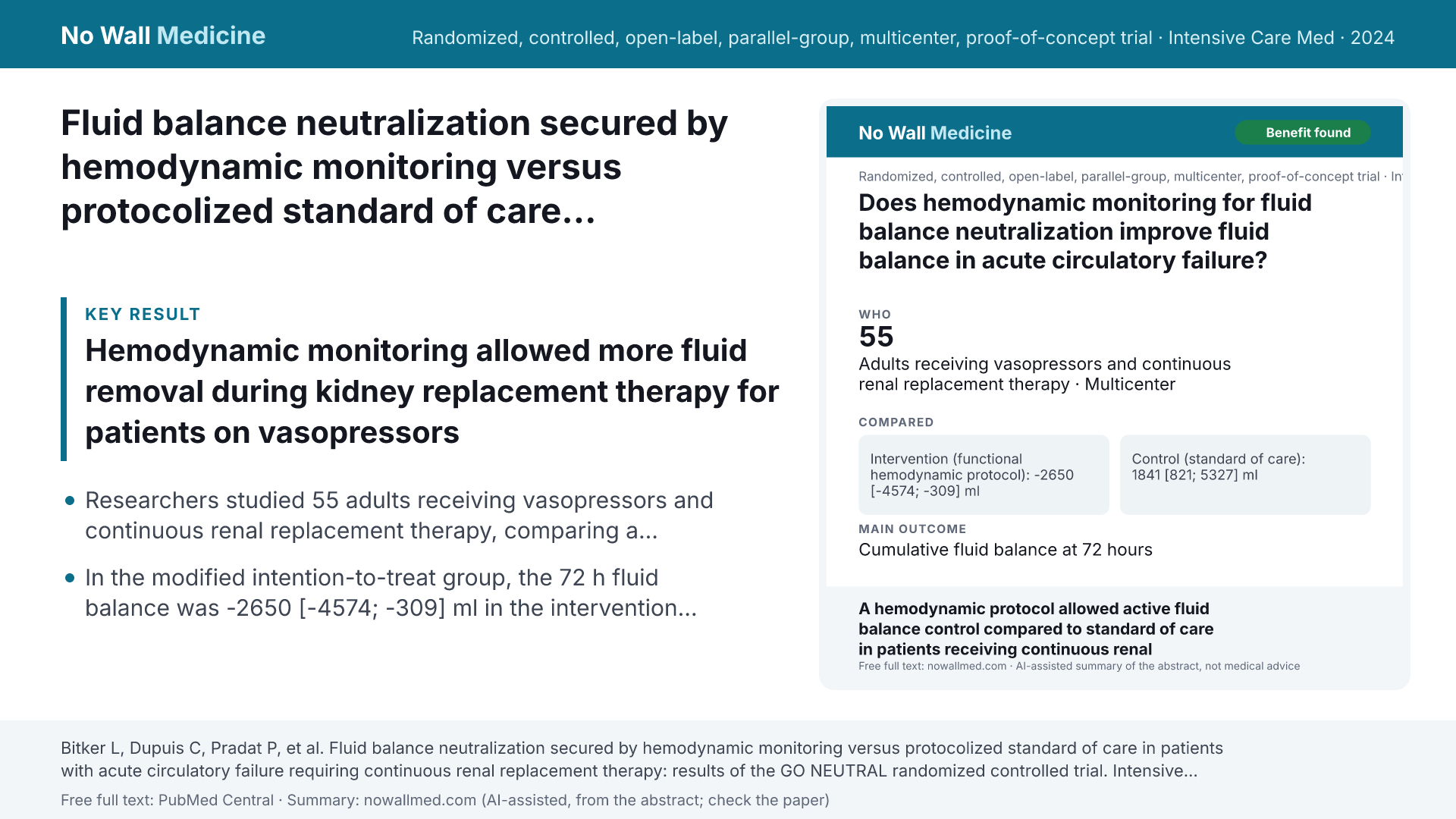
Hemodynamic monitoring allowed more fluid removal during kidney replacement therapy for patients on vasopressors
Fluid balance neutralization secured by hemodynamic monitoring versus protocolized standard of care in patients with acute circulatory failure requiring continuous renal replacement therapy: results of the GO NEUTRAL randomized controlled trial
Randomized, controlled, open-label, parallel-group, multicenter, proof-of-concept trialBenefit found
Does hemodynamic monitoring for fluid balance neutralization improve fluid balance in acute circulatory failure?
Who
55
Adults receiving vasopressors and continuous renal replacement therapy · Multicenter
Compared
Intervention (functional hemodynamic protocol): -2650 [-4574; -309] ml
Control (standard of care): 1841 [821; 5327] ml
Main outcome
Cumulative fluid balance at 72 hours
Result: difference: 4942 [95% confidence interval: 2736-6902] ml
Bottom line: A hemodynamic protocol allowed active fluid balance control compared to standard of care in patients receiving continuous renal replacement therapy.
Intensive Care Med · 2024-10-17 · Save PNG
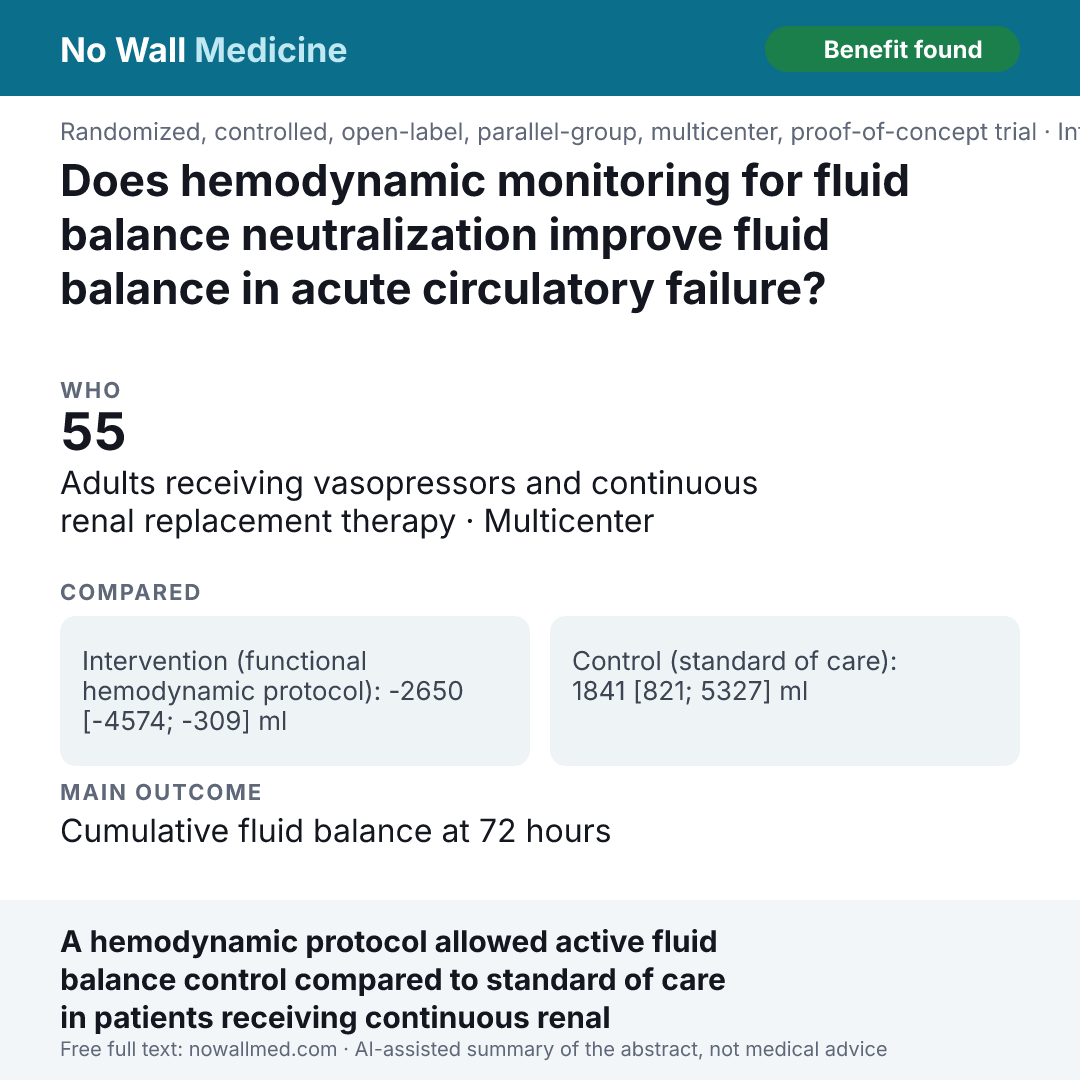
Clinical question: Does hemodynamic monitoring for fluid balance neutralization improve fluid balance in acute circulatory failure?
Key points
- Researchers studied 55 adults receiving vasopressors and continuous renal replacement therapy, comparing a protocol using hemodynamic monitoring to standard care.
- In the modified intention-to-treat group, the 72 h fluid balance was -2650 [-4574; -309] ml in the intervention group versus 1841 [821; 5327] ml in controls.
- There were no statistically significant differences between the groups regarding hemodynamics, oxygenation, kidney replacement therapy-related instability, or 90-day mortality.
Headline and key points written with AI from the paper’s abstract, with every number checked against it. Read the paper before relying on them.
Was this summary helpful?
Subject terms
Headline, design, result, key points, caveat and citation as plain text.
Cite this article
Bitker L, Dupuis C, Pradat P, et al. Fluid balance neutralization secured by hemodynamic monitoring versus protocolized standard of care in patients with acute circulatory failure requiring continuous renal replacement therapy: results of the GO NEUTRAL randomized controlled trial. Intensive Care Med. 2024;50(12):2061-2072. doi:10.1007/s00134-024-07676-1
Spotted a mistake? Suggest a correction