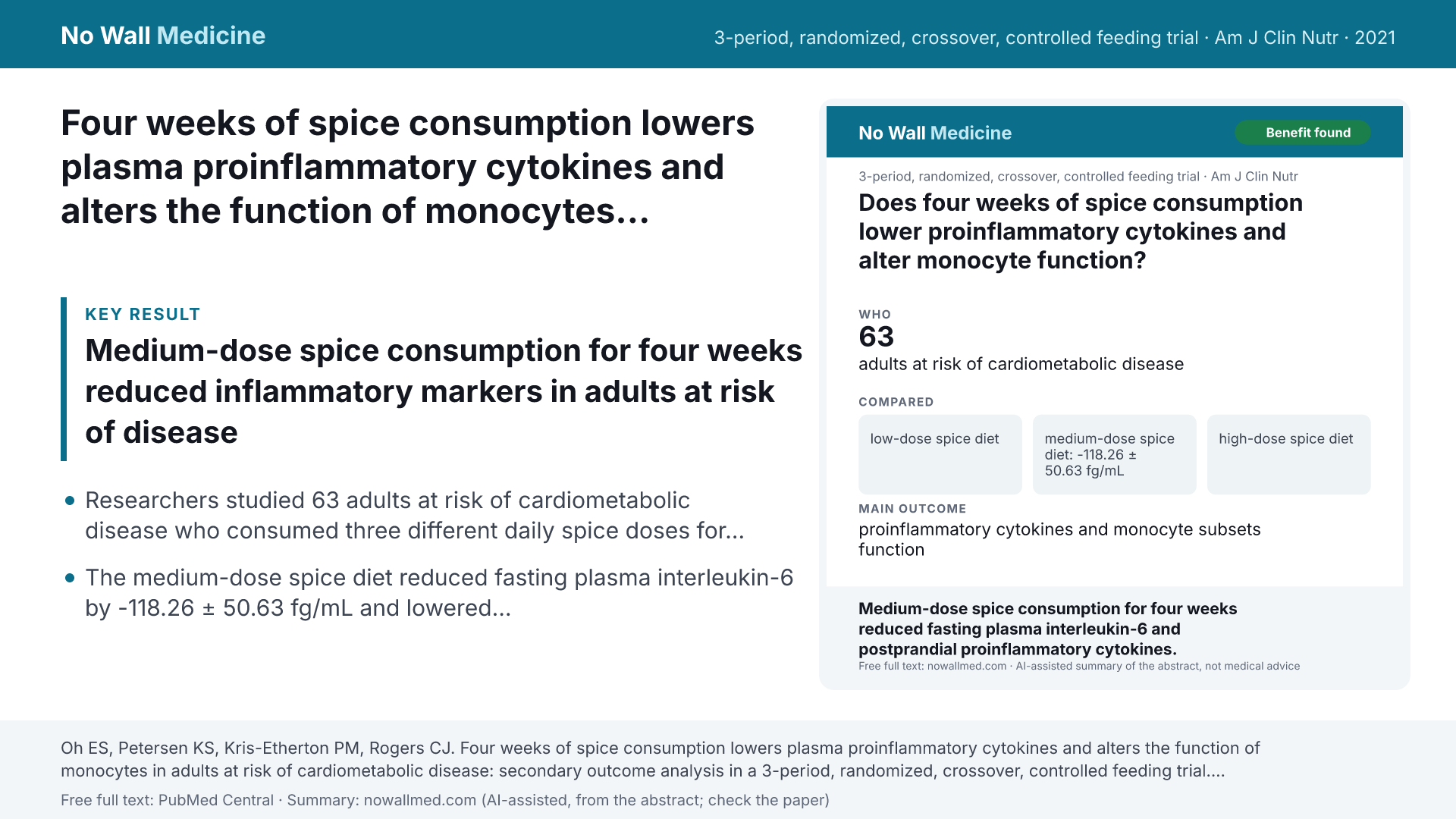
Medium-dose spice consumption for four weeks reduced inflammatory markers in adults at risk of disease
Four weeks of spice consumption lowers plasma proinflammatory cytokines and alters the function of monocytes in adults at risk of cardiometabolic disease: secondary outcome analysis in a 3-period, randomized, crossover, controlled feeding trial
3-period, randomized, crossover, controlled feeding trialBenefit found
Does four weeks of spice consumption lower proinflammatory cytokines and alter monocyte function?
Who
63
adults at risk of cardiometabolic disease
Compared
low-dose spice diet
medium-dose spice diet: -118.26 ± 50.63 fg/mL
high-dose spice diet
Main outcome
proinflammatory cytokines and monocyte subsets function
Bottom line: Medium-dose spice consumption for four weeks reduced fasting plasma interleukin-6 and postprandial proinflammatory cytokines.
Am J Clin Nutr · 2021-10-04Download image
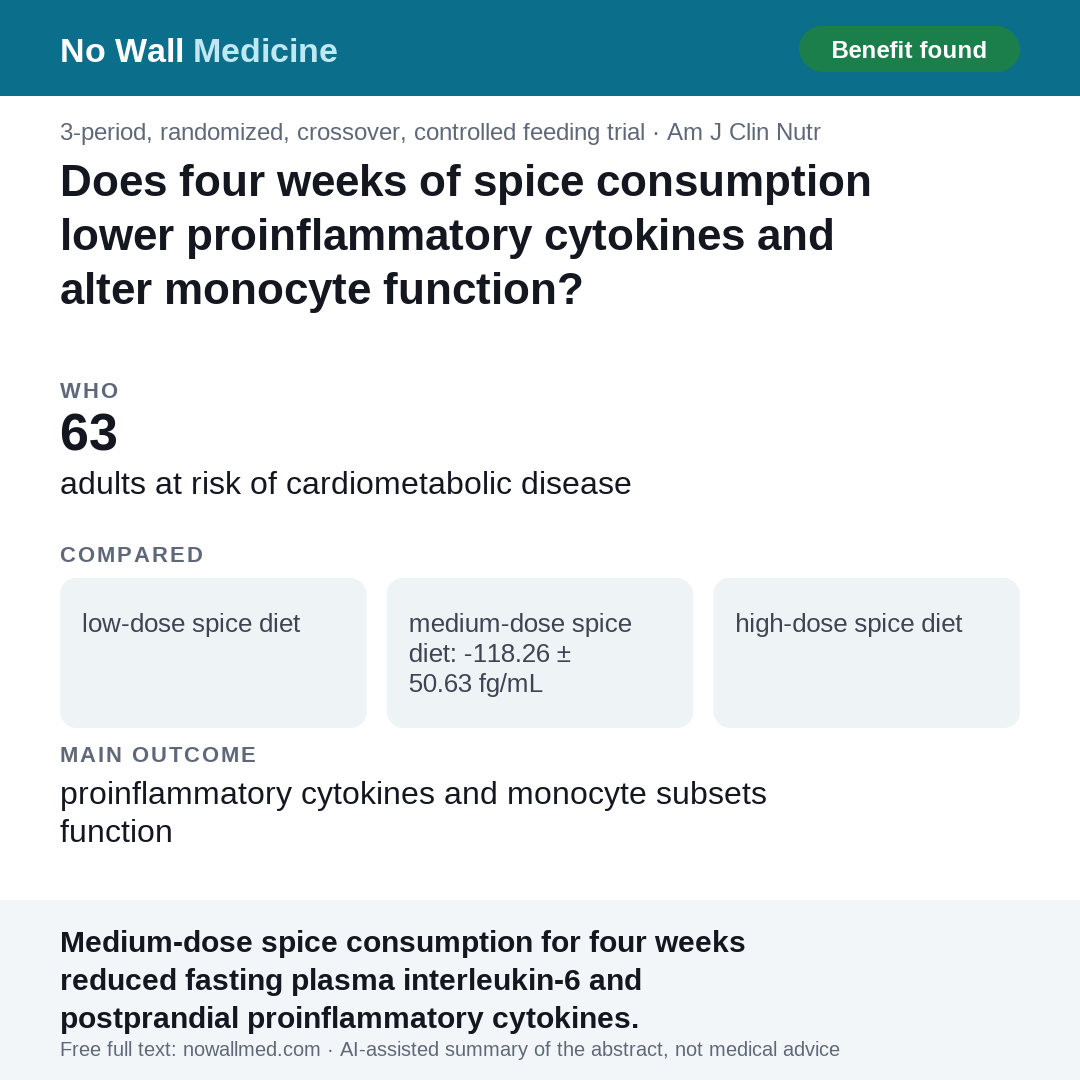
Clinical question: Does four weeks of spice consumption lower proinflammatory cytokines and alter monocyte function?
Why it matters: It was unknown if consuming a spice blend incorporated into meals over a longer period affects inflammatory cytokines and monocyte subsets in adults at risk of cardiometabolic disease.
Key points
- Researchers studied 63 adults at risk of cardiometabolic disease who consumed three different daily spice doses for four weeks in a randomized crossover trial.
- The medium-dose spice diet reduced fasting plasma interleukin-6 by -118.26 ± 50.63 fg/mL and lowered postprandial interleukin-1β, interleukin-8, and tumor necrosis factor-alpha compared to the low-dose diet.
- High-dose spice consumption was associated with reduced classical monocyte adherence, while medium and high doses reduced intermediate monocyte migration compared to the low-dose diet.
Headline and key points written with AI from the paper’s abstract, with every number checked against it. Read the paper before relying on them.
Was this summary helpful?
Subject terms
Cite this article
Oh ES, Petersen KS, Kris-Etherton PM, Rogers CJ. Four weeks of spice consumption lowers plasma proinflammatory cytokines and alters the function of monocytes in adults at risk of cardiometabolic disease: secondary outcome analysis in a 3-period, randomized, crossover, controlled feeding trial. Am J Clin Nutr. 2021. doi:10.1093/ajcn/nqab331
Spotted a mistake? Suggest a correction
Top studies every Monday
The week’s key trials and guidelines in your specialties, plus any topics you follow. By email, free.
Get the weekly digest