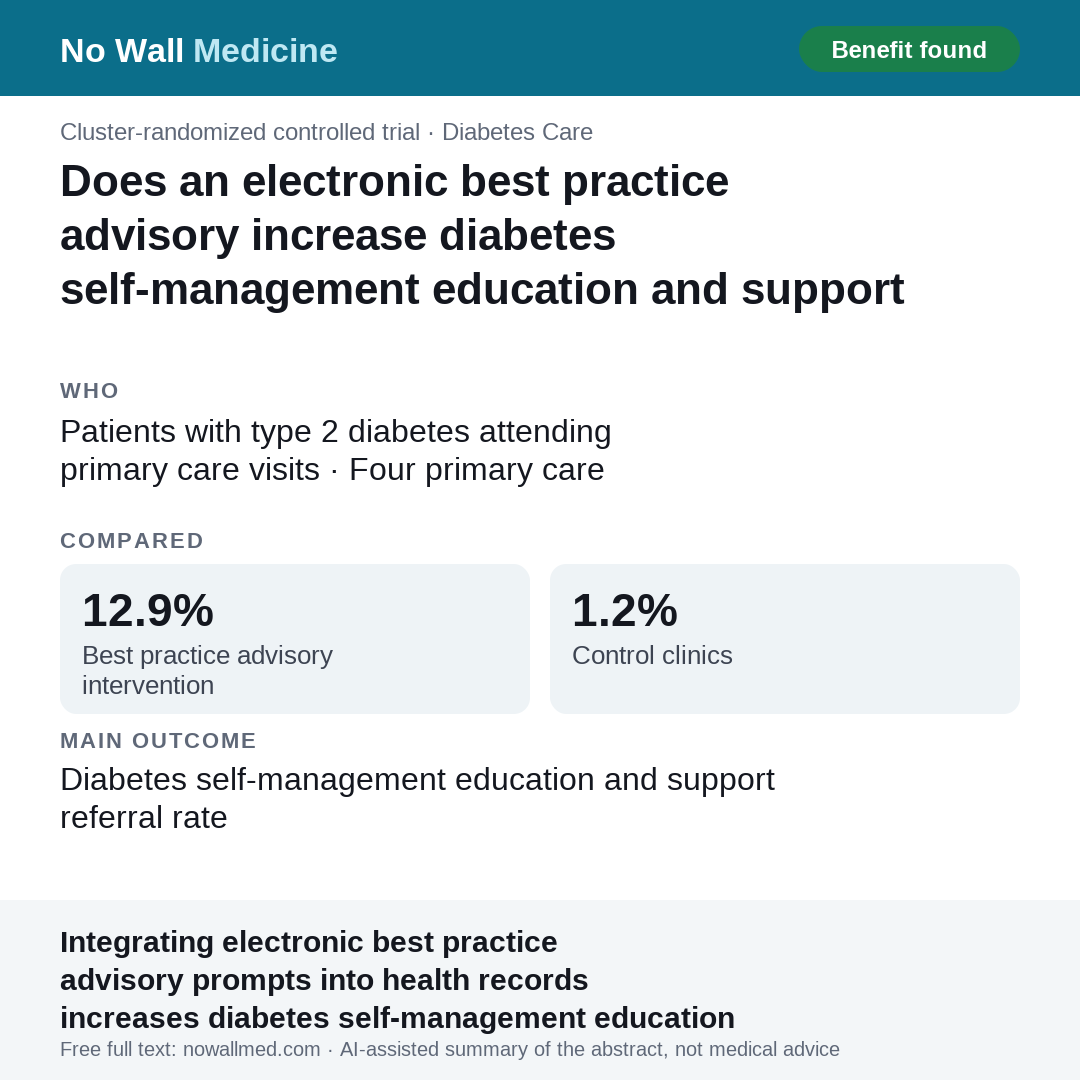
Does an electronic best practice advisory increase diabetes self-management education and support referrals?
Who
Patients with type 2 diabetes attending primary care visits · Four primary care practices in central North Carolina
Compared
12.9%Best practice advisory intervention
1.2%Control clinics
Main outcome
Diabetes self-management education and support referral rate
Bottom line: Integrating electronic best practice advisory prompts into health records increases diabetes self-management education and support referral rates.
Clinical question: Does an electronic best practice advisory increase diabetes self-management education and support referrals?
Why it matters: Engagement in diabetes self-management education and support is suboptimal among people with type 2 diabetes.
Key points
Researchers conducted a cluster-randomized controlled trial in six primary care practices in central North Carolina to test electronic health record alerts.
At 12 months, the intervention group achieved a 12.9% diabetes self-management education and support referral rate compared with 1.2% in control clinics.
The study added standing orders to the electronic alerts for nurses or medical assistants to help sustain referral gains.
Headline and key points written with AI from the paper’s abstract, with every number checked against it. Read the paper before relying on them.
Aged; Female; Humans; Male; Middle Aged; Diabetes Mellitus, Type 2; Electronic Health Records; North Carolina; Referral and Consultation; Self-Management