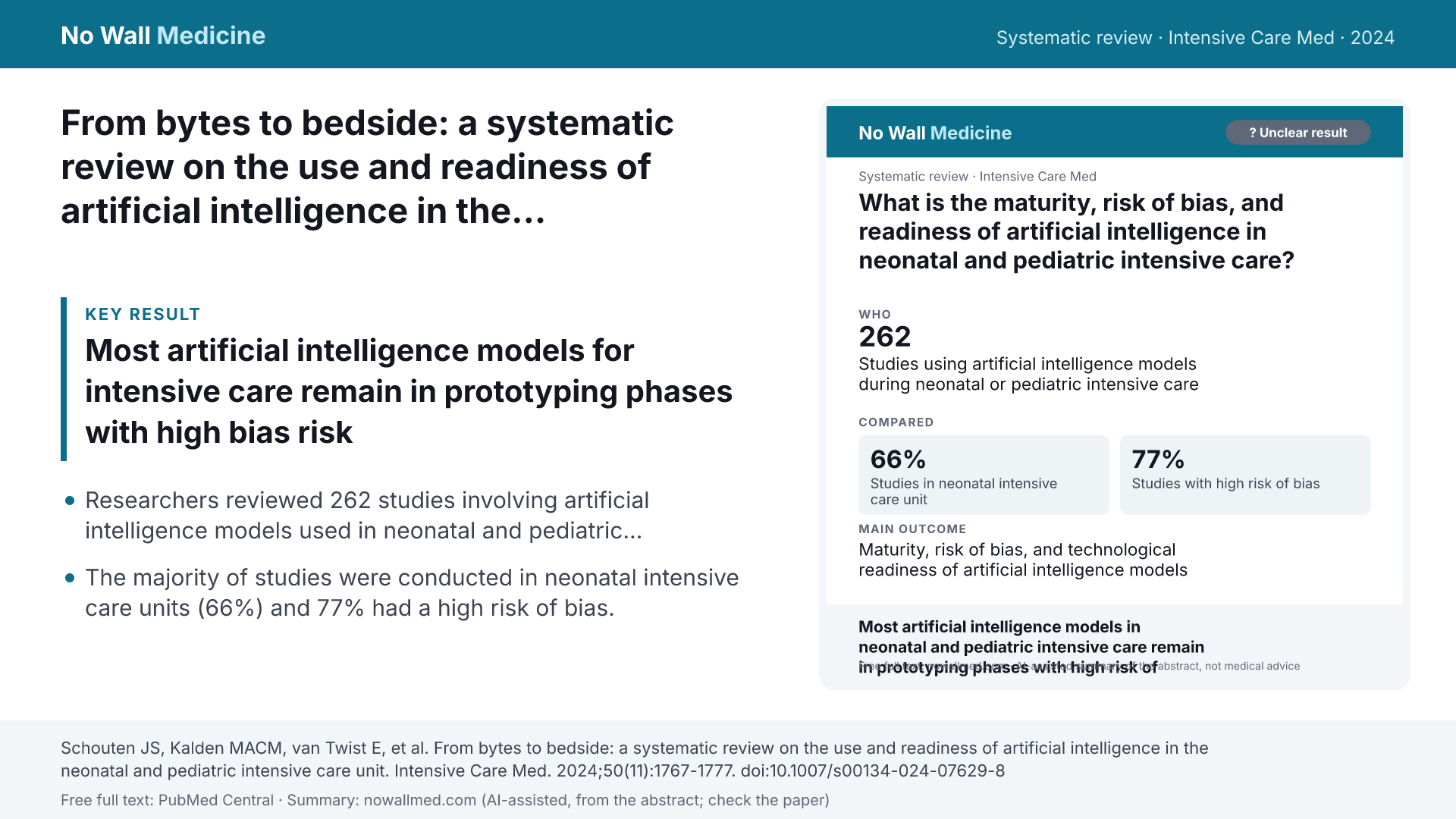
Most artificial intelligence models for intensive care remain in prototyping phases with high bias risk
From bytes to bedside: a systematic review on the use and readiness of artificial intelligence in the neonatal and pediatric intensive care unit
Systematic reviewUnclear result
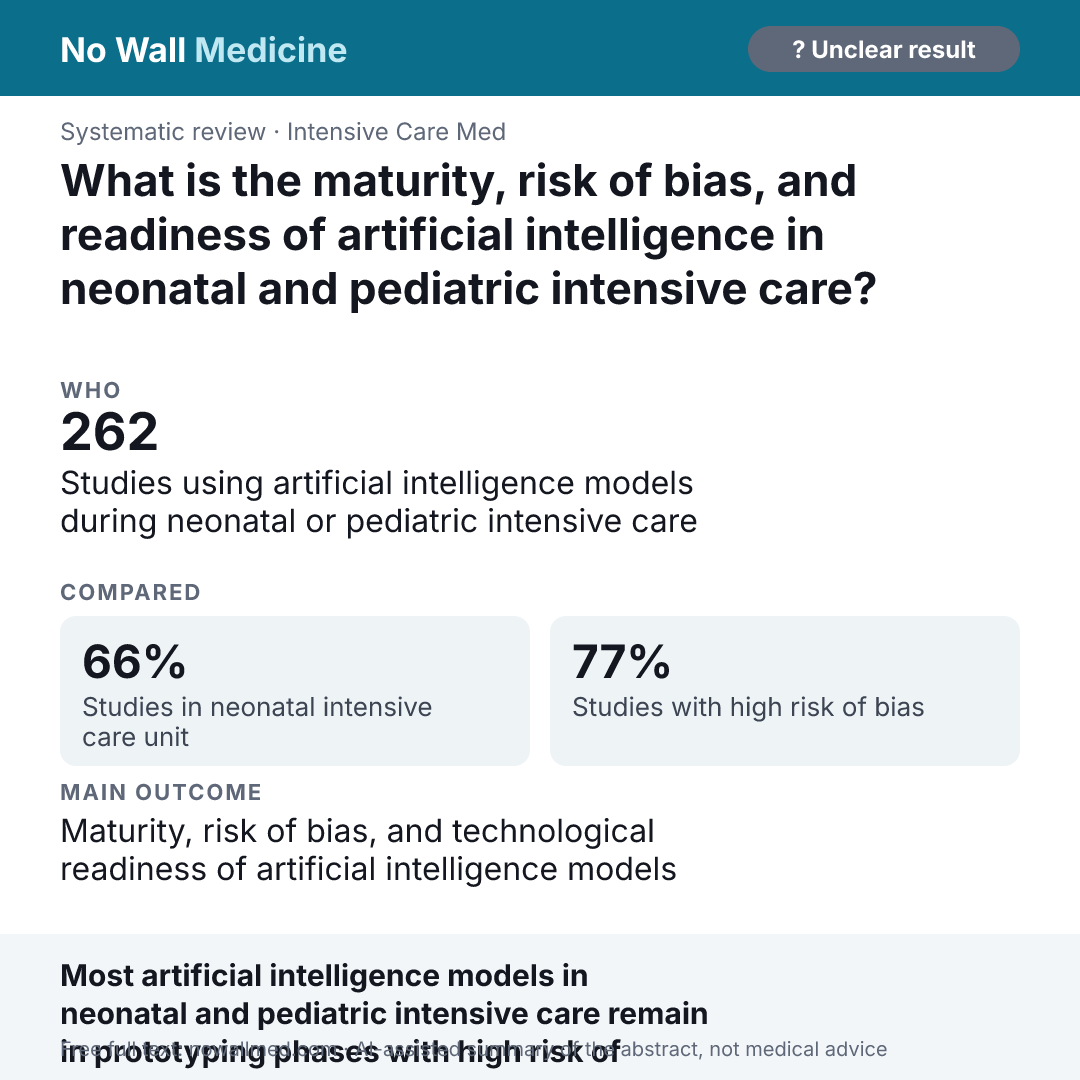
What is the maturity, risk of bias, and readiness of artificial intelligence in neonatal and pediatric intensive care?
Who
262
Studies using artificial intelligence models during neonatal or pediatric intensive care unit stays
Compared
66%Studies in neonatal intensive care unit
77%Studies with high risk of bias
Main outcome
Maturity, risk of bias, and technological readiness of artificial intelligence models
Bottom line: Most artificial intelligence models in neonatal and pediatric intensive care remain in prototyping phases with high risk of bias.
Limitation: Insufficient sample size was the main cause for high risk of bias.
Intensive Care Med · 2024-09-12 · Save PNG
Clinical question: What is the maturity, risk of bias, and readiness of artificial intelligence in neonatal and pediatric intensive care?
Why it matters: The translation of artificial intelligence research into tangible clinical benefits for critically ill neonatal and pediatric patients remains limited.
Key points
- Researchers reviewed 262 studies involving artificial intelligence models used in neonatal and pediatric intensive care units.
- The majority of studies were conducted in neonatal intensive care units (66%) and 77% had a high risk of bias.
- No studies were found that integrated an artificial intelligence model into routine clinical practice.
Limitation the authors note: The high risk of bias in most studies was primarily caused by insufficient sample sizes.
Headline and key points written with AI from the paper’s abstract, with every number checked against it. Read the paper before relying on them.
Was this summary helpful?
Subject terms
Headline, design, result, key points, caveat and citation as plain text.
Cite this article
Schouten JS, Kalden MACM, van Twist E, et al. From bytes to bedside: a systematic review on the use and readiness of artificial intelligence in the neonatal and pediatric intensive care unit. Intensive Care Med. 2024;50(11):1767-1777. doi:10.1007/s00134-024-07629-8
Spotted a mistake? Suggest a correction