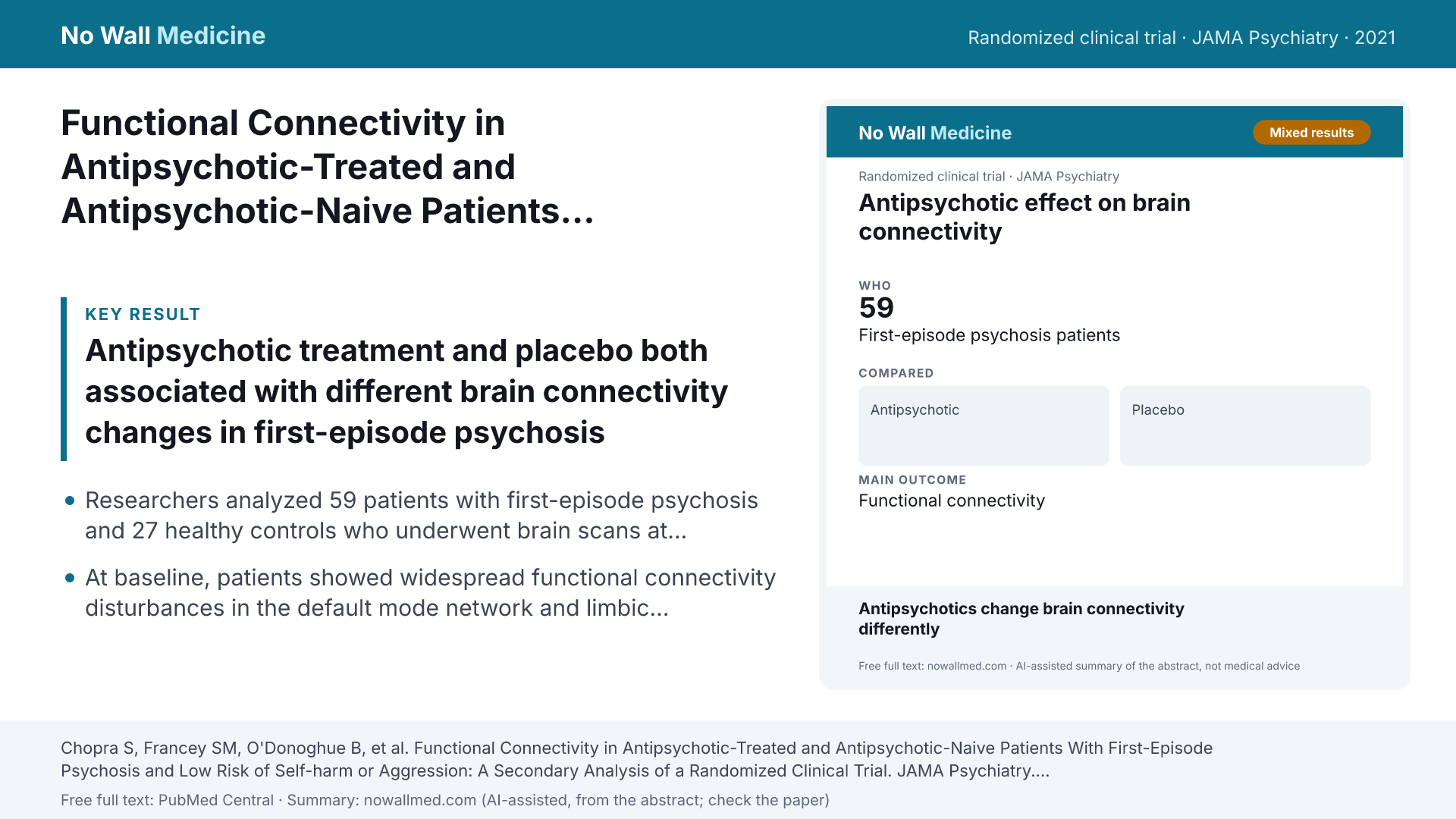
Functional Connectivity in Antipsychotic-Treated and Antipsychotic-Naive Patients With First-Episode Psychosis and Low Risk of Self-harm or Aggression: A Secondary Analysis of a Randomized Clinical Trial
Key result: Antipsychotic treatment and placebo both associated with different brain connectivity changes in first-episode psychosis
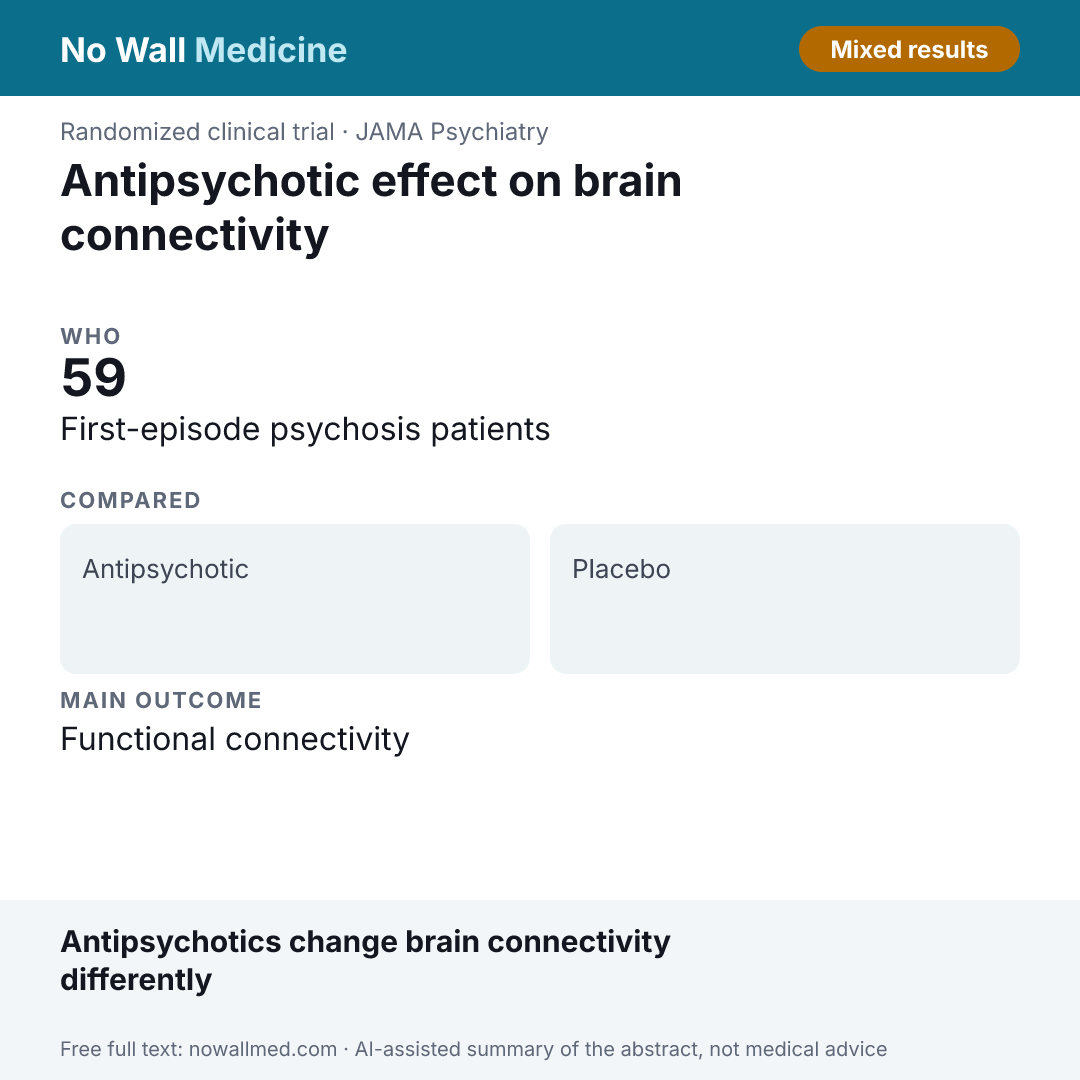
Secondary analysis of a trialMixed results
Antipsychotic effect on brain connectivity
Who
59
First-episode psychosis patients
Compared
Antipsychotic
Placebo
Main outcome
Functional connectivity
Bottom line: Antipsychotics change brain connectivity differently
JAMA Psychiatry · 2021-06-24 · Save PNG
Key points
- Researchers analyzed 59 patients with first-episode psychosis and 27 healthy controls who underwent brain scans at baseline, 3 months, and 12 months.
- At baseline, patients showed widespread functional connectivity disturbances in the default mode network and limbic systems compared to controls.
- From baseline to 3 months, placebo use was associated with increased connectivity in certain systems, while antipsychotic exposure was associated with increased connectivity between the thalamus and the rest of the brain.
Discussion prompts
- Would these patients look like yours? Who was left out?
- Is the main outcome one that matters to patients?
- Is the difference large enough to change what you do?
Cite: Chopra S, Francey SM, O'Donoghue B, et al. Functional Connectivity in Antipsychotic-Treated and Antipsychotic-Naive Patients With First-Episode Psychosis and Low Risk of Self-harm or Aggression: A Secondary Analysis of a Randomized Clinical Trial. JAMA Psychiatry. 2021. doi:10.1001/jamapsychiatry.2021.1422
Free full text: PubMed Central · Summary and visual abstract: nowallmed.com/a/functional-connectivity-in-antipsychotic-treated-and-antipsychotic-k1vw24/ (AI-assisted from the abstract; check the paper before relying on it).