Brain connectivity patterns predicted treatment responses for depression and anxiety across different therapies
Functional Connectivity Predicting Transdiagnostic Treatment Outcomes in Internalizing Psychopathologies
Randomized trialBenefit found
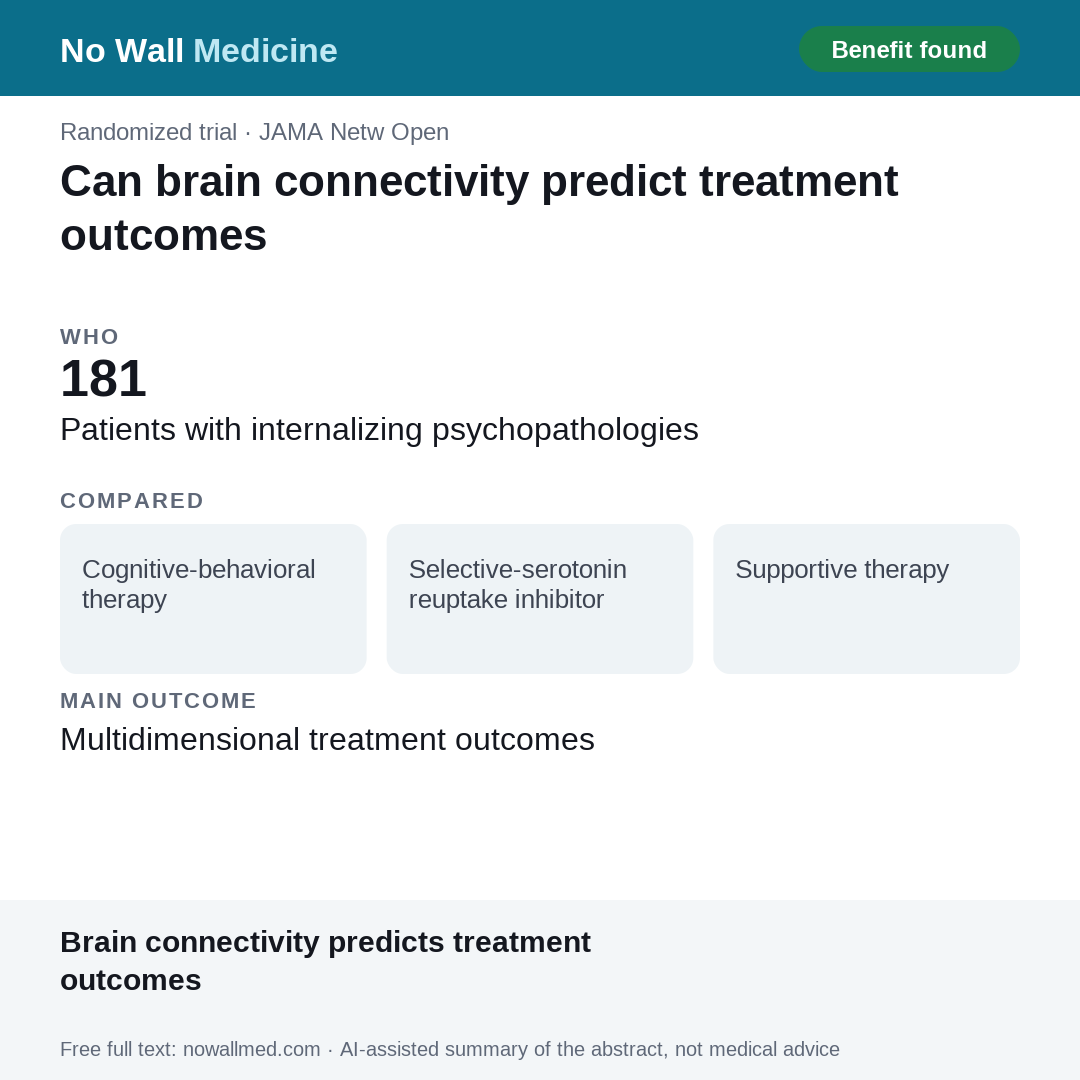
Can brain connectivity predict treatment outcomes
Who
181
Patients with internalizing psychopathologies
Compared
Cognitive-behavioral therapy
Selective-serotonin reuptake inhibitor
Supportive therapy
Main outcome
Multidimensional treatment outcomes
Bottom line: Brain connectivity predicts treatment outcomes
JAMA Netw Open · 2025-09-02Download image
Why it matters: It is unclear if whole-brain functional connectivity can predict how patients with depression and anxiety respond to different types of therapeutic treatments.
Key points
- The study analyzed 181 patients with internalizing psychopathologies, such as depression and anxiety, who were randomized to receive cognitive-behavioral therapy, antidepressant medication, or supportive therapy.
- Baseline whole-brain functional connectivity, which measures how different brain regions communicate, predicted multidimensional symptom changes with an individual-level correlation of r = 0.37.
- Predictions were significant across different diagnoses and treatment modalities, including supportive therapy (r = 0.28), antidepressant medication (r = 0.39), and cognitive-behavioral therapy (r = 0.32).
Headline and key points written with AI from the paper’s abstract, with every number checked against it. Read the paper before relying on them.
Topics
Cite this article
Zhang K, Klumpp H, Jimmy J, Phan KL, Milad MR, Wen Z. Functional Connectivity Predicting Transdiagnostic Treatment Outcomes in Internalizing Psychopathologies. JAMA Netw Open. 2025. doi:10.1001/jamanetworkopen.2025.30008
Spotted a mistake? Suggest a correction
Top studies every Monday
The week’s key trials and guidelines in your specialties, by email. Free.
Get the weekly digest