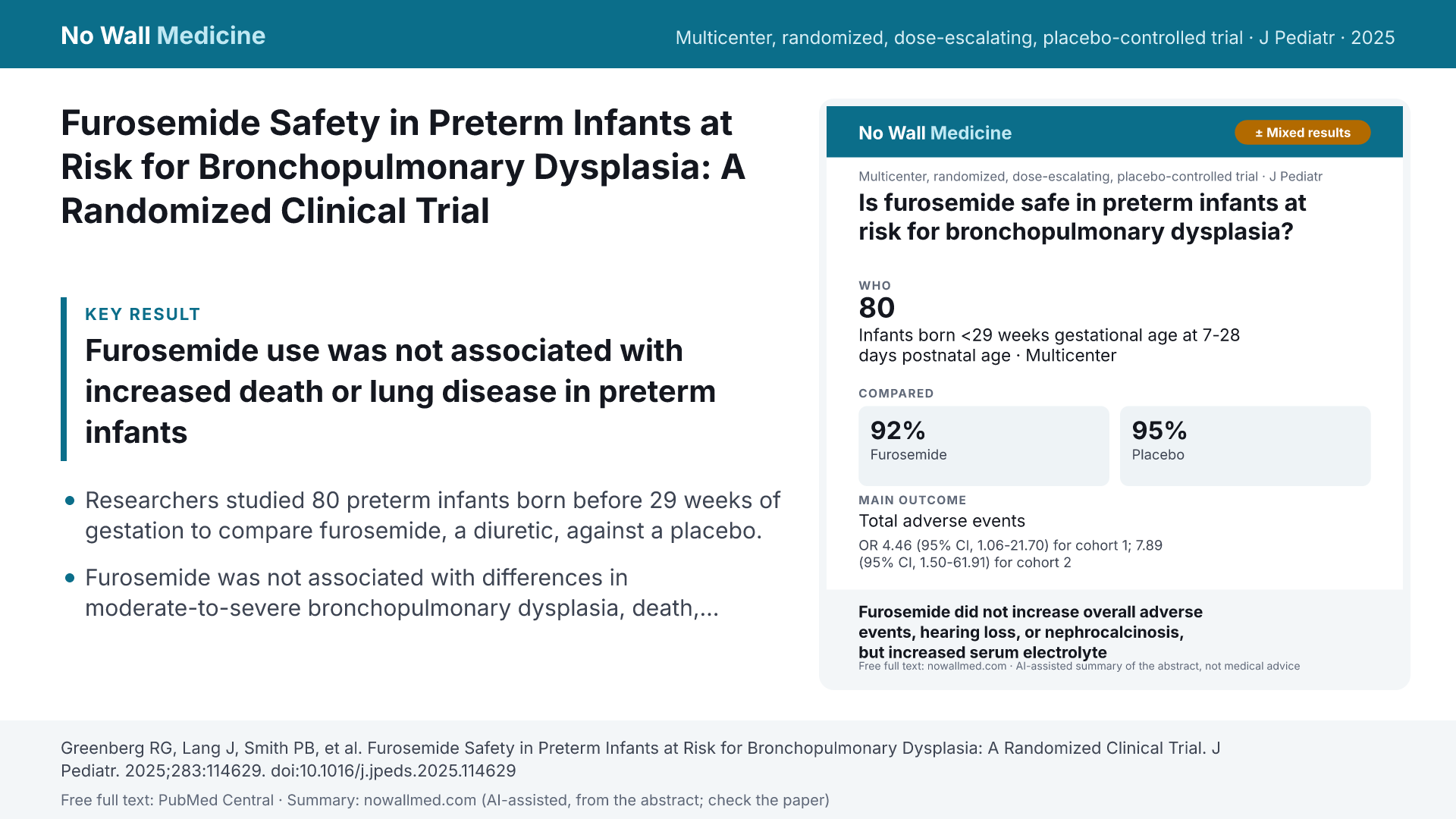
Furosemide Safety in Preterm Infants at Risk for Bronchopulmonary Dysplasia: A Randomized Clinical Trial
Key result: Furosemide use was not associated with increased death or lung disease in preterm infants
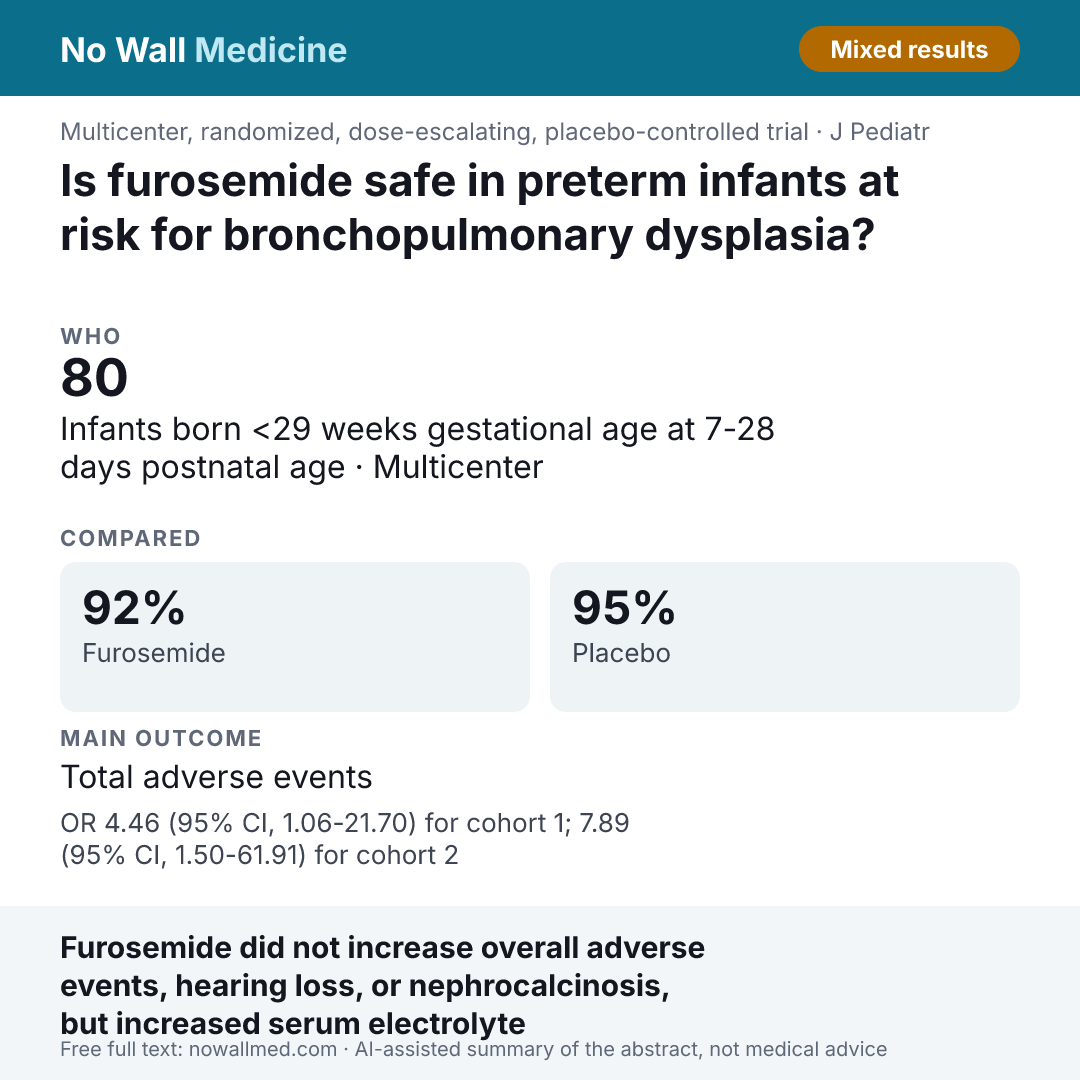
Multicenter, randomized, dose-escalating, placebo-controlled trialMixed results
Is furosemide safe in preterm infants at risk for bronchopulmonary dysplasia?
Who
80
Infants born <29 weeks gestational age at 7-28 days postnatal age · Multicenter
Compared
92%Furosemide (223 AEs among 56 of 61 infants)
95%Placebo (70 AEs among 18 of 19 infants)
Main outcome
Total adverse events
Result: OR 4.46 (95% CI, 1.06-21.70) for cohort 1; 7.89 (95% CI, 1.50-61.91) for cohort 2
Bottom line: Furosemide did not increase overall adverse events, hearing loss, or nephrocalcinosis, but increased serum electrolyte abnormalities.
J Pediatr · 2025-04-28 · Save PNG
Key points
- Researchers studied 80 preterm infants born before 29 weeks of gestation to compare furosemide, a diuretic, against a placebo.
- Furosemide was not associated with differences in moderate-to-severe bronchopulmonary dysplasia, death, hearing loss, or kidney calcium deposits.
- The use of furosemide was associated with an increased incidence of serum electrolyte adverse events, which are imbalances in blood minerals.
Discussion prompts
- Would these patients look like yours? Who was left out?
- Is the main outcome one that matters to patients?
- Is the difference large enough to change what you do?
Cite: Greenberg RG, Lang J, Smith PB, et al. Furosemide Safety in Preterm Infants at Risk for Bronchopulmonary Dysplasia: A Randomized Clinical Trial. J Pediatr. 2025;283:114629. doi:10.1016/j.jpeds.2025.114629
Free full text: PubMed Central · Summary and visual abstract: nowallmed.com/a/furosemide-safety-in-preterm-infants-at-risk-for-bronchopulmonary-olxvn/ (AI-assisted from the abstract; check the paper before relying on it).