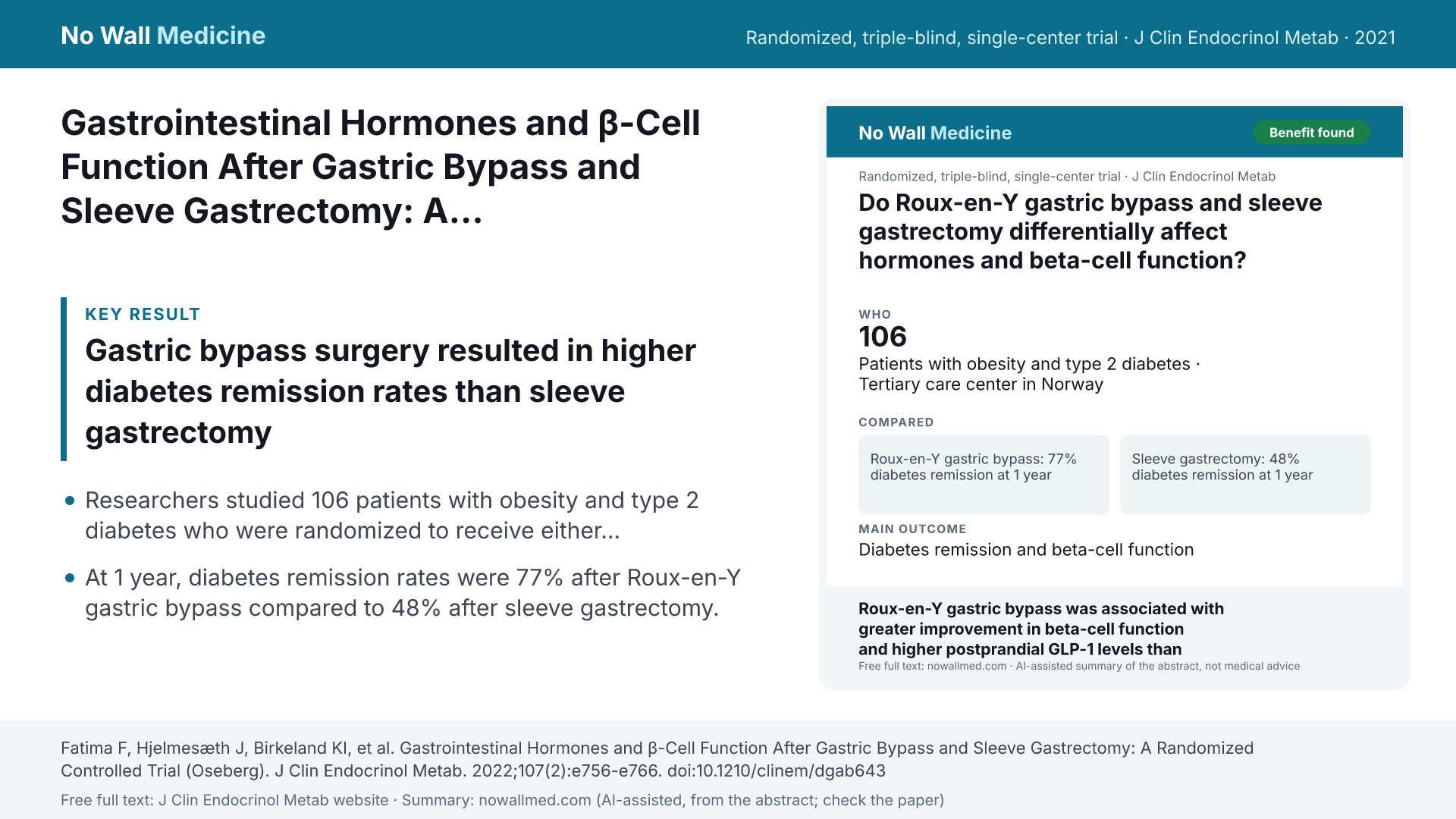
Gastrointestinal Hormones and β-Cell Function After Gastric Bypass and Sleeve Gastrectomy: A Randomized Controlled Trial (Oseberg)
Key result: Gastric bypass surgery resulted in higher diabetes remission rates than sleeve gastrectomy
Key points
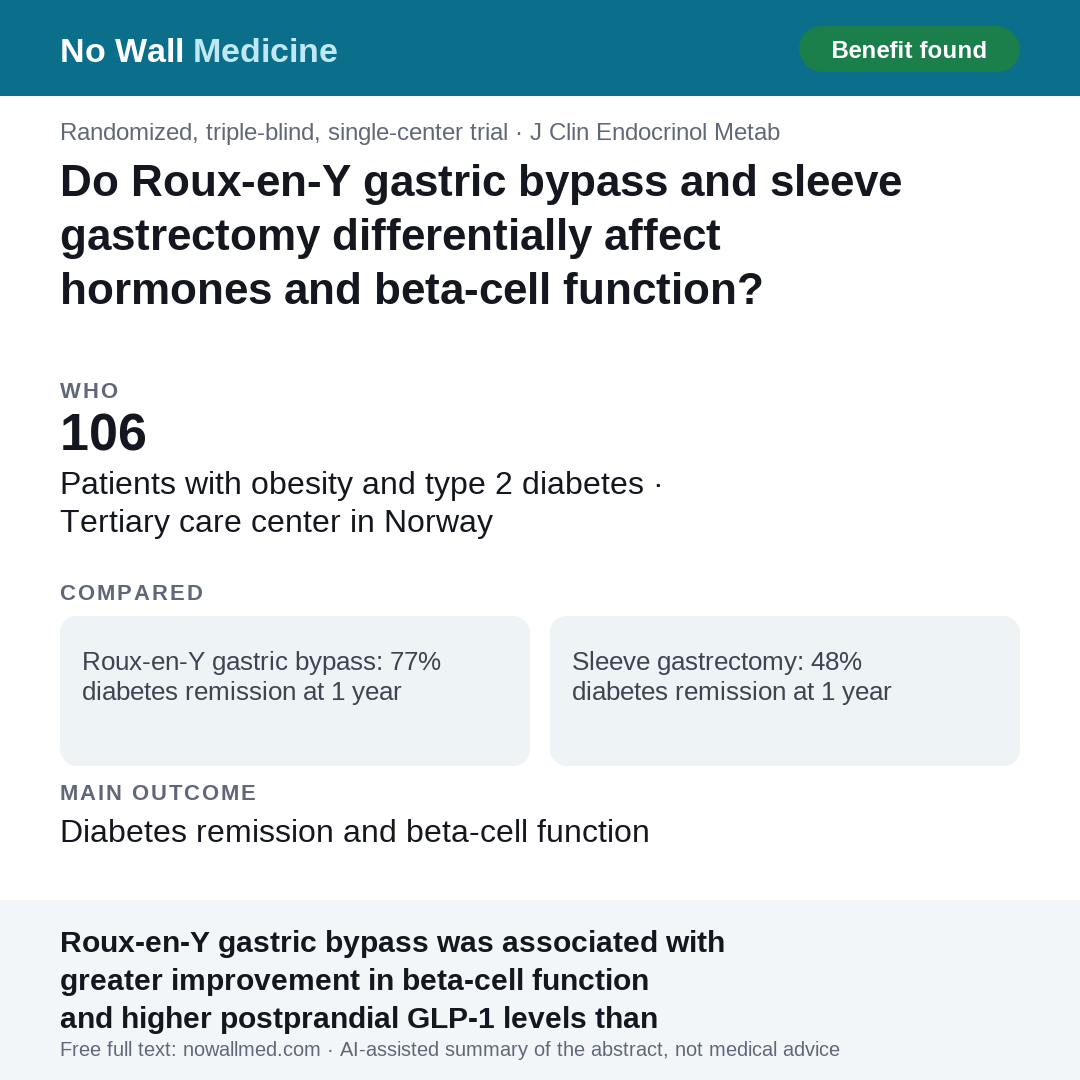
- Researchers studied 106 patients with obesity and type 2 diabetes who were randomized to receive either Roux-en-Y gastric bypass or sleeve gastrectomy.
- At 1 year, diabetes remission rates were 77% after Roux-en-Y gastric bypass compared to 48% after sleeve gastrectomy.
- Roux-en-Y gastric bypass was associated with greater increases in glucagon-like peptide-1 levels and beta-cell glucose sensitivity than sleeve gastrectomy.
Why it matters: It remains unclear if Roux-en-Y gastric bypass and sleeve gastrectomy differentially affect gastrointestinal hormones and beta-cell function in people with type 2 diabetes.
Discussion prompts
- Would these patients look like yours? Who was left out?
- Is the main outcome one that matters to patients?
- Is the difference large enough to change what you do?
Cite: Fatima F, Hjelmesæth J, Birkeland KI, et al. Gastrointestinal Hormones and β-Cell Function After Gastric Bypass and Sleeve Gastrectomy: A Randomized Controlled Trial (Oseberg). J Clin Endocrinol Metab. 2021. doi:10.1210/clinem/dgab643
Free full text: J Clin Endocrinol Metab website · Summary and visual abstract: nowallmed.com/a/gastrointestinal-hormones-and-cell-function-after-gastric-bypass-and-1plby0h/ (AI-assisted from the abstract; check the paper before relying on it).