Generative artificial intelligence virtual patients improved clinical skills and decision-making in healthcare education studies
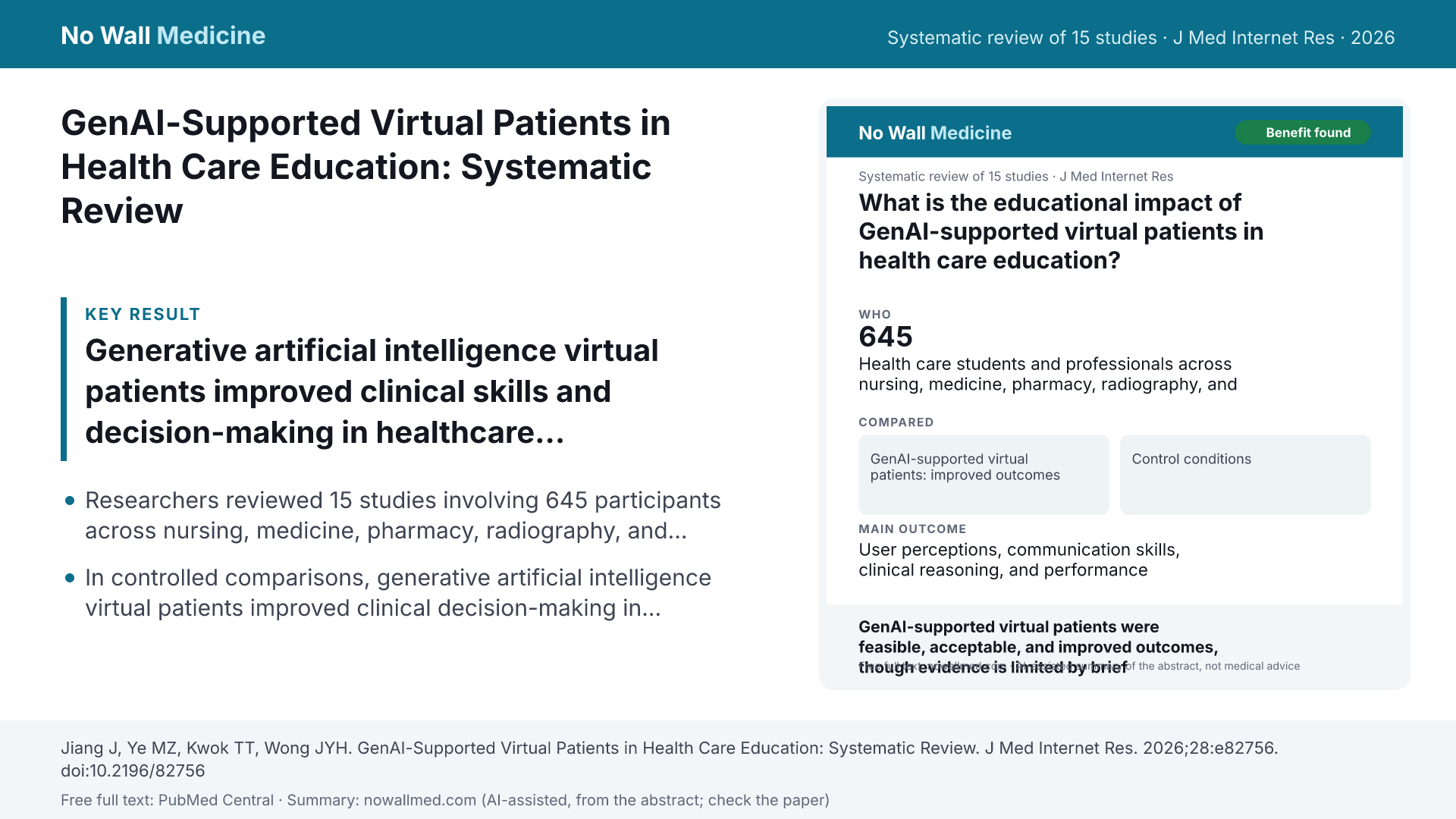
GenAI-Supported Virtual Patients in Health Care Education: Systematic Review
Systematic review of 15 studiesBenefit found
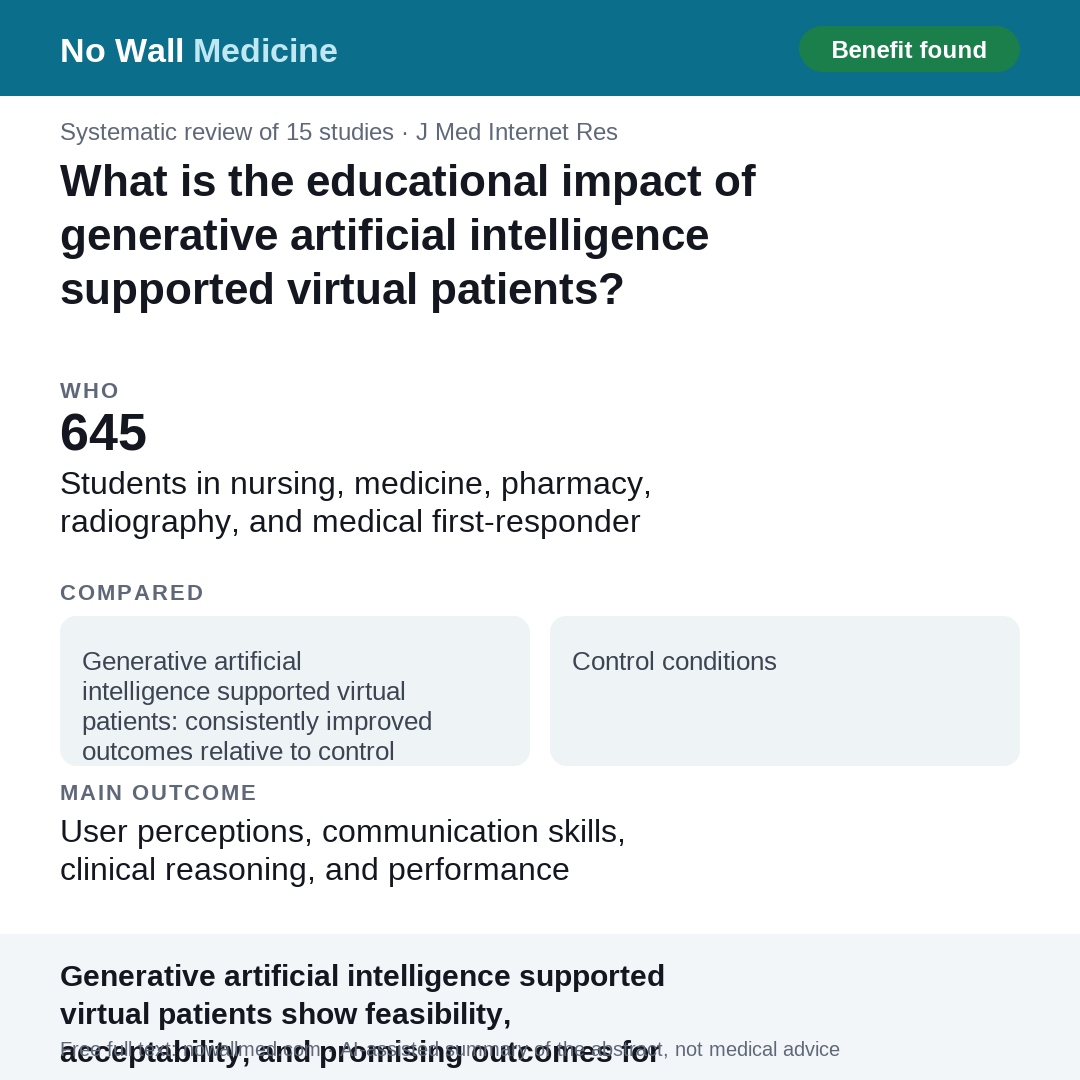
What is the educational impact of GenAI-supported virtual patients in health care education?
Who
645
Health care students and professionals across nursing, medicine, pharmacy, radiography, and first-responder training
Compared
GenAI-supported virtual patients: improved outcomes
Control conditions
Main outcome
User perceptions, communication skills, clinical reasoning, and performance
Bottom line: GenAI-supported virtual patients were feasible, acceptable, and improved outcomes, though evidence is limited by brief durations and design heterogeneity.
Limitation: Brief intervention durations, single-session interactions, lack of educational theory, and significant heterogeneity preventing meta-analysis
J Med Internet Res · 2026-05-07Download image
Clinical question: What is the educational impact of GenAI-supported virtual patients in health care education?
Why it matters: A synthesis of evidence was needed to guide the implementation of generative artificial intelligence in virtual patient simulations for healthcare education.
Key points
- Researchers reviewed 15 studies involving 645 participants across nursing, medicine, pharmacy, radiography, and medical first-responder training.
- In controlled comparisons, generative artificial intelligence virtual patients improved clinical decision-making in 21 participants and history-taking skills in 26 and 20 participants.
- The studies showed positive learner perceptions and promising outcomes for developing skills through these digital simulations.
Limitation the authors note: The evidence base is characterized by brief intervention durations, a reliance on single-session interactions, and a lack of underpinning educational theory.
Headline and key points written with AI from the paper’s abstract, with every number checked against it. Read the paper before relying on them.
Was this summary helpful?
Subject terms
Headline, design, result, key points, caveat and citation as plain text.
Cite this article
Jiang J, Ye MZ, Kwok TT, Wong JYH. GenAI-Supported Virtual Patients in Health Care Education: Systematic Review. J Med Internet Res. 2026;28:e82756. doi:10.2196/82756
Spotted a mistake? Suggest a correction