Genetic abnormalities in catatonia: a systematic review
Systematic reviewMixed results
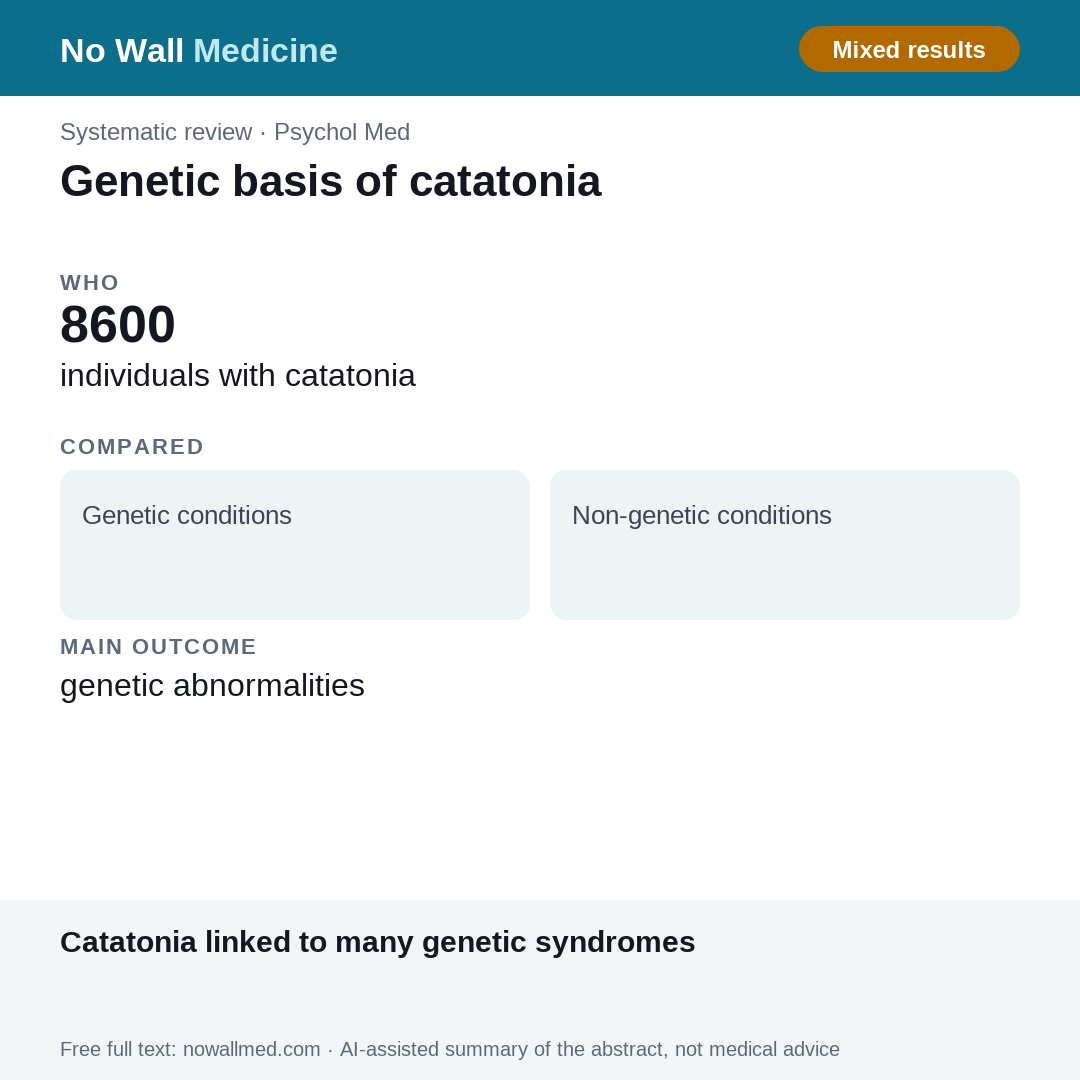
Genetic basis of catatonia
Who
8600
individuals with catatonia
Compared
Genetic conditions
Non-genetic conditions
Main outcome
genetic abnormalities
Bottom line: Catatonia linked to many genetic syndromes
Psychol Med · 2025-06-13Download image
Abstract
Background
Catatonia has many potential underlying causes, but in some patients, no clear etiology is identified, sparking growing interest in its genetic basis. We aimed to provide the first comprehensive synthesis of genetic abnormalities in catatonia. Methods
In this systematic review (PROSPERO CRD42023455118) we searched MEDLINE All, Embase Classic + Embase, PsycINFO, and AMED up to August 15, 2023, for studies on genetic testing and catatonia phenotyping in all age groups. Catatonia was diagnosed using specified diagnostic criteria or description of clinical features. Risk of bias was assessed using the Joanna Briggs Institute quality assessment tools. Results were summarized with a narrative synthesis. Results
We included 99 studies involving 8600 individuals. Sex was reported for 6080 individuals, of whom 3208 (52.8%) were male. Mean age at onset of catatonia was 28.8 years (SD 16.3). The median duration of the index catatonic episode was 180 days (IQR 38 to 668). Stupor and mutism were the most frequently reported symptoms. Forty-seven genetic conditions were reported in catatonia, including Phelan-McDermid syndrome (n = 80), 22q11.2 deletion syndrome (n = 23), and Down's syndrome (n = 19). Study quality was good in 29 studies, moderate in 53, and poor in 17. The major focus of association studies has centered on periodic catatonia; despite identifying candidate genes at both 22q13 and 15q15, none have been replicated. Conclusions
Catatonia can manifest in a wide range of genetic syndromes, suggesting a shared vulnerability across diverse genetic and developmental disorders. We did not identify a unique phenomenology or treatment response profile in genetic associations of catatonia.
Topics
Cite this article
Conti I, Ramachandran K, Badenoch JB, Fanshawe JB, Rengasamy E, Cross B. Genetic abnormalities in catatonia: a systematic review. Psychol Med. 2025. doi:10.1017/S0033291725100536
Spotted a mistake? Suggest a correction
Top studies every Monday
The week’s key trials and guidelines in your specialties, by email. Free.
Get the weekly digest