Genetic variants and polygenic risk scores are associated with pulmonary embolism in patients with deep vein thrombosis
Genetic associations with pulmonary embolism among those with a deep vein thrombosis: the International Network Against Venous Thrombosis Consortium
Case-only meta-analysis of genome-wide association studiesBenefit found
What are the causal genetic factors altering pulmonary embolism risk among those with deep vein thrombosis?
Who
126316
Individuals diagnosed with venous thromboembolism · 29 studies
Compared
54389Pulmonary embolism
71927Isolated deep vein thrombosis
Main outcome
Risk of pulmonary embolism compared with isolated deep vein thrombosis
Result: odds ratio 1.05 (95% CI 1.003-1.094) per 1 standard deviation polygenic risk score increase
Bottom line: Genetic factors regulate pulmonary embolism risk in deep vein thrombosis, though the overall effect appears modest.
J Thromb Haemost · 2026-07-27Download image
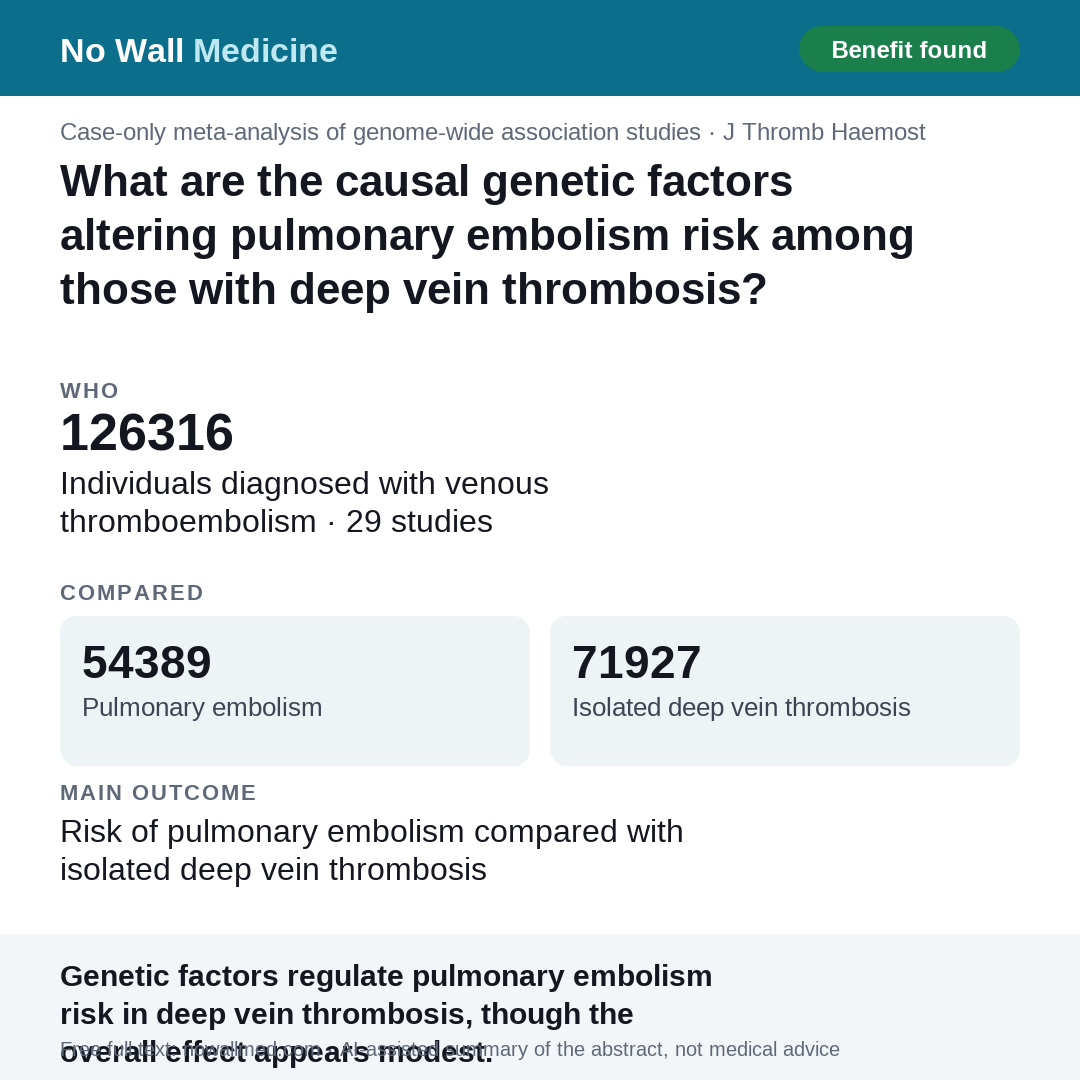
Clinical question: What are the causal genetic factors altering pulmonary embolism risk among those with deep vein thrombosis?
Why it matters: Researchers aimed to identify causal genetic factors that alter the risk of pulmonary embolism among those with a presumed deep vein thrombosis.
Key points
- Researchers analyzed 126,316 individuals with venous thromboembolism, comparing 54,389 people with pulmonary embolism to 71,927 people with isolated deep vein thrombosis.
- Four genetic variants reached significance, including factor V Leiden with an odds ratio of 0.66, and a polygenic risk score where each 1 standard deviation increase was associated with an odds ratio of 1.05.
- Transcriptome-wide association study analyses identified genetic associations with FGG, SLC12A2-DT, and CDHR4 transcripts.
Headline and key points written with AI from the paper’s abstract, with every number checked against it. Read the paper before relying on them.
Topics
Cite this article
Lozano-Esparza S, Shakt GE, Brody JA, Martinez-Perez A, Conomos MP, Germain M. Genetic associations with pulmonary embolism among those with a deep vein thrombosis: the International Network Against Venous Thrombosis Consortium. J Thromb Haemost. 2026. doi:10.1016/j.jtha.2026.06.046
Spotted a mistake? Suggest a correction