Genetic analysis identifies distinct patterns for different types of wheezing in preschool children
Genetic characterization of preschool wheeze phenotypes
Meta-analysis of genome-wide association studiesMixed results
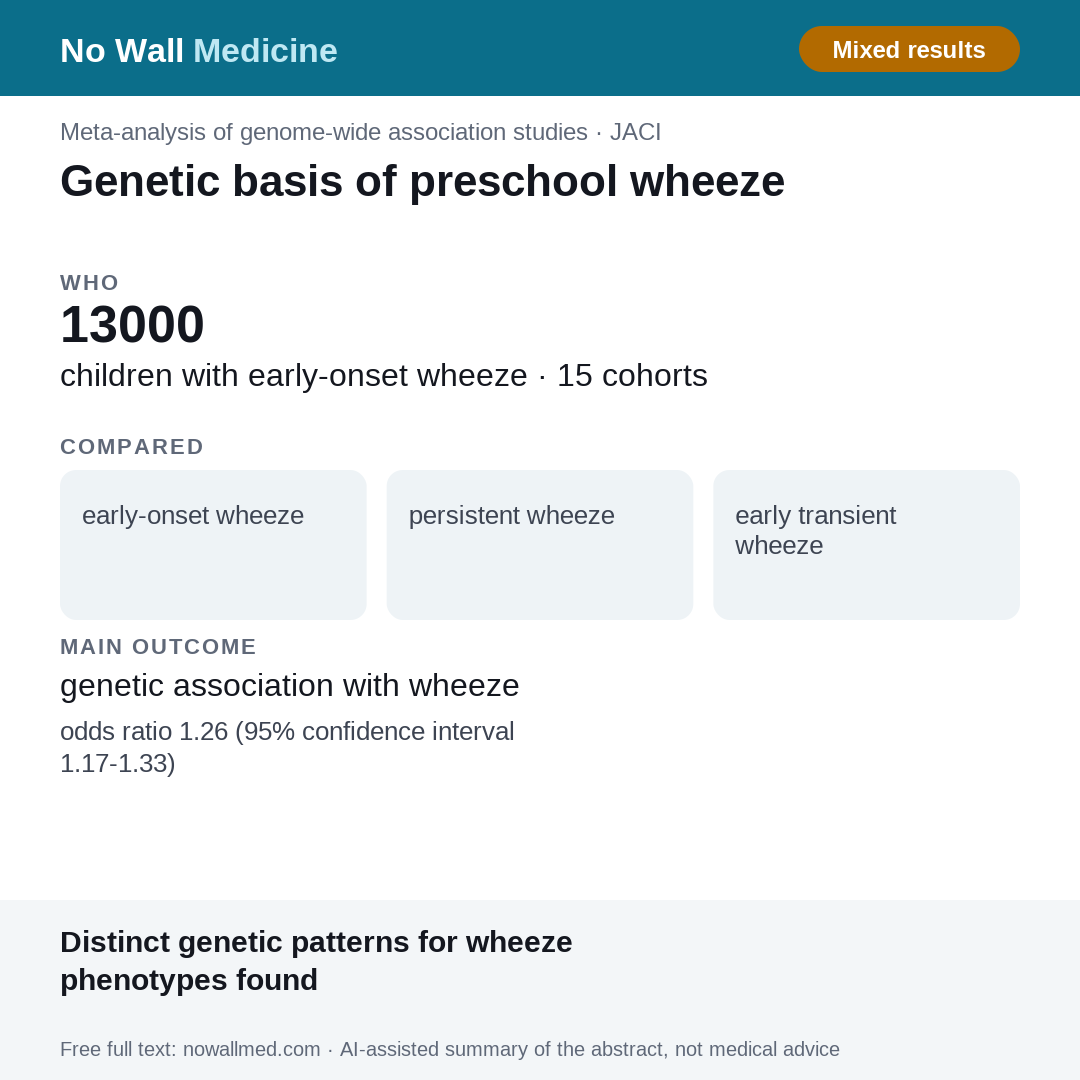
Genetic basis of preschool wheeze
Who
13000
children with early-onset wheeze · 15 cohorts
Compared
early-onset wheeze
persistent wheeze
early transient wheeze
Main outcome
genetic association with wheeze
Result: odds ratio 1.26 (95% confidence interval 1.17-1.33)
Bottom line: Distinct genetic patterns for wheeze phenotypes found
JACI · 2025-08-05Download image
Why it matters: Preschool wheeze is a poorly understood clinical syndrome with different subtypes, making current treatments and prevention strategies insufficient.
Key points
- Researchers performed meta-analyses of genome-wide association studies involving more than 13,000 children from 15 cohorts and up to 5,000 children in 7 replication cohorts.
- Variants near the GSDMB gene were associated with early-onset wheeze (odds ratio 1.26) and persistent wheeze (odds ratio 1.43), but not with early transient wheeze.
- Increased genetic risk for early-onset wheeze was associated with genetic risk for adult asthma, atopy, eosinophil count, and lower adult lung function.
Headline and key points written with AI from the paper’s abstract, with every number checked against it. Read the paper before relying on them.
Was this summary helpful?
Subject terms
Cite this article
Fischer-Rasmussen K, Granell R, Eliasen AU, Kreiner E, Pedersen CT, Luo Y. Genetic characterization of preschool wheeze phenotypes. JACI. 2025. doi:10.1016/j.jaci.2025.07.015
Spotted a mistake? Suggest a correction
Top studies every Monday
The week’s key trials and guidelines in your specialties, plus any topics you follow. By email, free.
Get the weekly digest