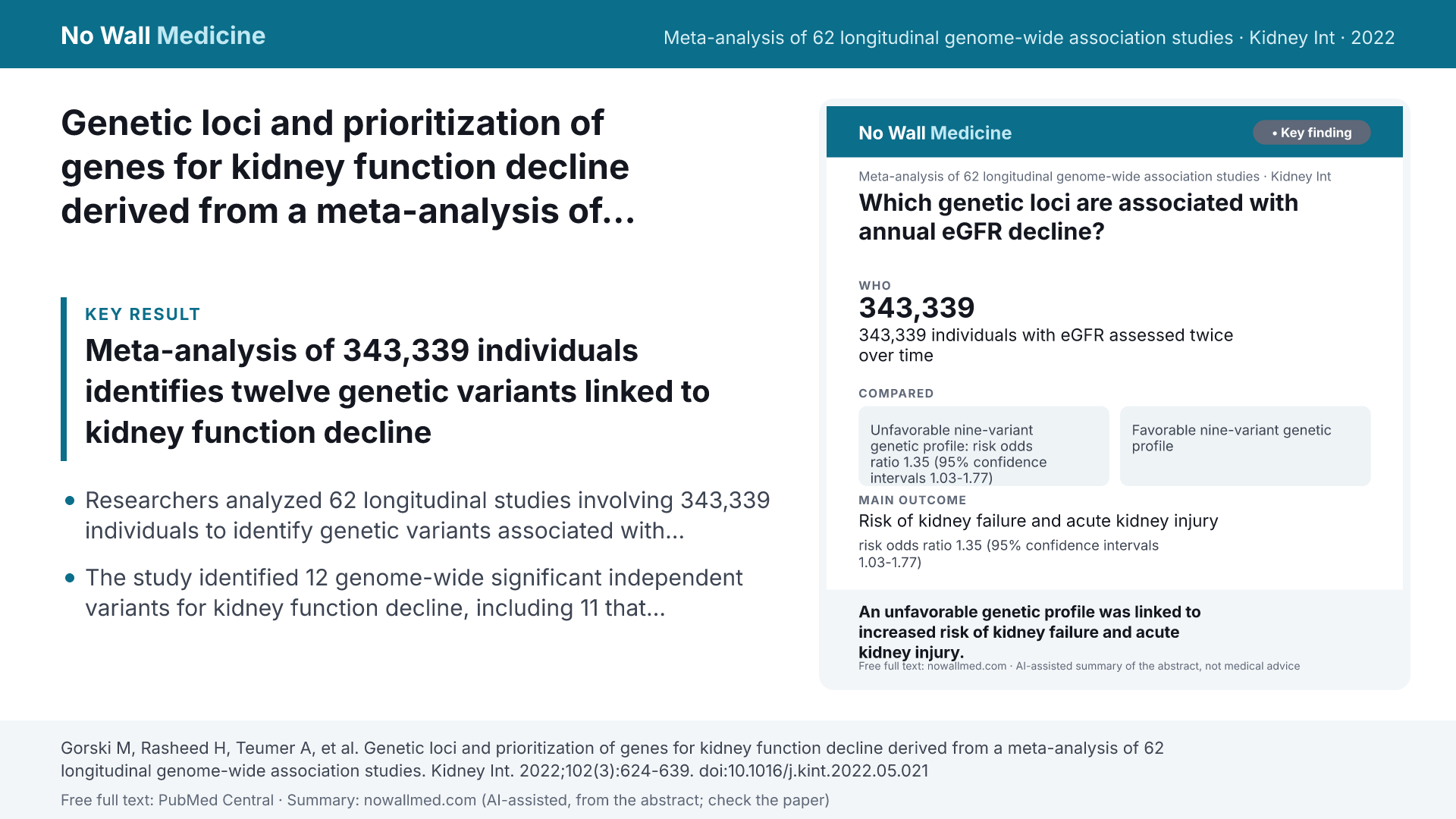
Genetic loci and prioritization of genes for kidney function decline derived from a meta-analysis of 62 longitudinal genome-wide association studies
Key result: Meta-analysis of 343,339 individuals identifies twelve genetic variants linked to kidney function decline
Key points
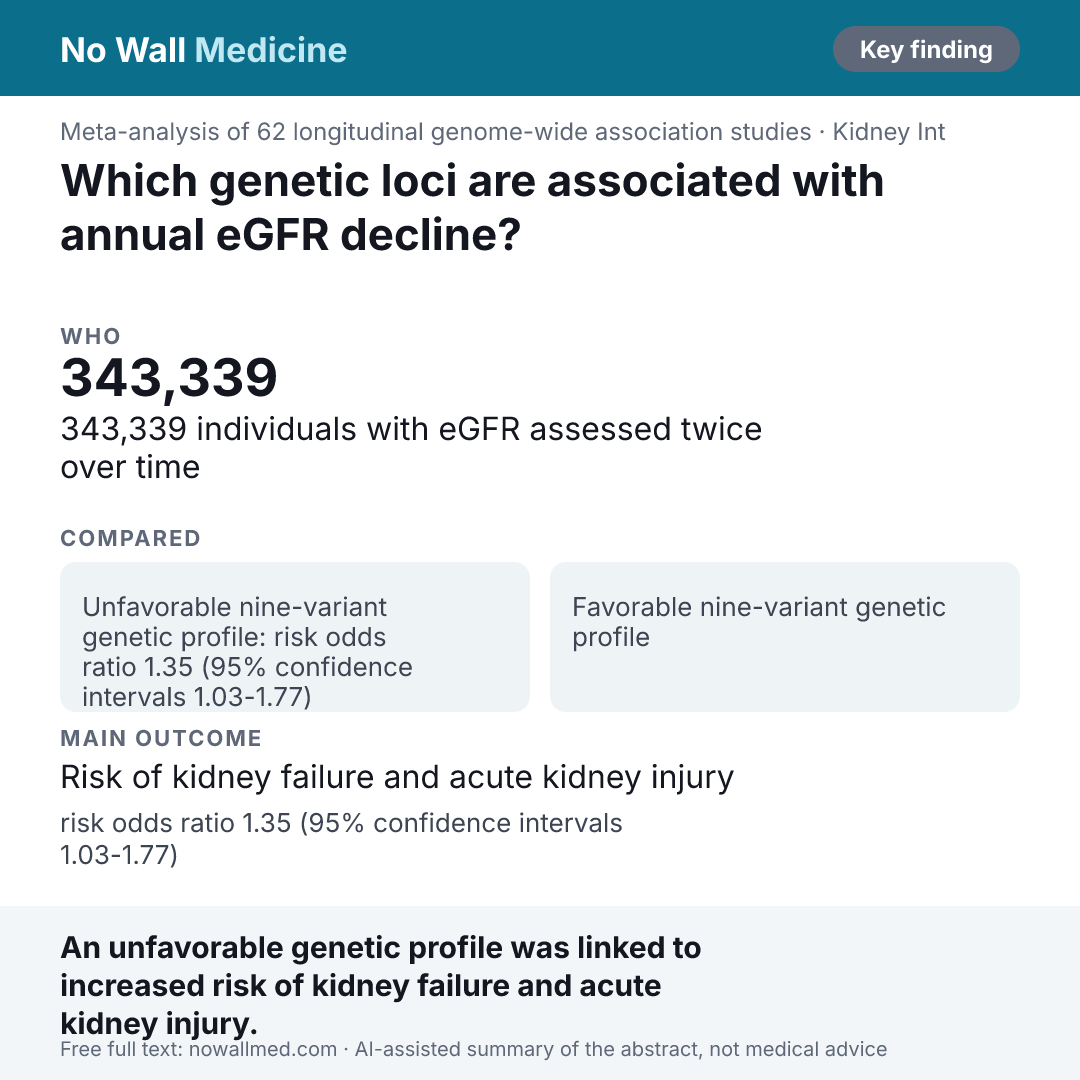
- Researchers analyzed 62 longitudinal studies involving 343,339 individuals to identify genetic variants associated with the annual decline of the estimated glomerular filtration rate, a measure of kidney function.
- The study identified 12 genome-wide significant independent variants for kidney function decline, including 11 that were previously unknown for this specific phenotype.
- An unfavorable nine-variant genetic profile was associated with increased risk odds ratios of 1.35 for kidney failure and 1.27 for acute kidney injury.
Why it matters: The contribution of specific genetic locations to the rate of kidney function decline remains largely unknown compared to their role in kidney function variability at a single point in time.
Discussion prompts
- Would these patients look like yours? Who was left out?
- Is the main outcome one that matters to patients?
- Is the difference large enough to change what you do?
Cite: Gorski M, Rasheed H, Teumer A, et al. Genetic loci and prioritization of genes for kidney function decline derived from a meta-analysis of 62 longitudinal genome-wide association studies. Kidney Int. 2022;102(3):624-639. doi:10.1016/j.kint.2022.05.021
Free full text: PubMed Central · Summary and visual abstract: nowallmed.com/a/genetic-loci-and-prioritization-of-genes-for-kidney-function-decline-1adhieh/ (AI-assisted from the abstract; check the paper before relying on it).