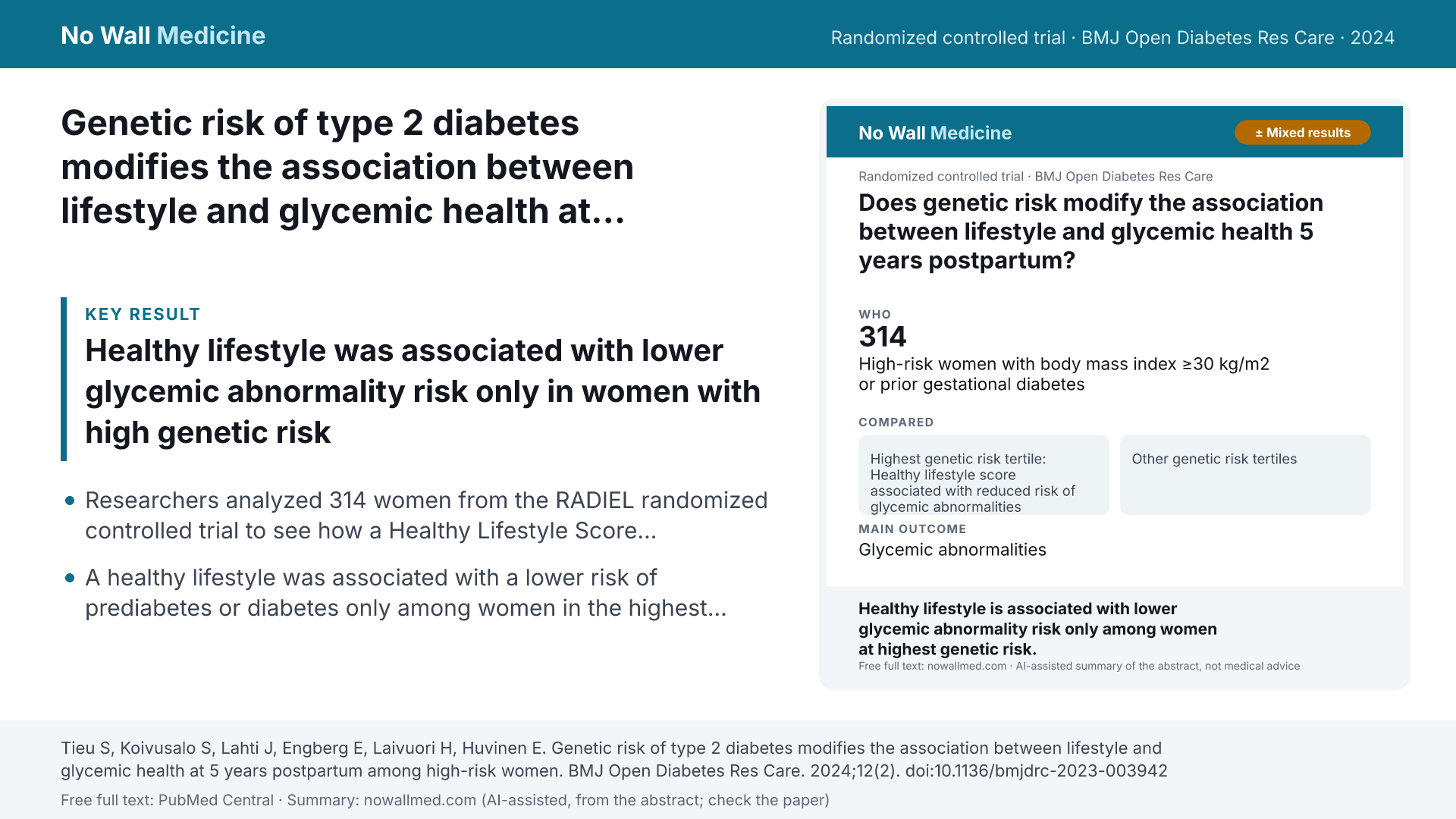
Healthy lifestyle was associated with lower glycemic abnormality risk only in women with high genetic risk
Genetic risk of type 2 diabetes modifies the association between lifestyle and glycemic health at 5 years postpartum among high-risk women
Randomized controlled trialMixed results
Does genetic risk modify the association between lifestyle and glycemic health 5 years postpartum?
Who
314
High-risk women with body mass index ≥30 kg/m2 or prior gestational diabetes
Compared
Highest genetic risk tertile: Healthy lifestyle score associated with reduced risk of glycemic abnormalities
Other genetic risk tertiles
Main outcome
Glycemic abnormalities
Bottom line: Healthy lifestyle is associated with lower glycemic abnormality risk only among women at highest genetic risk.
BMJ Open Diabetes Res Care · 2024-04-17Download image

Clinical question: Does genetic risk modify the association between lifestyle and glycemic health 5 years postpartum?
Why it matters: It was unknown if genetic risk continues to influence how lifestyle factors relate to blood sugar health five years after pregnancy.
Key points
- Researchers analyzed 314 women from the RADIEL randomized controlled trial to see how a Healthy Lifestyle Score and polygenic risk score related to blood sugar health 5 years after pregnancy.
- A healthy lifestyle was associated with a lower risk of prediabetes or diabetes only among women in the highest group of genetic risk (p=0.008).
- In the total study sample, neither the polygenic risk score nor the Healthy Lifestyle Score was associated with glycemic abnormalities.
Headline and key points written with AI from the paper’s abstract, with every number checked against it. Read the paper before relying on them.
Was this summary helpful?
Abstract
Introduction
Lifestyle interventions are effective in preventing type 2 diabetes, but genetic background may influence the individual response. In the Finnish gestational diabetes prevention study, RADIEL, lifestyle intervention during pregnancy and first postpartum year was effective in preventing gestational diabetes (GDM) and postpartum glycemic abnormalities only among women at highest genetic risk of type 2 diabetes. This study aimed to assess whether still 5 years postpartum the genetic risk modifies the association between lifestyle and glycemic health. Research design and methods
The RADIEL study (randomized controlled trial) aimed to prevent GDM with a lifestyle intervention among high-risk women (body mass index ≥30 kg/m2 and/or prior GDM). The follow-up study 5 years postpartum included anthropometric measurements, laboratory assessments, device-measured physical activity (PA), and questionnaires. A Healthy Lifestyle Score (HLS) indicated adherence to lifestyle goals (PA, diet, smoking) and a polygenic risk score (PRS) based on 50 type 2 diabetes risk alleles depicted the genetic risk. Results
Altogether 314 women provided genetic and glycemic data 5 years postpartum. The PRS for type 2 diabetes was not associated with glycemic abnormalities, nor was HLS in the total study sample. There was, however, an interaction between HLS and type 2 diabetes PRS on glycemic abnormalities (p=0.03). When assessing the association between HLS and glycemic abnormalities in PRS tertiles, HLS was associated with reduced risk of glycemic abnormalities only among women at the highest genetic risk (p=0.008). Conclusions
These results extend our previous findings from pregnancy and first postpartum year demonstrating that still at 5 years postpartum, healthy lifestyle is associated with a lower risk of prediabetes/diabetes only among women at the highest genetic risk of type 2 diabetes.
Abstract reproduced under the article’s CC BY NC licence.
Subject terms
Cite this article
Tieu S, Koivusalo S, Lahti J, Engberg E, Laivuori H, Huvinen E. Genetic risk of type 2 diabetes modifies the association between lifestyle and glycemic health at 5 years postpartum among high-risk women. BMJ Open Diabetes Res Care. 2024. doi:10.1136/bmjdrc-2023-003942
Spotted a mistake? Suggest a correction