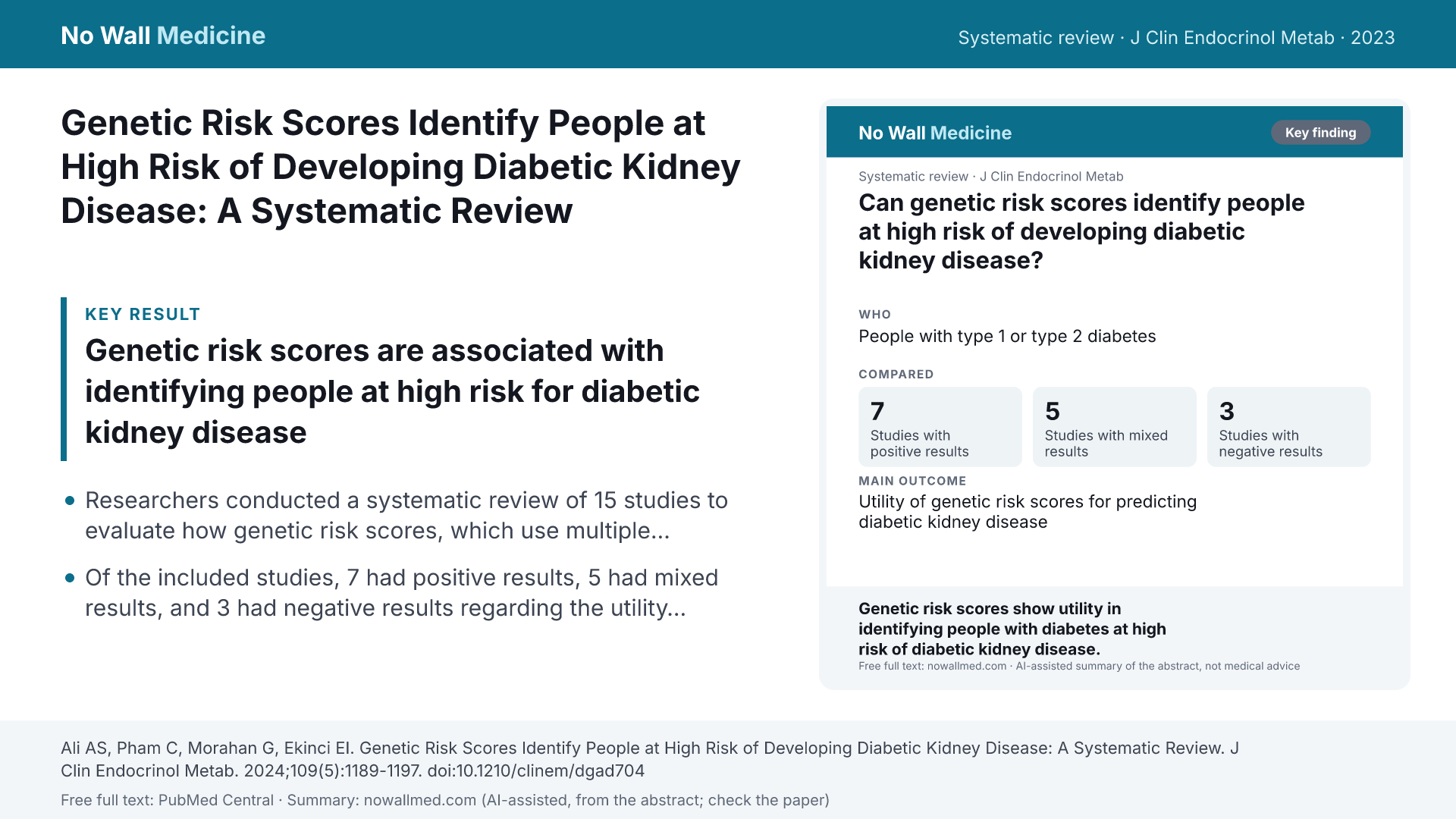
Genetic risk scores are associated with identifying people at high risk for diabetic kidney disease
Genetic Risk Scores Identify People at High Risk of Developing Diabetic Kidney Disease: A Systematic Review
Systematic reviewBenefit found
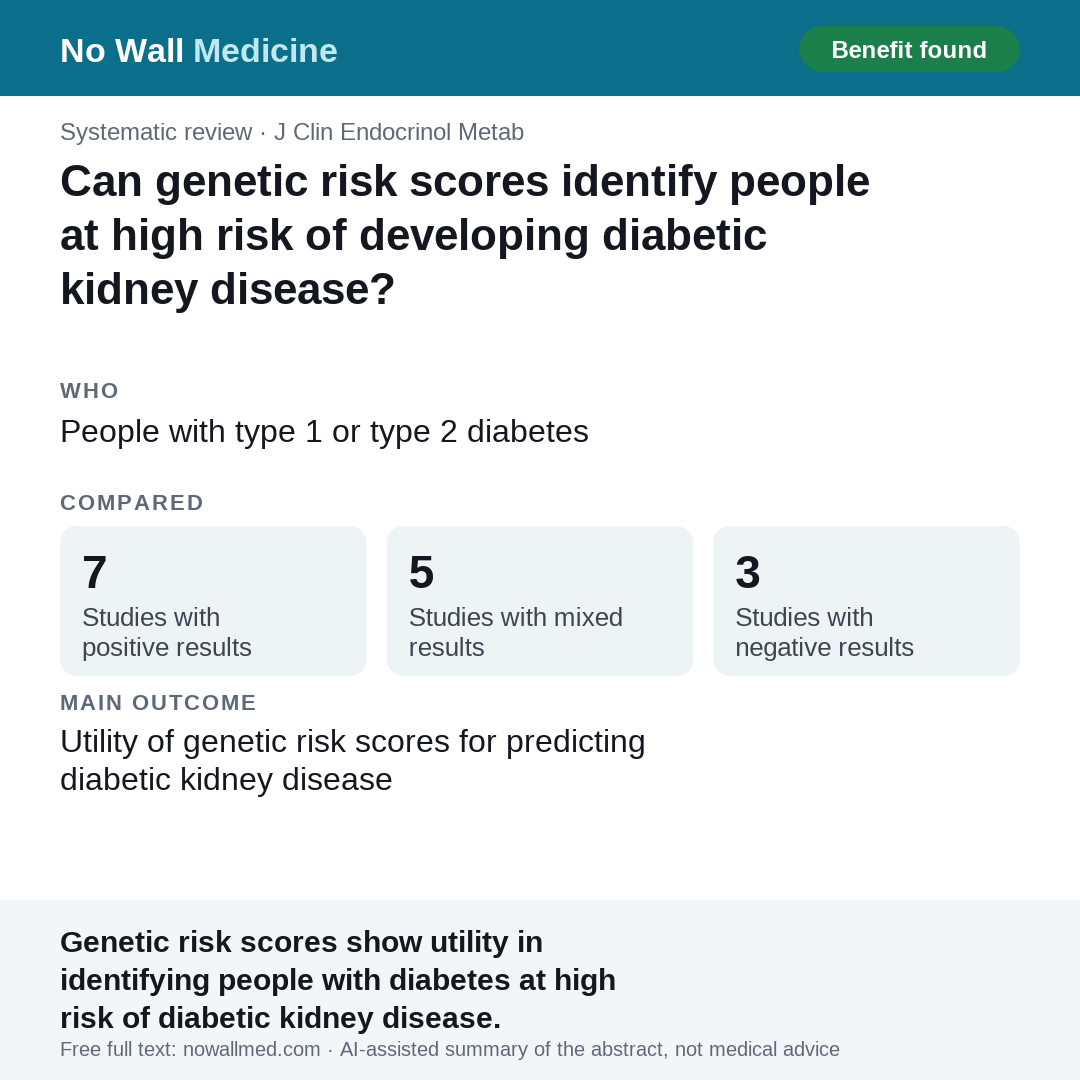
Can genetic risk scores identify people at high risk of developing diabetic kidney disease?
Who
People with type 1 or type 2 diabetes
Compared
7Studies with positive results
5Studies with mixed results
3Studies with negative results
Main outcome
Utility of genetic risk scores for predicting diabetic kidney disease
Bottom line: Genetic risk scores show utility in identifying people with diabetes at high risk of diabetic kidney disease.
J Clin Endocrinol Metab · 2023-12-01Download image
Clinical question: Can genetic risk scores identify people at high risk of developing diabetic kidney disease?
Why it matters: Better identification of patients most at risk is required to prevent and treat diabetic kidney disease, which is the leading cause of end-stage renal disease.
Key points
- Researchers conducted a systematic review of 15 studies to evaluate how genetic risk scores, which use multiple genetic variations to estimate disease risk, predict diabetic kidney disease.
- Of the included studies, 7 had positive results, 5 had mixed results, and 3 had negative results regarding the utility of these scores.
- Nine studies with the strongest methodological quality reported statistically significant associations between genetic risk scores and at least one measure of diabetic kidney disease.
Headline and key points written with AI from the paper’s abstract, with every number checked against it. Read the paper before relying on them.
Was this summary helpful?
Subject terms
Cite this article
Ali AS, Pham C, Morahan G, Ekinci EI. Genetic Risk Scores Identify People at High Risk of Developing Diabetic Kidney Disease: A Systematic Review. J Clin Endocrinol Metab. 2023. doi:10.1210/clinem/dgad704
Spotted a mistake? Suggest a correction