Genetic analysis and animal models suggest B cells provide protection against chronic post-surgical pain
Genome-wide association studies with experimental validation identify a protective role for B lymphocytes against chronic post-surgical pain
Meta-analysis of genome-wide association studiesBenefit found
What is the genetic contribution and role of B lymphocytes in chronic post-surgical pain?
Who
1350
1350 individuals across five surgery types
Compared
Rag1 null mutant mice: exacerbated and prolonged allodynia up to 42 days
Wild-type mice
Main outcome
SNP-based narrow-sense heritability and B cell protective role
Result: SNP-based narrow-sense heritability for chronic post-surgical pain at ∼39%
Bottom line: B lymphocytes play a key protective role against the development of chronic post-surgical pain.
Br J Anaesth · 2024-06-10Download image
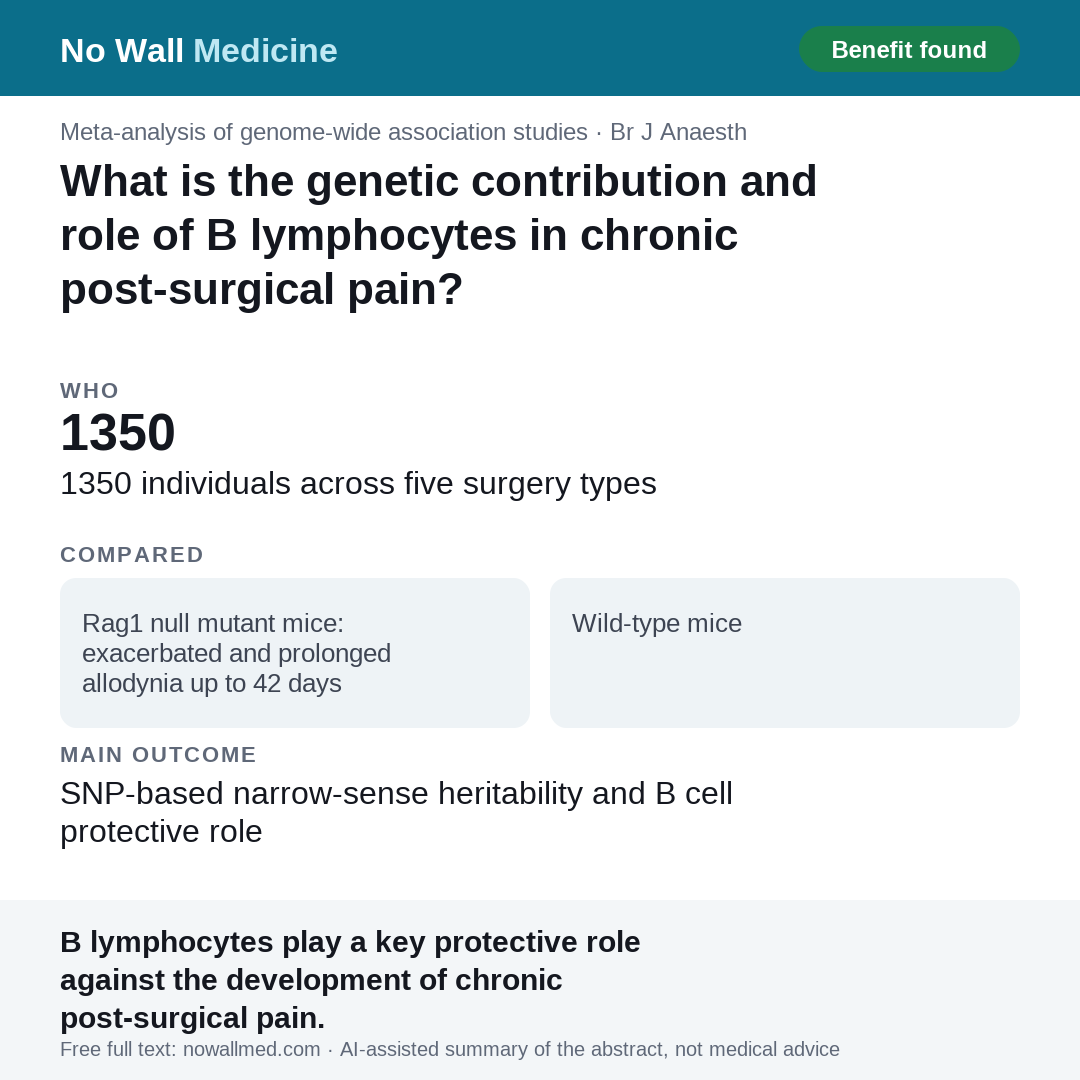
Clinical question: What is the genetic contribution and role of B lymphocytes in chronic post-surgical pain?
Why it matters: The genetic risk factors contributing to the development of chronic post-surgical pain remain less understood despite known environmental risks.
Key points
- Researchers analyzed 1350 individuals across five surgery types and used animal models to study the genetic and immune components of chronic post-surgical pain.
- The meta-analysis estimated a single-nucleotide polymorphism-based narrow-sense heritability for chronic post-surgical pain at ∼39%, with enrichment in immune system-related genes.
- Mice lacking both T and B cells showed increased and prolonged allodynia, which is pain from a stimulus that does not normally provoke pain, up to 42 days after surgery.
Headline and key points written with AI from the paper’s abstract, with every number checked against it. Read the paper before relying on them.
Was this summary helpful?
Subject terms
Cite this article
Parisien M, van Reij RRI, Khoury S, Koseli E, Karaky M, Silva JR. Genome-wide association studies with experimental validation identify a protective role for B lymphocytes against chronic post-surgical pain. Br J Anaesth. 2024. doi:10.1016/j.bja.2024.04.053
Spotted a mistake? Suggest a correction
Top studies every Monday
The week’s key trials and guidelines in your specialties, plus any topics you follow. By email, free.
Get the weekly digest