Genetic analysis of 404,302 people identifies seven locations in the genome linked to reaction time variability
Genome-wide association study in 404,302 individuals identifies 7 significant loci for reaction time variability
Genome-wide association study and meta-analysisBenefit found
What are the genetic underpinnings of reaction time variability?
Who
44873
Individuals of white British ancestry and trans-ancestry participants · United Kingdom Biobank
Compared
Discovery genome-wide association study: 161 genome-wide significant single nucleotide polymorphisms across 7 genomic loci
Trans-ancestry meta-analysis
Main outcome
Reaction time variability
Bottom line: Seven genomic loci and 161 single nucleotide polymorphisms were identified as being associated with reaction time variability.
Mol Psychiatry · 2023-10-20Download image
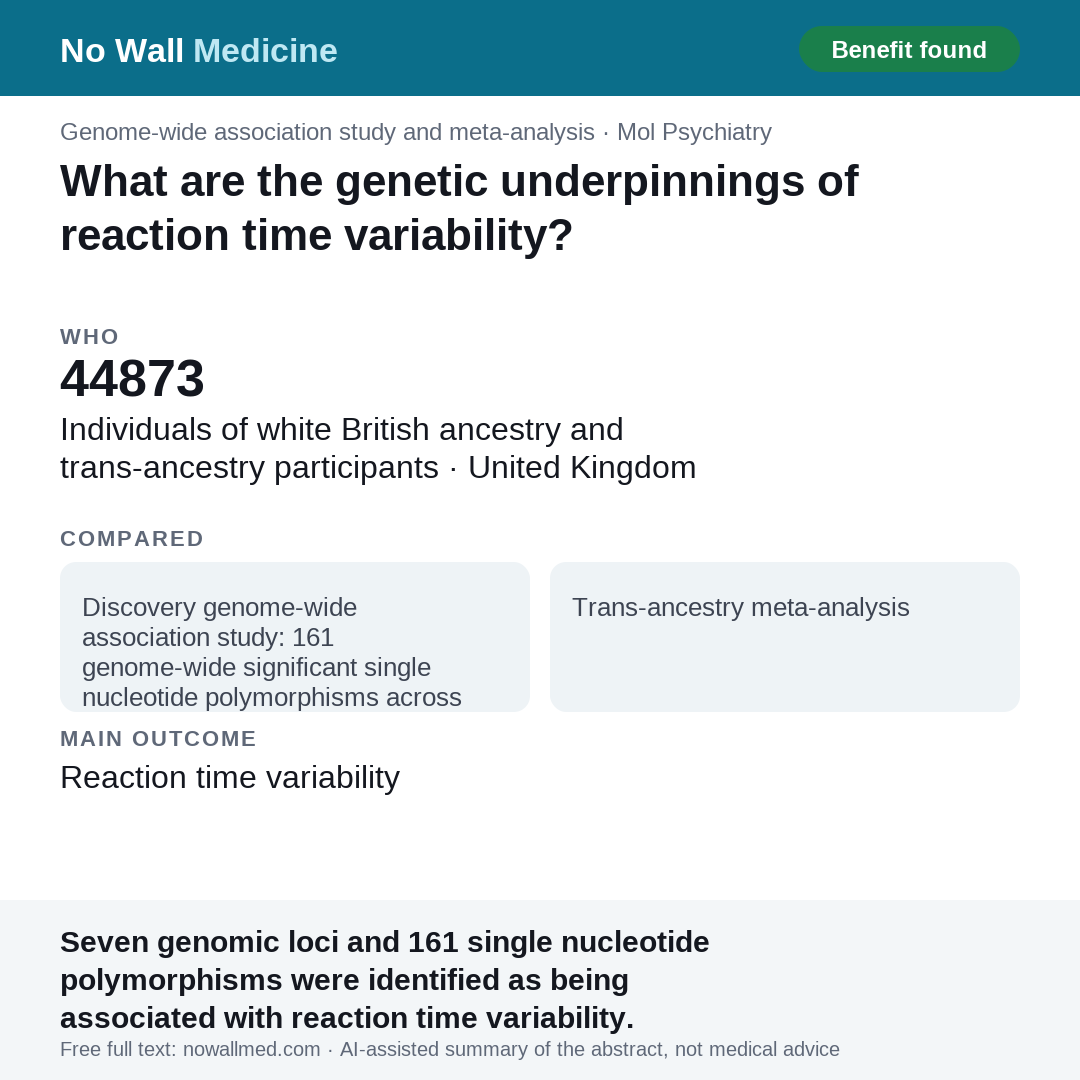
Clinical question: What are the genetic underpinnings of reaction time variability?
Why it matters: The genetic foundations of reaction time variability and its potential role as a biological marker for neuropsychiatric disorders were unknown.
Key points
- Researchers studied 404,302 individuals of white British ancestry to identify genetic markers for reaction time variability, which refers to fluctuations in how quickly a person responds to tasks.
- The study identified 161 significant single nucleotide polymorphisms, which are small genetic variations, located across 7 genomic loci.
- Reaction time variability was associated with a positive correlation to schizophrenia and mean reaction time, with a genetic heritability estimate of 3%.
Limitation the authors note: The generalisability of the polygenic score to other ancestry groups was poor.
Headline and key points written with AI from the paper’s abstract, with every number checked against it. Read the paper before relying on them.
Topics
Cite this article
Wootton O, Shadrin AA, Mohn C, Susser E, Ramesar R, Gur RC. Genome-wide association study in 404,302 individuals identifies 7 significant loci for reaction time variability. Mol Psychiatry. 2023. doi:10.1038/s41380-023-02292-9
Spotted a mistake? Suggest a correction
Top studies every Monday
The week’s key trials and guidelines in your specialties, plus any topics you follow. By email, free.
Get the weekly digest