Genetic risk scores for obsessive-compulsive disorder were associated with subclinical obsessive-compulsive symptoms
Genome-Wide Association Study of Obsessive-Compulsive Symptoms including 33,943 individuals from the general population
Genome-wide association study meta-analysisBenefit found
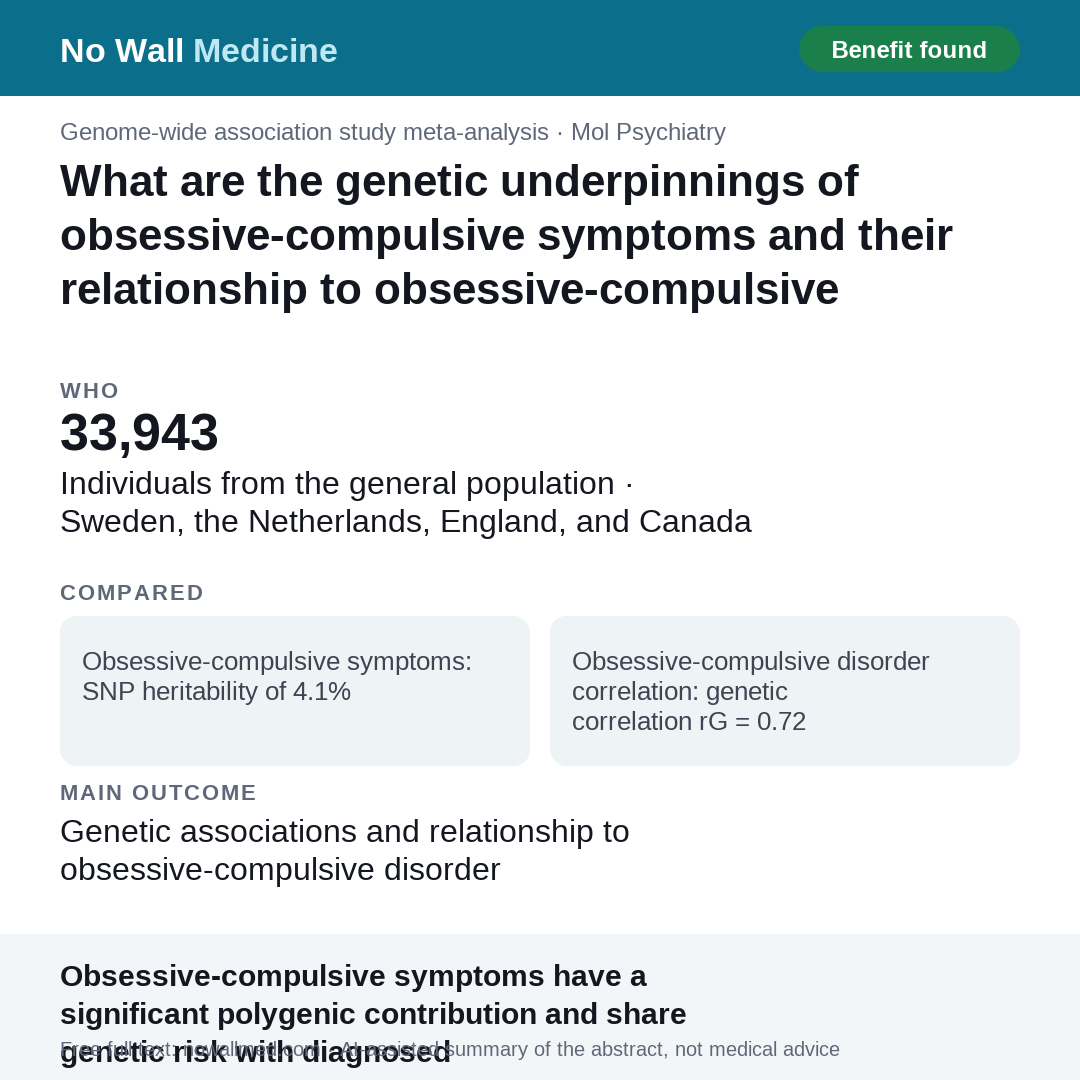
What are the genetic underpinnings of obsessive-compulsive symptoms and their relationship to obsessive-compulsive disorder?
Who
33,943
Individuals from the general population · Sweden, the Netherlands, England, and Canada
Compared
Obsessive-compulsive symptoms: SNP heritability of 4.1%
Obsessive-compulsive disorder correlation: genetic correlation rG = 0.72
Main outcome
Genetic associations and relationship to obsessive-compulsive disorder
Result: genetic correlation rG = 0.72 (p = 0.0007)
Bottom line: Obsessive-compulsive symptoms have a significant polygenic contribution and share genetic risk with diagnosed obsessive-compulsive disorder.
Mol Psychiatry · 2024-03-28Download image
Clinical question: What are the genetic underpinnings of obsessive-compulsive symptoms and their relationship to obsessive-compulsive disorder?
Why it matters: The genetic underpinnings of subclinical obsessive-compulsive symptoms and their relationship to clinical obsessive-compulsive disorder were not fully characterized.
Key points
- Researchers analyzed 33,943 individuals from seven population-based cohorts to study the genetic basis of subclinical obsessive-compulsive symptoms.
- A polygenic risk score, which measures the combined effect of many genetic variants, was significantly associated with these symptoms (Pfixed = 3.06 × 10⁻⁵).
- Subclinical symptoms showed the strongest genetic correlation with obsessive-compulsive disorder among 11 tested psychiatric disorders (rG = 0.72, p = 0.0007).
Headline and key points written with AI from the paper’s abstract, with every number checked against it. Read the paper before relying on them.
Was this summary helpful?
Subject terms
Cite this article
Strom NI, Burton CL, Iyegbe C, Silzer T, Antonyan L, Pool R. Genome-Wide Association Study of Obsessive-Compulsive Symptoms including 33,943 individuals from the general population. Mol Psychiatry. 2024. doi:10.1038/s41380-024-02489-6
Spotted a mistake? Suggest a correction
Top studies every Monday
The week’s key trials and guidelines in your specialties, plus any topics you follow. By email, free.
Get the weekly digest