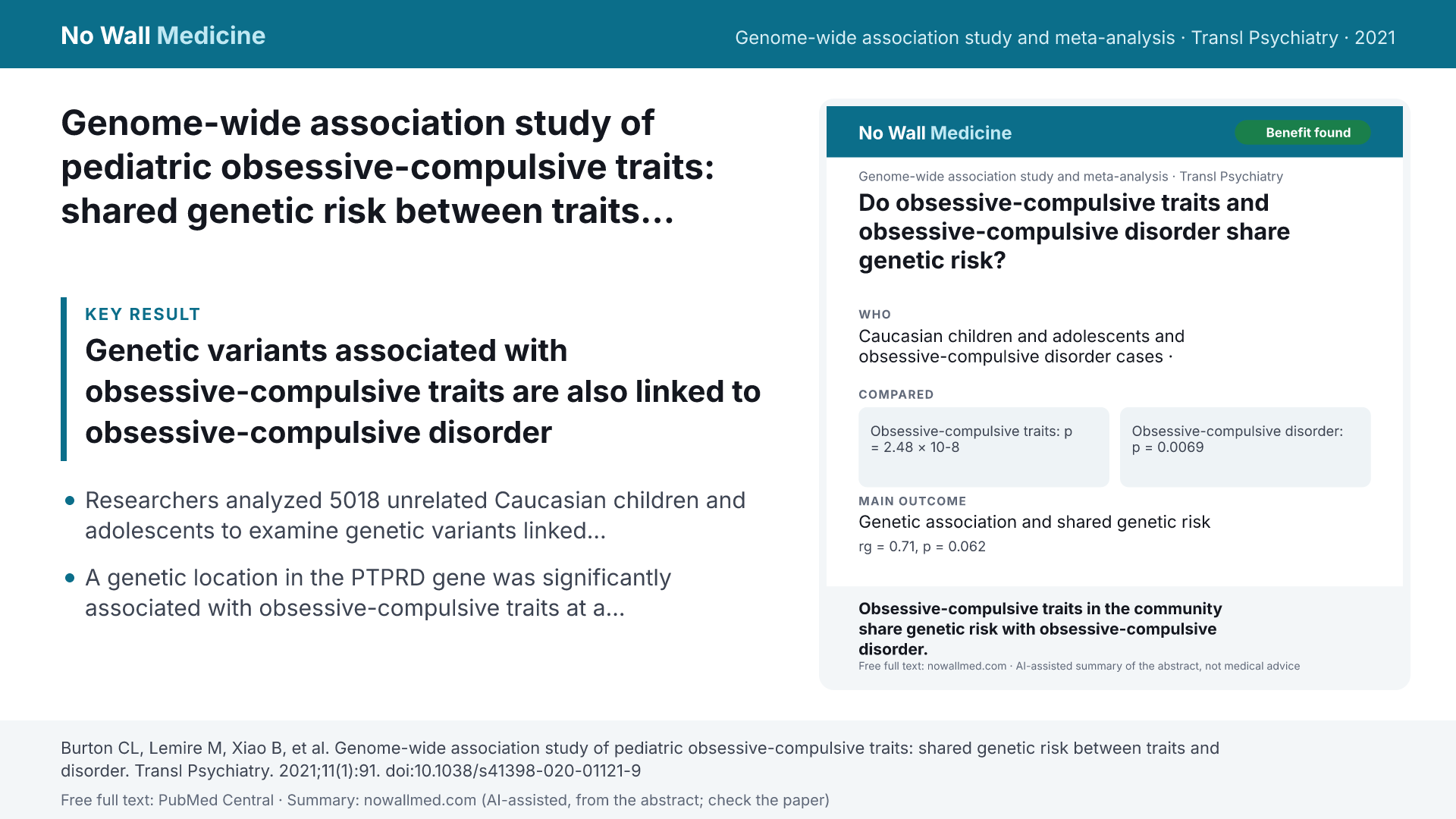
Genome-wide association study of pediatric obsessive-compulsive traits: shared genetic risk between traits and disorder
Key result: Genetic variants associated with obsessive-compulsive traits are also linked to obsessive-compulsive disorder
Genome-wide association study and meta-analysisBenefit found
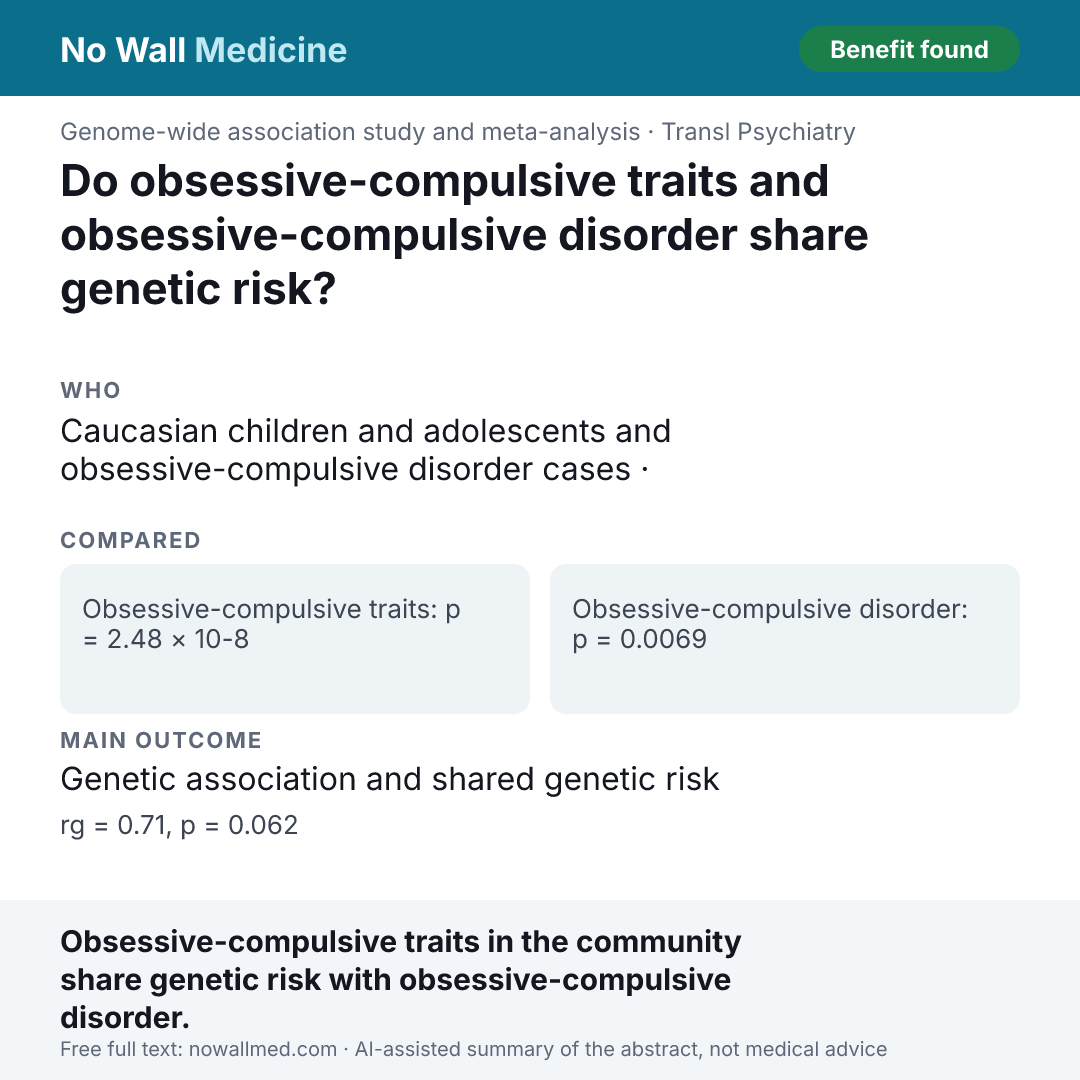
Do obsessive-compulsive traits and obsessive-compulsive disorder share genetic risk?
Who
Caucasian children and adolescents and obsessive-compulsive disorder cases · Community sample
Compared
Obsessive-compulsive traits: p = 2.48 × 10⁻⁸
Obsessive-compulsive disorder: p = 0.0069
Main outcome
Genetic association and shared genetic risk
Result: rg = 0.71, p = 0.062
Bottom line: Obsessive-compulsive traits in the community share genetic risk with obsessive-compulsive disorder.
Transl Psychiatry · 2021-02-02 · Save PNG
Key points
- Researchers analyzed 5018 unrelated Caucasian children and adolescents to examine genetic variants linked to obsessive-compulsive traits and their relationship to obsessive-compulsive disorder.
- A genetic location in the PTPRD gene was significantly associated with obsessive-compulsive traits at a significance level of p = 2.48 × 10⁻⁸.
- Polygenic risk scores, which estimate genetic liability, for obsessive-compulsive traits were significantly associated with obsessive-compulsive disorder in case/control datasets (p < 0.01).
Discussion prompts
- Would these patients look like yours? Who was left out?
- Is the main outcome one that matters to patients?
- Is the difference large enough to change what you do?
Cite: Burton CL, Lemire M, Xiao B, et al. Genome-wide association study of pediatric obsessive-compulsive traits: shared genetic risk between traits and disorder. Transl Psychiatry. 2021;11(1):91. doi:10.1038/s41398-020-01121-9
Free full text: PubMed Central · Summary and visual abstract: nowallmed.com/a/genome-wide-association-study-of-pediatric-obsessive-compulsive-1csuhz4/ (AI-assisted from the abstract; check the paper before relying on it).