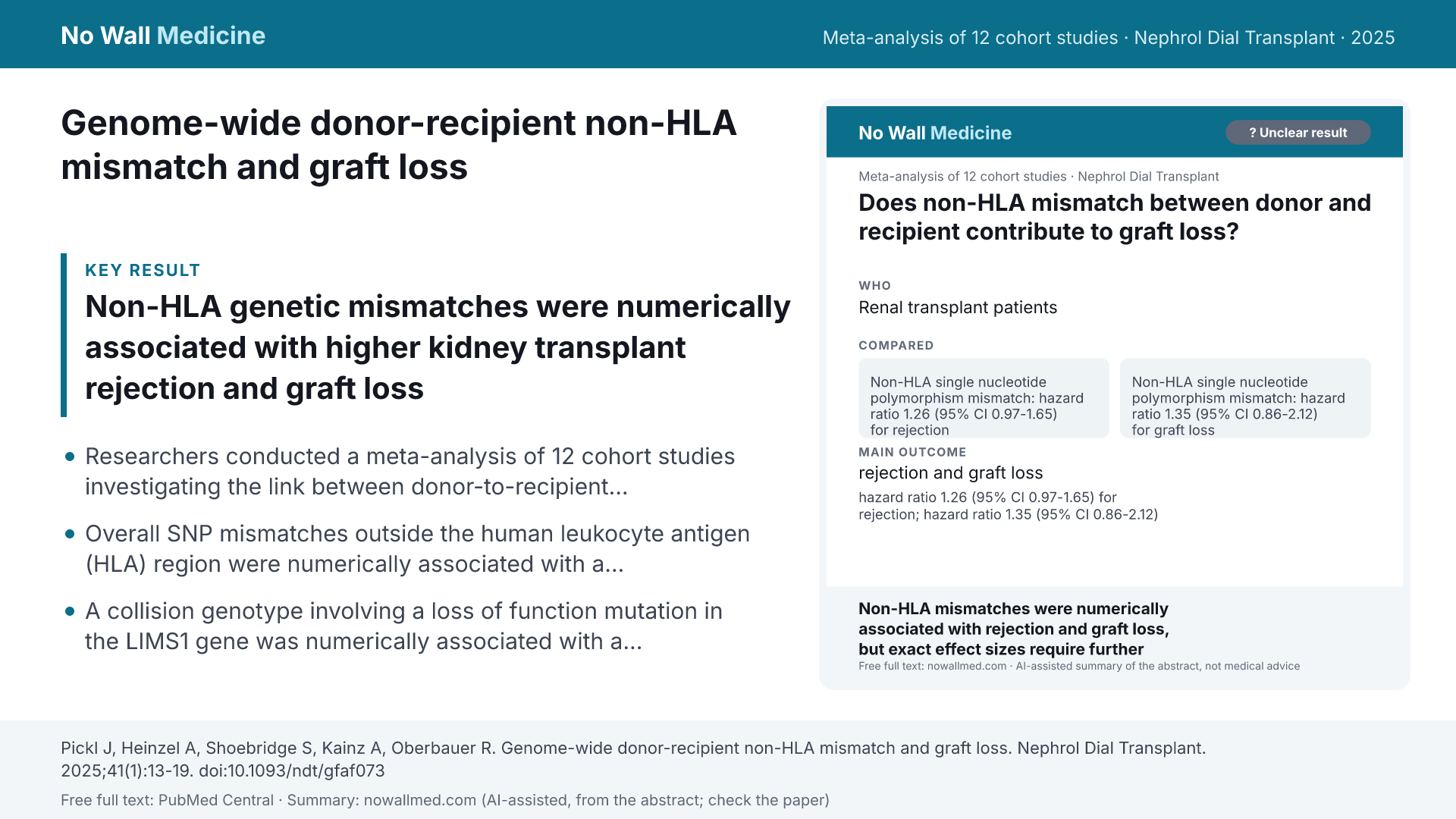
Non-HLA genetic mismatches were numerically associated with higher kidney transplant rejection and graft loss
Genome-wide donor-recipient non-HLA mismatch and graft loss
Meta-analysis of 12 cohort studiesUnclear result
Does non-HLA mismatch between donor and recipient contribute to graft loss?
Who
Renal transplant patients
Compared
Non-HLA single nucleotide polymorphism mismatch: hazard ratio 1.26 (95% CI 0.97-1.65) for rejection
Non-HLA single nucleotide polymorphism mismatch: hazard ratio 1.35 (95% CI 0.86-2.12) for graft loss
Main outcome
rejection and graft loss
Result: hazard ratio 1.26 (95% CI 0.97-1.65) for rejection; hazard ratio 1.35 (95% CI 0.86-2.12) for graft loss
Bottom line: Non-HLA mismatches were numerically associated with rejection and graft loss, but exact effect sizes require further investigation.
Nephrol Dial Transplant · 2025-04-26 · Save PNG
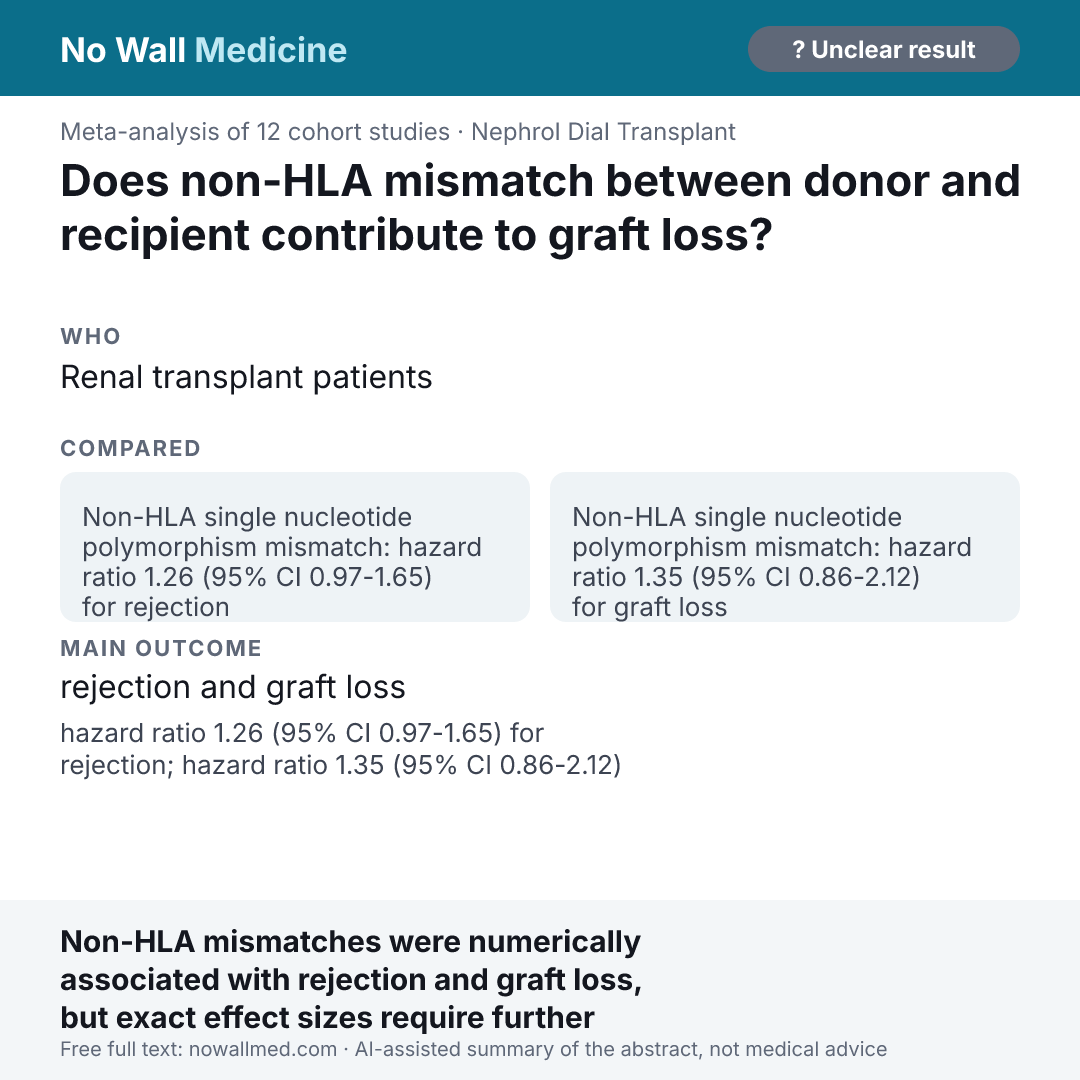
Clinical question: Does non-HLA mismatch between donor and recipient contribute to graft loss?
Why it matters: Current kidney allocation relies on HLA-matching, but this only explains moderate variability in transplant survival, leaving the role of non-HLA mismatches unclear.
Key points
- Researchers conducted a meta-analysis of 12 cohort studies investigating the link between donor-to-recipient single nucleotide polymorphism (SNP) mismatches and kidney transplant outcomes.
- Overall SNP mismatches outside the human leukocyte antigen (HLA) region were numerically associated with a rejection hazard ratio of 1.26 and a graft loss hazard ratio of 1.35.
- A collision genotype involving a loss of function mutation in the LIMS1 gene was numerically associated with a rejection hazard ratio of 1.23 and a graft loss hazard ratio of 1.43.
Headline and key points written with AI from the paper’s abstract, with every number checked against it. Read the paper before relying on them.
Was this summary helpful?
Subject terms
Headline, design, result, key points, caveat and citation as plain text.
Cite this article
Pickl J, Heinzel A, Shoebridge S, Kainz A, Oberbauer R. Genome-wide donor-recipient non-HLA mismatch and graft loss. Nephrol Dial Transplant. 2025;41(1):13-19. doi:10.1093/ndt/gfaf073
Spotted a mistake? Suggest a correction