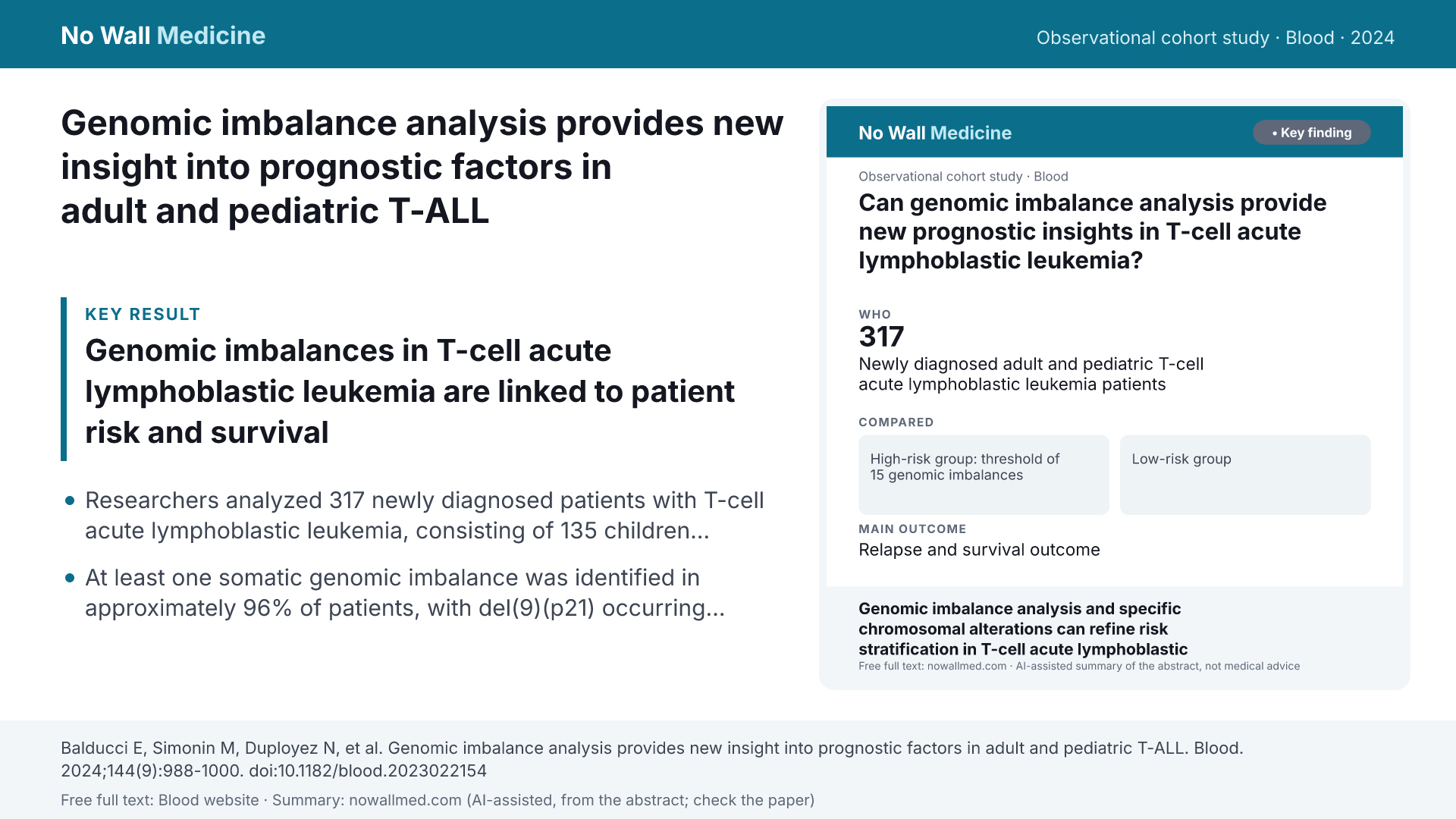
Genomic imbalances in T-cell acute lymphoblastic leukemia are linked to patient risk and survival
Genomic imbalance analysis provides new insight into prognostic factors in adult and pediatric T-ALL
Observational cohort studyBenefit found
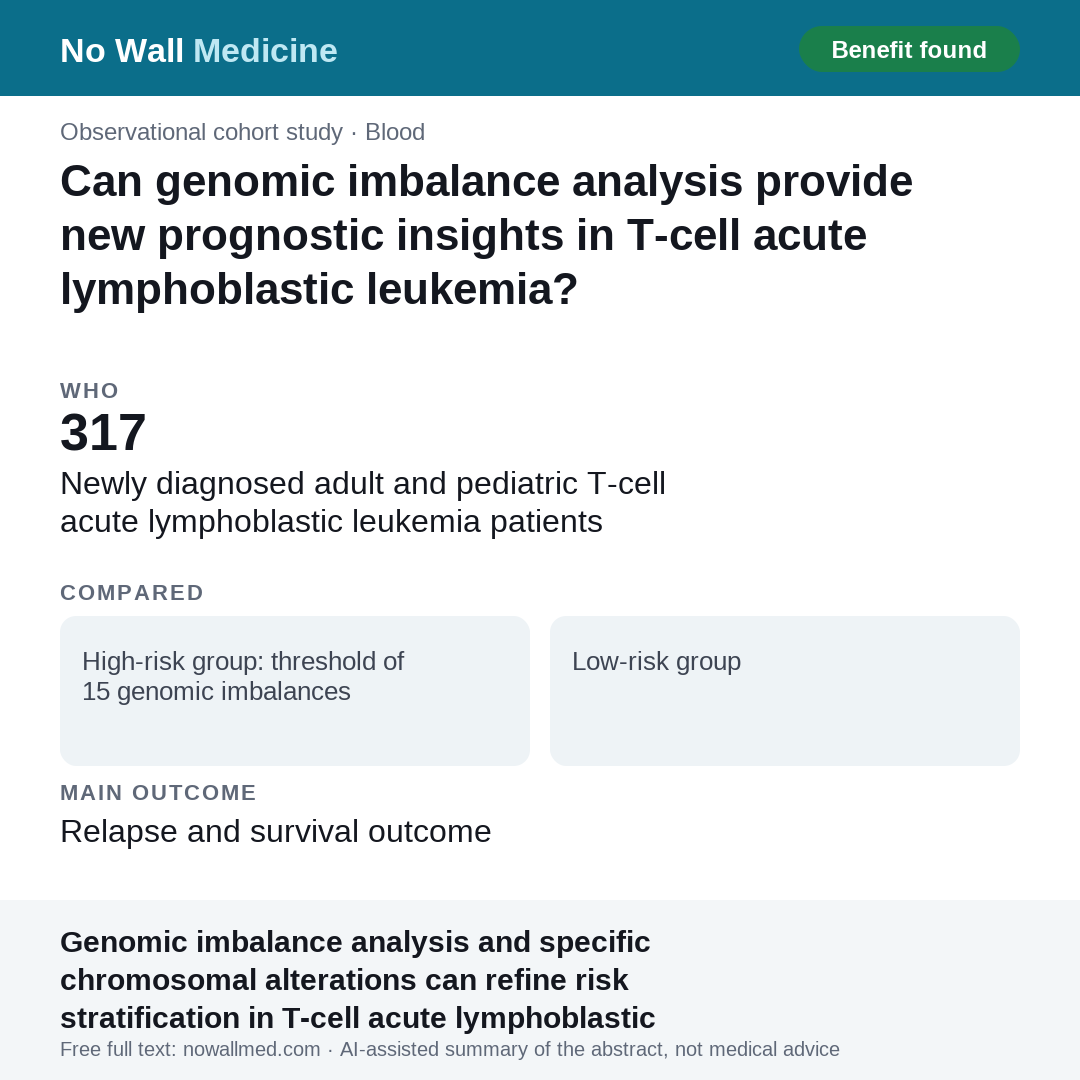
Can genomic imbalance analysis provide new prognostic insights in T-cell acute lymphoblastic leukemia?
Who
317
Newly diagnosed adult and pediatric T-cell acute lymphoblastic leukemia patients
Compared
High-risk group: threshold of 15 genomic imbalances
Low-risk group
Main outcome
Relapse and survival outcome
Bottom line: Genomic imbalance analysis and specific chromosomal alterations can refine risk stratification in T-cell acute lymphoblastic leukemia.
Blood · 2024-03-22Download image
Clinical question: Can genomic imbalance analysis provide new prognostic insights in T-cell acute lymphoblastic leukemia?
Why it matters: Identifying prognostic markers remains challenging for patients with refractory and relapsing T-cell acute lymphoblastic leukemia.
Key points
- Researchers analyzed 317 newly diagnosed patients with T-cell acute lymphoblastic leukemia, consisting of 135 children and 182 adults, using single nucleotide polymorphism array analysis.
- At least one somatic genomic imbalance was identified in approximately 96% of patients, with del(9)(p21) occurring in approximately 70% of cases.
- A threshold of 15 genomic imbalances was associated with stratifying patients into high- and low-risk groups for relapse.
Headline and key points written with AI from the paper’s abstract, with every number checked against it. Read the paper before relying on them.
Was this summary helpful?
Subject terms
Cite this article
Balducci E, Simonin M, Duployez N, Steimlé T, Dourthe ME, Villarese P. Genomic imbalance analysis provides new insight into prognostic factors in adult and pediatric T-ALL. Blood. 2024. doi:10.1182/blood.2023022154
Spotted a mistake? Suggest a correction