Genotype-guided antidepressant prescribing did not improve depression symptoms at three months
Genotype-Guided Antidepressant Prescribing for Patients With Depression: A Randomized Clinical Trial
Pragmatic randomized clinical trialMixed results
Does pharmacogenetic-guided prescribing of selective serotonin reuptake inhibitors improve treatment response in patients with depression?
Who
1460
Patients aged 8 years or older with depression for 3 months or longer · Primary care, psychiatry, or family medicine clinics in the US
Compared
Genotype-guided prescribing: -4.3 [8.4]
Usual care: -4.0 [8.1]
Main outcome
Change in Patient-Reported Outcomes Measurement Information System depression T scores at 3 months
Bottom line: Genotype-guided prescribing did not improve depression symptom control at 3 months but was associated with higher remission rates at 6 months.
Limitation: Future studies should focus on the durability and long-term impact of genotype-guided prescribing.
JAMA Netw Open · 2026-05-01Download image
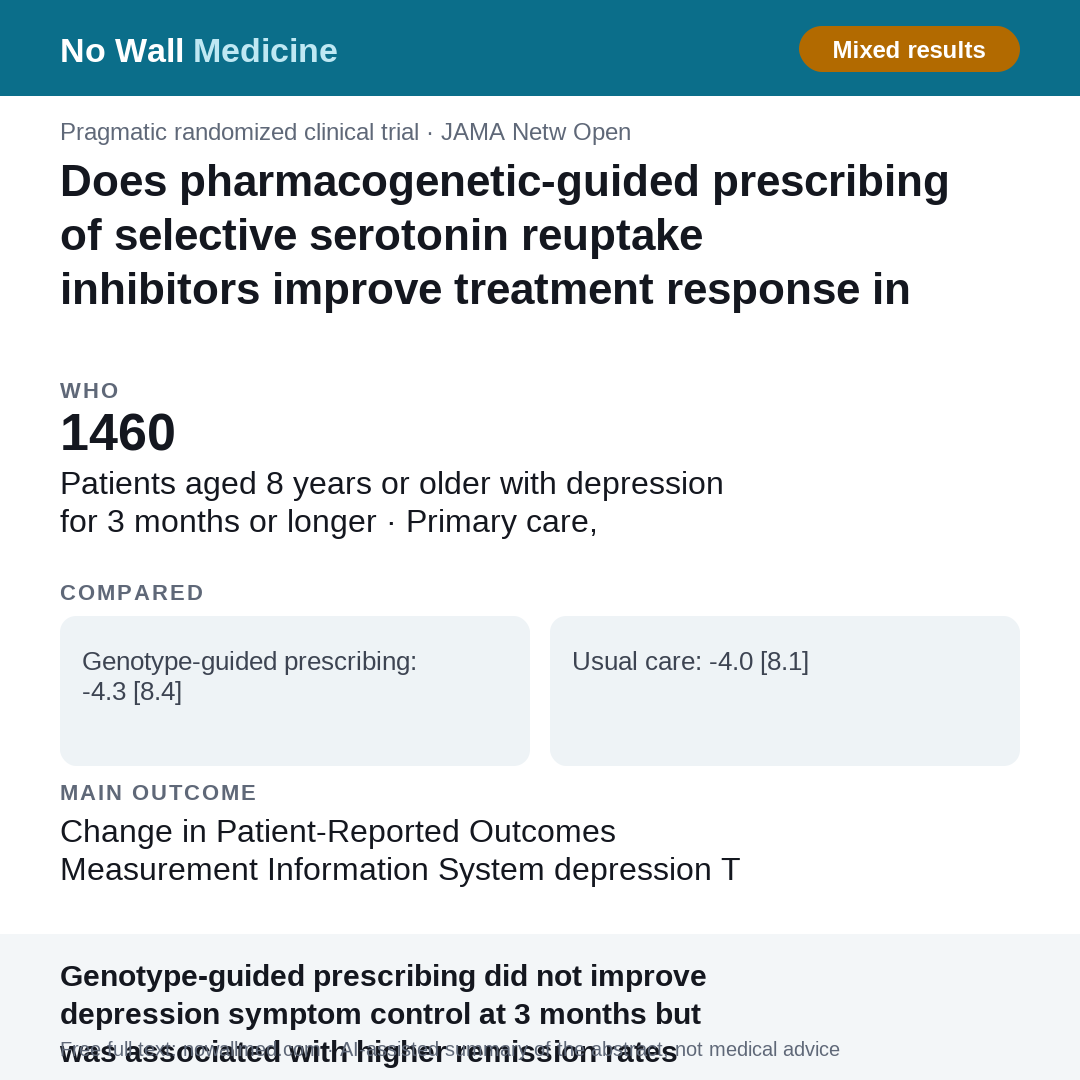
Clinical question: Does pharmacogenetic-guided prescribing of selective serotonin reuptake inhibitors improve treatment response in patients with depression?
Why it matters: The effectiveness of using genetic testing to guide the prescribing of selective serotonin reuptake inhibitors for depression remains unclear.
Key points
- Researchers studied 1460 patients, including 1239 adults and 221 children, comparing genotype-guided selective serotonin reuptake inhibitor prescribing to usual care.
- At 3 months, there were no significant differences in depression score changes, medication side effect burden, or Patient Health Questionnaire-8 score changes.
- At 6 months, the remission rate for depression was higher in the genotype-guided group at 48.3% compared to 39.4% in the usual care group.
Headline and key points written with AI from the paper’s abstract, with every number checked against it. Read the paper before relying on them.
Topics
Spotted a mistake? Suggest a correction