Genetic risk scores for type 2 diabetes relate to insulin secretion and sensitivity in prediabetes
Global and Partitioned Polygenic Risk Scores: Associations With Pathophysiology and Incidence of Type 2 Diabetes in People With Prediabetes
Randomized trial analysisMixed results
How do partitioned polygenic risk scores relate to insulin secretion and type 2 diabetes incidence?
Who
2,052
People with prediabetes · Diabetes Prevention Program
Compared
Intensive lifestyle intervention
Metformin
Placebo
Main outcome
Incidence of type 2 diabetes
Bottom line: Inadequate compensatory insulin secretion contributes to diabetes progression regardless of genetic risk measured by partitioned polygenic risk scores.
Diabetes · 2026-06-22Download image
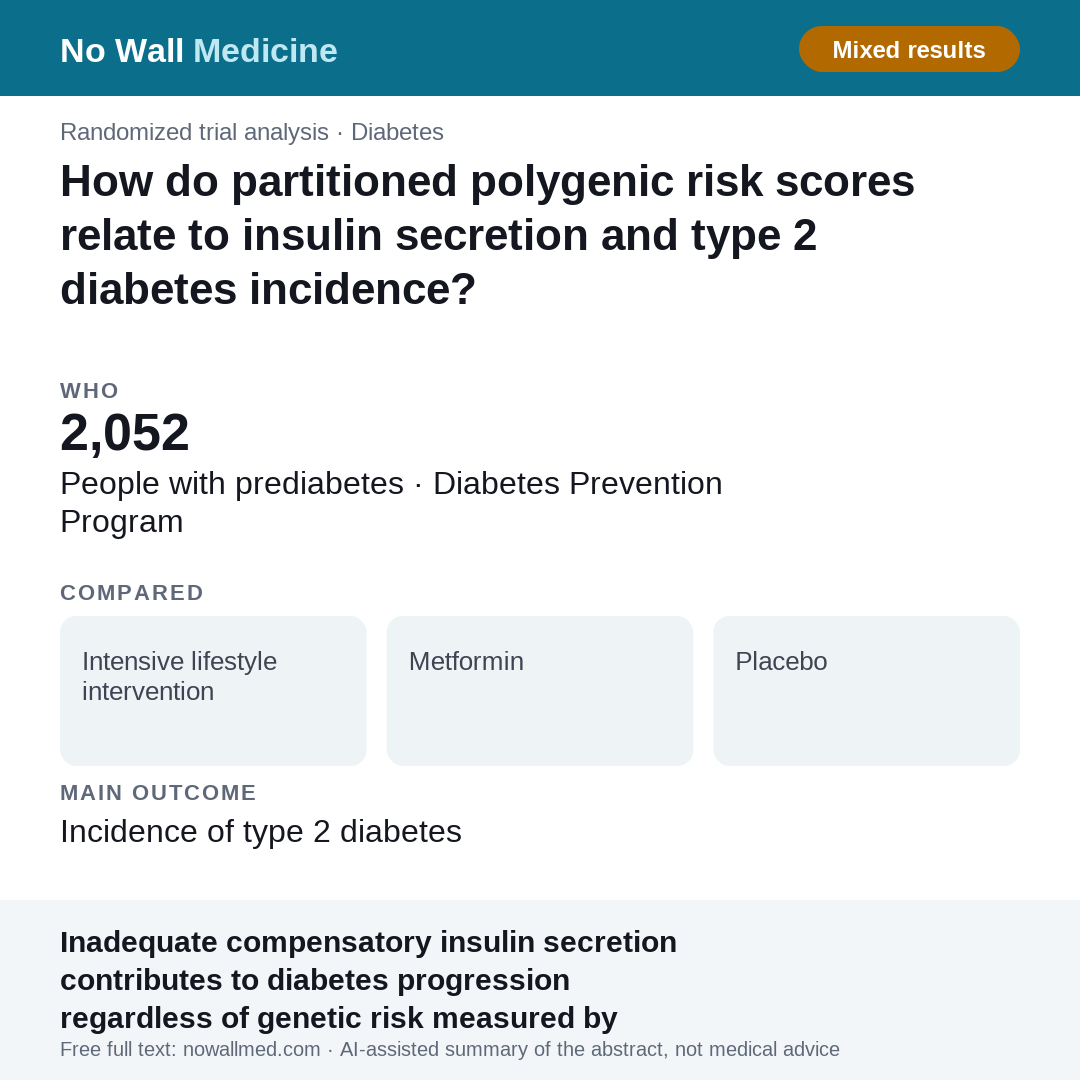
Clinical question: How do partitioned polygenic risk scores relate to insulin secretion and type 2 diabetes incidence?
Why it matters: The extent to which partitioned polygenic risk scores for type 2 diabetes influence the relationship between insulin secretion and sensitivity has not been examined in people with prediabetes.
Key points
- Researchers studied 2,052 participants from the Diabetes Prevention Program who were randomized to intensive lifestyle intervention, metformin, or placebo.
- Global polygenic risk scores, which are tools that estimate genetic risk using many small genetic variations, showed stronger associations with diabetes incidence than partitioned scores.
- Inadequate compensatory insulin secretion contributes to the progression to diabetes in people with prediabetes regardless of their genetic risk level.
Headline and key points written with AI from the paper’s abstract, with every number checked against it. Read the paper before relying on them.
Topics
Cite this article
Vazquez Arreola E, Knowler WC, Hanson RL. Global and Partitioned Polygenic Risk Scores: Associations With Pathophysiology and Incidence of Type 2 Diabetes in People With Prediabetes. Diabetes. 2026. doi:10.2337/db25-0640
Spotted a mistake? Suggest a correction