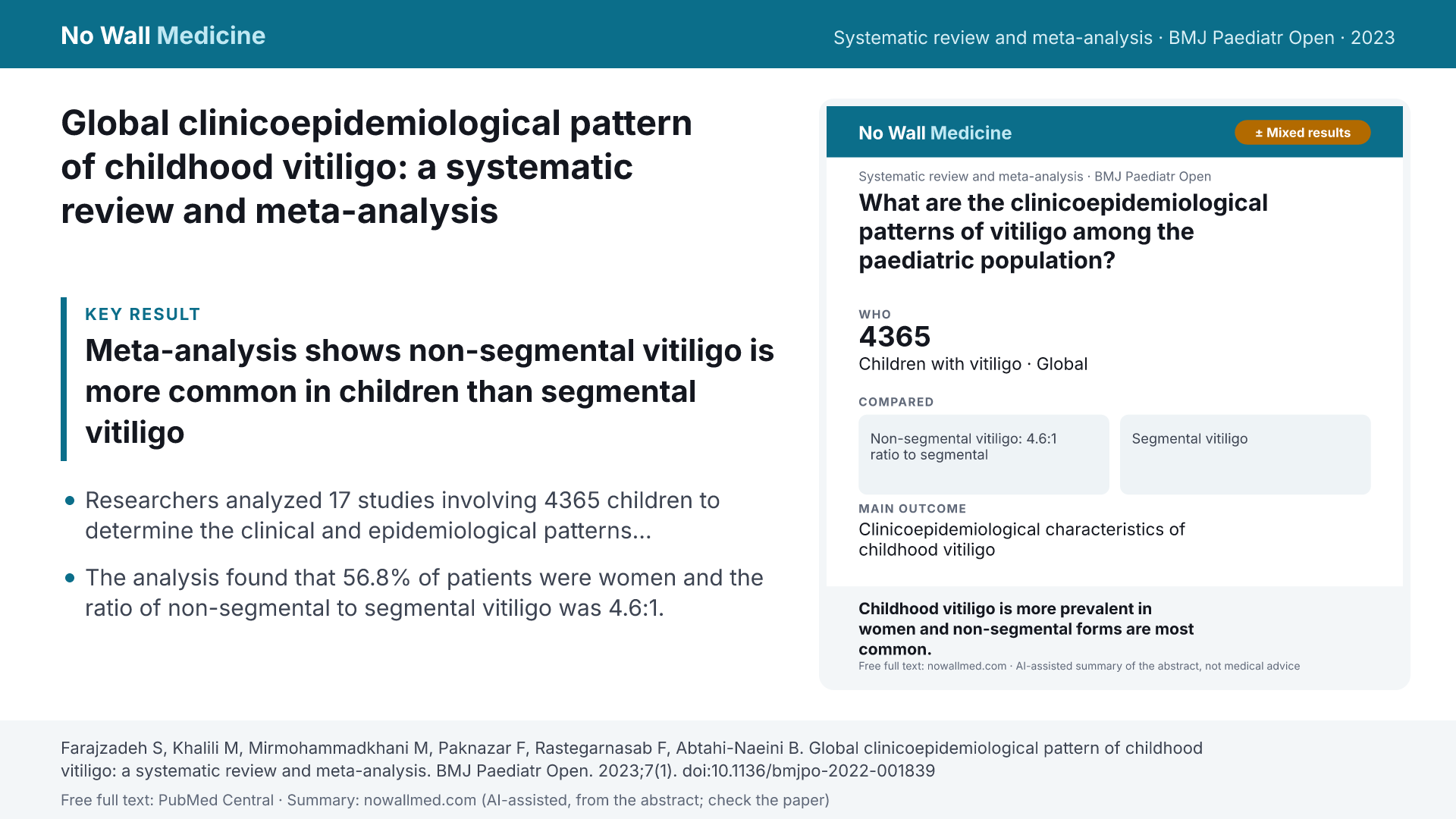
Meta-analysis shows non-segmental vitiligo is more common in children than segmental vitiligo
Global clinicoepidemiological pattern of childhood vitiligo: a systematic review and meta-analysis
Systematic review and meta-analysisMixed results
What are the clinicoepidemiological patterns of vitiligo among the paediatric population?
Who
4365
Children with vitiligo · Global
Compared
Non-segmental vitiligo: 4.6:1 ratio to segmental
Segmental vitiligo
Main outcome
Clinicoepidemiological characteristics of childhood vitiligo
Bottom line: Childhood vitiligo is more prevalent in women and non-segmental forms are most common.
BMJ Paediatr Open · 2023-08-24 · Save PNG
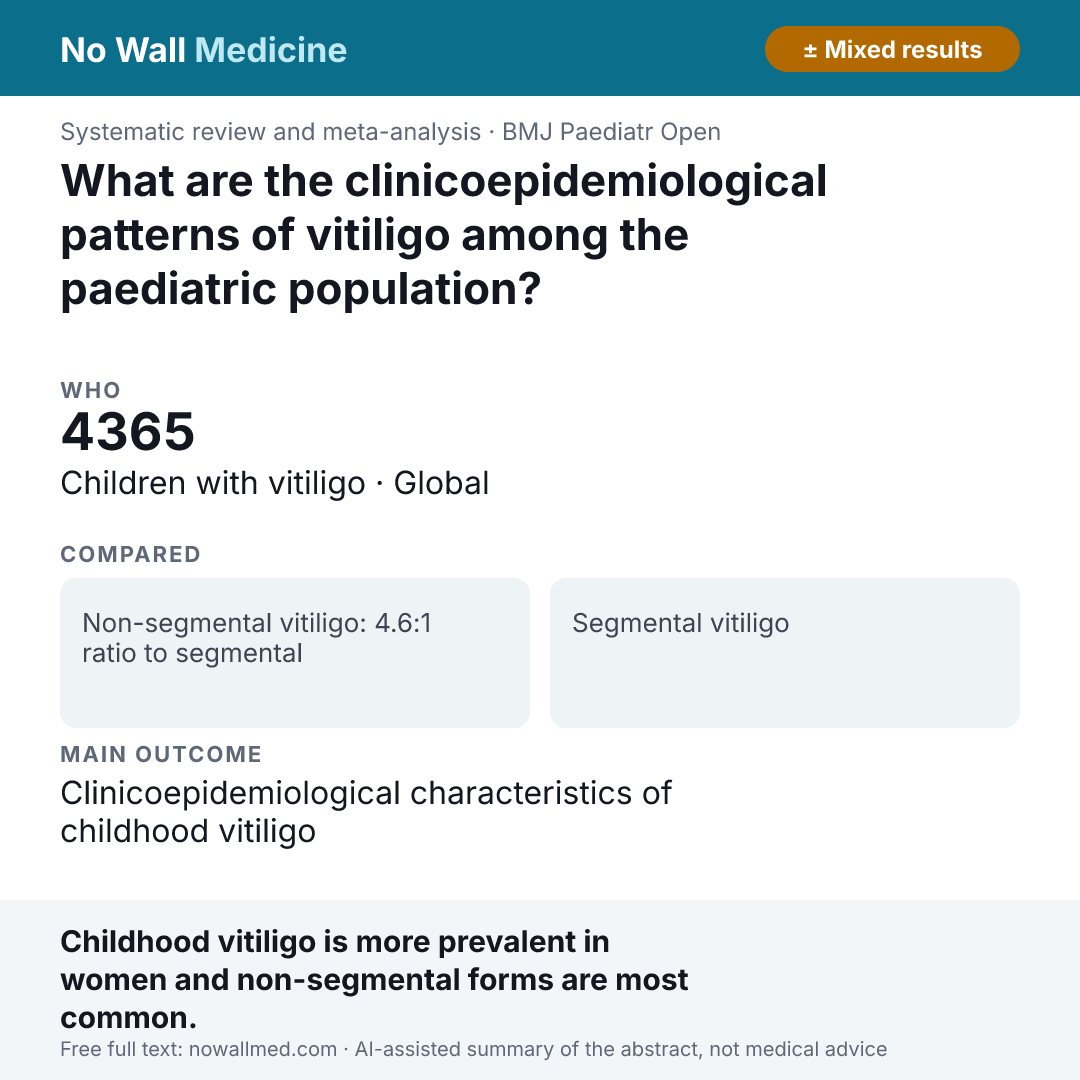
Clinical question: What are the clinicoepidemiological patterns of vitiligo among the paediatric population?
Why it matters: The clinical and epidemiological characteristics of vitiligo specifically in the pediatric population were not previously summarized in a systematic review.
Key points
- Researchers analyzed 17 studies involving 4365 children to determine the clinical and epidemiological patterns of vitiligo, a condition causing loss of skin pigment.
- The analysis found that 56.8% of patients were women and the ratio of non-segmental to segmental vitiligo was 4.6:1.
- Among non-segmental types, vulgaris was the most common at 42.49%, followed by focal at 27.21% and acrofacial at 17.8%.
Headline and key points written with AI from the paper’s abstract, with every number checked against it. Read the paper before relying on them.
Was this summary helpful?
Abstract
Background
Childhood vitiligo differs from adult vitiligo in many aspects. To the best of the authors' knowledge, there is no systematic review of different clinicoepidemiological patterns of vitiligo in children. This study aimed to review the characteristics of vitiligo among the paediatric population. Methods
In June 2022, a comprehensive search was conducted using MeSh-based keywords on online databases including PubMed, Scopus and Web of Sciences. The papers were assessed, and the eligible articles were selected. The selection of articles followed three distinct steps. The extracted clinicoepidemiological data were then imported into the STATA software for meta-analysis. Results
The meta-analysis of 17 studies with 4365 subjects yielded 2475 women (estimated=56.8%, 95% CI 54.45 to 59.22). The female-to-male ratio was determined to be 1.3:1. Meta-regression demonstrated a significant relationship between continents and gender (p=0.03). The most prevalent types of non-segmental vitiligo were vulgaris (42.49%), focal (27.21%) and acrofacial (17.8%). The pooled ratio of non-segmental to segmental was 4.6:1. The highest and lowest ratios were found in Africa with one study (estimated=11.56%, 95% CI -0.98 to 24.10) and America with two studies (estimated=3.02%, 95% CI 1.54 to 4.50), respectively. Using meta-regression, the relationship between continents and vitiligo type was found to be insignificant (p=0.47). Positive family history was recorded in 657 patients (estimated = 16.88%, 95% CI 13.37 to 20.39). Positive family history varied by country of study from 13.91% (Asia with 11 studies) to 27.01% (Europe with two studies) (p=0.11). Kobner phenomena and leukotrichia were noted in 687 (25.47%) and 461 (18.52%) patients, respectively. Conclusion
The review indicated that childhood vitiligo is more prevalent in women. Non-segmental forms of childhood vitiligo were the most common, including vulgaris, focal and acrofacial. The clinicoepidemiological pattern of childhood vitiligo is variable in different geographic areas.
Abstract reproduced under the article’s CC BY NC licence.
Subject terms
Headline, design, result, key points, caveat and citation as plain text.
Cite this article
Farajzadeh S, Khalili M, Mirmohammadkhani M, Paknazar F, Rastegarnasab F, Abtahi-Naeini B. Global clinicoepidemiological pattern of childhood vitiligo: a systematic review and meta-analysis. BMJ Paediatr Open. 2023;7(1). doi:10.1136/bmjpo-2022-001839
Spotted a mistake? Suggest a correction