Modifiable risk factors are associated with varying proportions of global mental disorder cases
Global population attributable fraction of potentially modifiable risk factors for mental disorders: a meta-umbrella systematic review
Meta-umbrella systematic reviewBenefit found
What is the global population attributable fraction of modifiable risk factors for mental disorders?
Who
Global population with mental disorders · Global
Compared
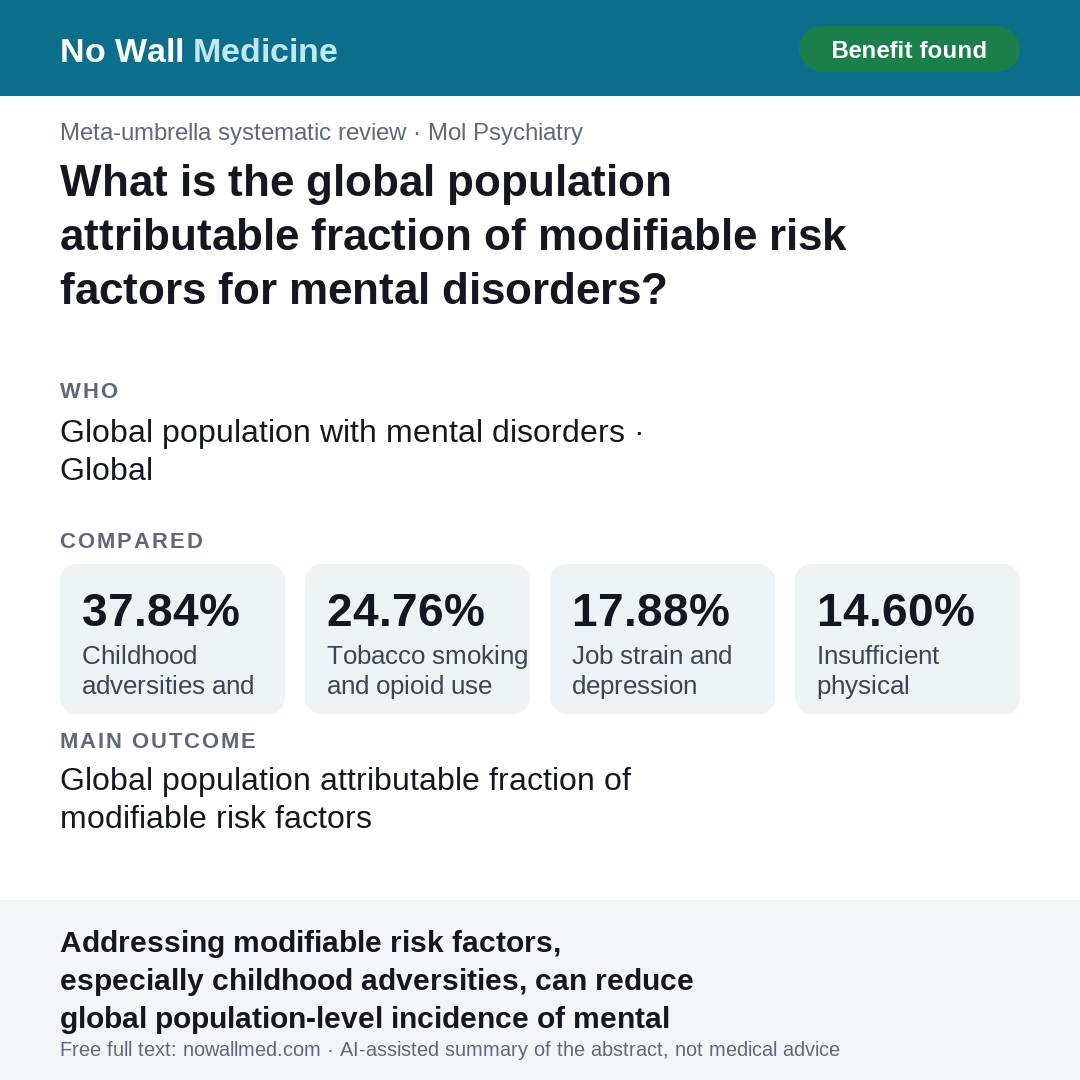
37.84%Childhood adversities and schizophrenia spectrum disorders (95% CI 26.77-48.40%)
24.76%Tobacco smoking and opioid use disorders (95% CI 13.98-36.49%)
17.88%Job strain and depression (95% CI not available)
14.60%Insufficient physical activity and Alzheimer's disease (95% CI 9.46-20.52%)
Main outcome
Global population attributable fraction of modifiable risk factors
Bottom line: Addressing modifiable risk factors, especially childhood adversities, can reduce global population-level incidence of mental disorders.
Limitation: Study quality assessment showed 20.0% low quality reviews.
Mol Psychiatry · 2022-04-28Download image
Clinical question: What is the global population attributable fraction of modifiable risk factors for mental disorders?
Why it matters: It is unknown how many mental disorder cases are associated with potentially modifiable risk factors and to what extent they contribute to the global burden.
Key points
- Researchers analyzed seven umbrella reviews containing 295 meta-analyses and 547 associations to quantify the population attributable fraction, which is the proportion of disease cases linked to a specific risk factor.
- The largest global population attributable fractions were 37.84% for childhood adversities and schizophrenia spectrum disorders and 24.76% for tobacco smoking and opioid use disorders.
- Other significant associations included 17.88% for job strain and depression and 14.60% for insufficient physical activity and Alzheimer's disease.
Limitation the authors note: The included studies had varying quality, with 45.0% high-, 35.0% medium-, and 20.0% low quality according to the AMSTAR assessment tool.
Headline and key points written with AI from the paper’s abstract, with every number checked against it. Read the paper before relying on them.
Was this summary helpful?
Subject terms
Cite this article
Dragioti E, Radua J, Solmi M, Arango C, Oliver D, Cortese S. Global population attributable fraction of potentially modifiable risk factors for mental disorders: a meta-umbrella systematic review. Mol Psychiatry. 2022. doi:10.1038/s41380-022-01586-8
Spotted a mistake? Suggest a correction
Top studies every Monday
The week’s key trials and guidelines in your specialties, plus any topics you follow. By email, free.
Get the weekly digest