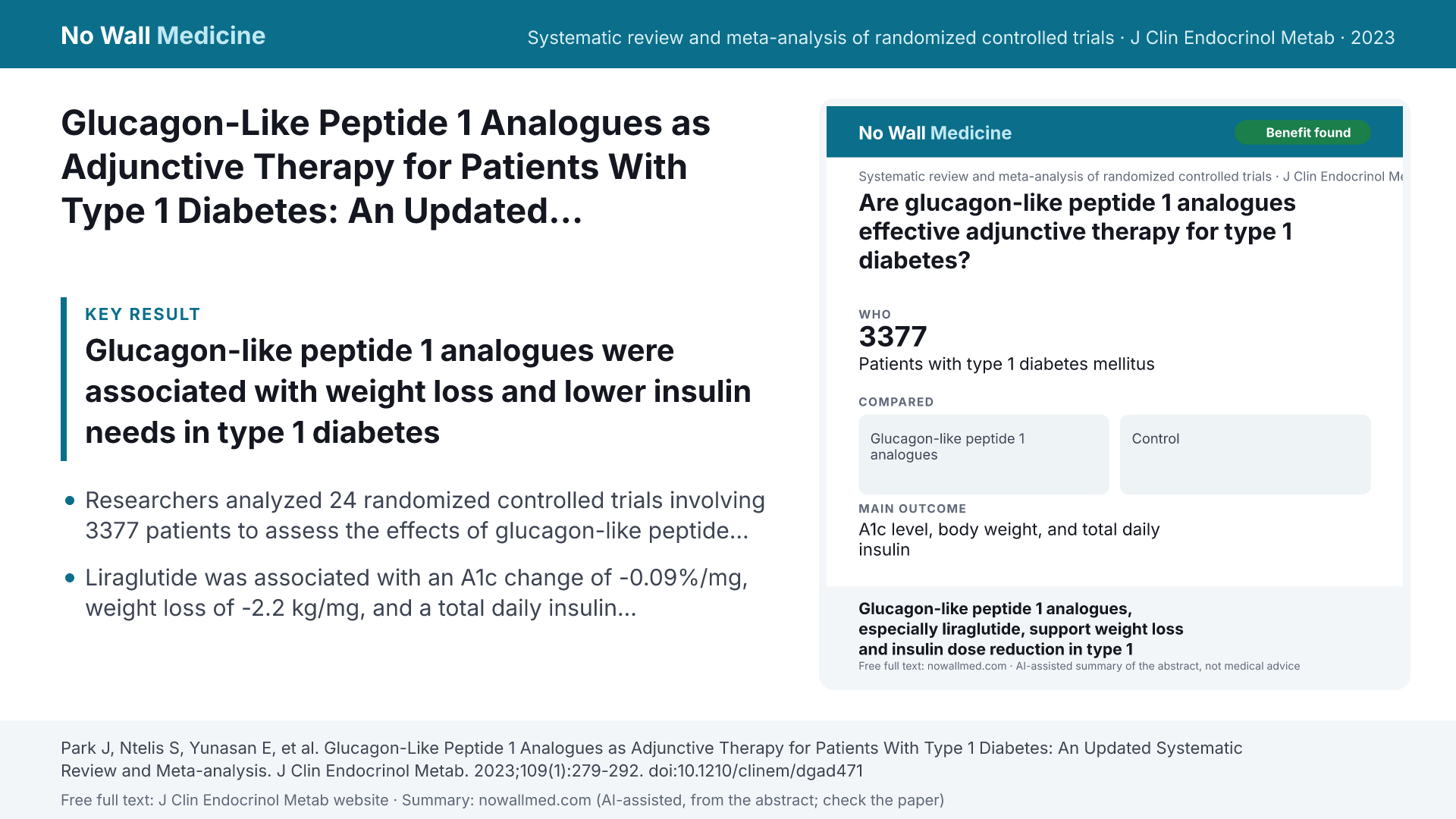
Glucagon-like peptide 1 analogues were associated with weight loss and lower insulin needs in type 1 diabetes
Glucagon-Like Peptide 1 Analogues as Adjunctive Therapy for Patients With Type 1 Diabetes: An Updated Systematic Review and Meta-analysis
Systematic review and meta-analysis of randomized controlled trialsBenefit found
Are glucagon-like peptide 1 analogues effective adjunctive therapy for type 1 diabetes?
Who
3377
Patients with type 1 diabetes mellitus
Compared
Glucagon-like peptide 1 analogues
Control
Main outcome
A1c level, body weight, and total daily insulin
Bottom line: Glucagon-like peptide 1 analogues, especially liraglutide, support weight loss and insulin dose reduction in type 1 diabetes.
Limitation: Exenatide studies had higher risk of bias and sparse safety data.
J Clin Endocrinol Metab · 2023-08-10 · Save PNG
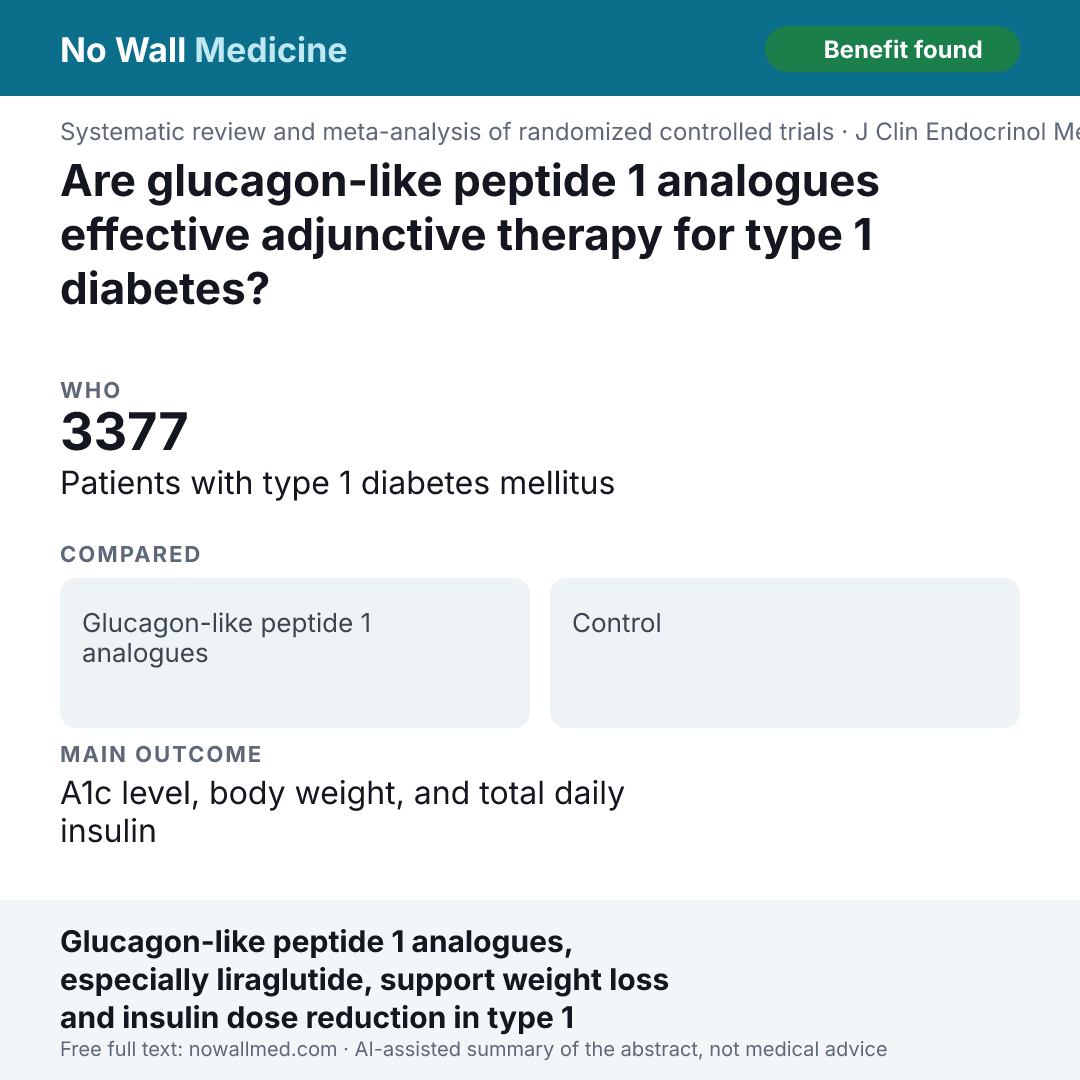
Clinical question: Are glucagon-like peptide 1 analogues effective adjunctive therapy for type 1 diabetes?
Why it matters: Adjunctive therapy options are scarce for patients living with both type 1 diabetes and obesity.
Key points
- Researchers analyzed 24 randomized controlled trials involving 3377 patients to assess the effects of glucagon-like peptide 1 analogues as add-on therapy for type 1 diabetes.
- Liraglutide was associated with an A1c change of -0.09%/mg, weight loss of -2.2 kg/mg, and a total daily insulin reduction of -4.32 IU/mg.
- Higher liraglutide doses were associated with higher odds of nausea (OR 6.5; 95% CI, 5.0-8.4) and ketosis (OR 1.8; 95% CI, 1.1-2.8).
Limitation the authors note: Studies involving exenatide had a higher risk of bias and sparse safety data.
Headline and key points written with AI from the paper’s abstract, with every number checked against it. Read the paper before relying on them.
Was this summary helpful?
Subject terms
Headline, design, result, key points, caveat and citation as plain text.
Cite this article
Park J, Ntelis S, Yunasan E, et al. Glucagon-Like Peptide 1 Analogues as Adjunctive Therapy for Patients With Type 1 Diabetes: An Updated Systematic Review and Meta-analysis. J Clin Endocrinol Metab. 2023;109(1):279-292. doi:10.1210/clinem/dgad471
Spotted a mistake? Suggest a correction