Goal-directed hemodynamic therapy linked to shorter hospital stays and lower mortality in noncardiac surgery
Goal-directed haemodynamic therapy during general anaesthesia for noncardiac surgery: a systematic review and meta-analysis
Systematic review and meta-analysisMixed results
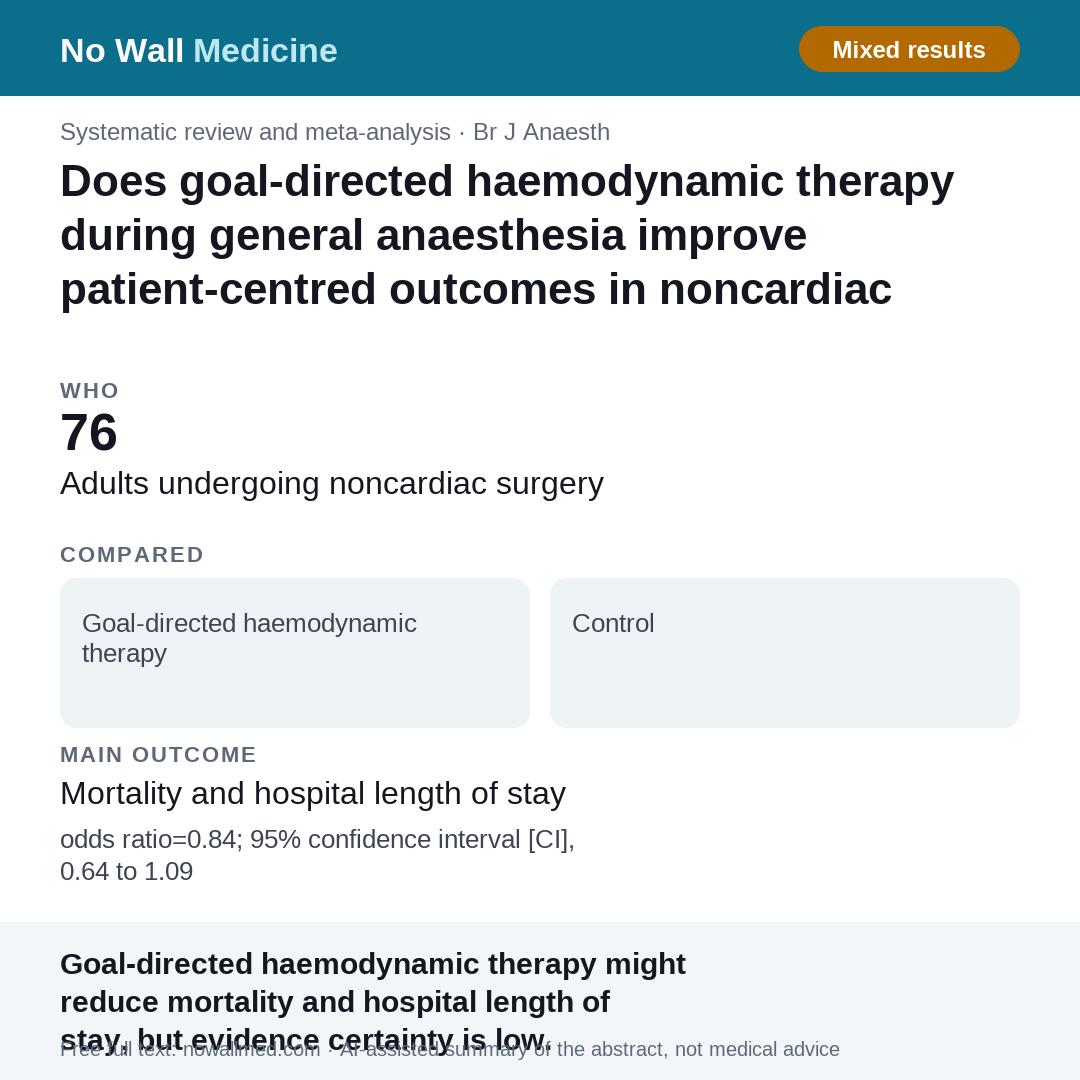
Does goal-directed haemodynamic therapy during general anaesthesia improve patient-centred outcomes in noncardiac surgery?
Who
76
Adults undergoing noncardiac surgery
Compared
Goal-directed haemodynamic therapy
Control
Main outcome
Mortality and hospital length of stay
Result: odds ratio=0.84; 95% confidence interval [CI], 0.64 to 1.09
Bottom line: Goal-directed haemodynamic therapy might reduce mortality and hospital length of stay, but evidence certainty is low.
Limitation: Low certainty in the evidence for mortality and length of stay outcomes.
Br J Anaesth · 2021-12-13Download image
Clinical question: Does goal-directed haemodynamic therapy during general anaesthesia improve patient-centred outcomes in noncardiac surgery?
Why it matters: It is unknown how goal-directed hemodynamic therapy affects patient-centered outcomes like mortality and hospital stay during general anesthesia for noncardiac surgery.
Key points
- Researchers analyzed 76 clinical trials involving adults undergoing noncardiac surgery to evaluate the effects of goal-directed hemodynamic therapy, which uses specific targets to manage blood flow and pressure.
- The therapy was associated with a mean difference of -0.72 days in hospital length of stay and an odds ratio of 0.84 for mortality, though evidence certainty was low.
- Only infectious complications and anastomotic leakage, which is a leak at a surgical connection, reached moderate certainty of evidence regarding the therapy's effects.
Limitation the authors note: The certainty of evidence for mortality and hospital length of stay was low.
Headline and key points written with AI from the paper’s abstract, with every number checked against it. Read the paper before relying on them.
Was this summary helpful?
Subject terms
Cite this article
Jessen MK, Vallentin MF, Holmberg MJ, Bolther M, Hansen FB, Holst JM. Goal-directed haemodynamic therapy during general anaesthesia for noncardiac surgery: a systematic review and meta-analysis. Br J Anaesth. 2021. doi:10.1016/j.bja.2021.10.046
Spotted a mistake? Suggest a correction
Top studies every Monday
The week’s key trials and guidelines in your specialties, plus any topics you follow. By email, free.
Get the weekly digest