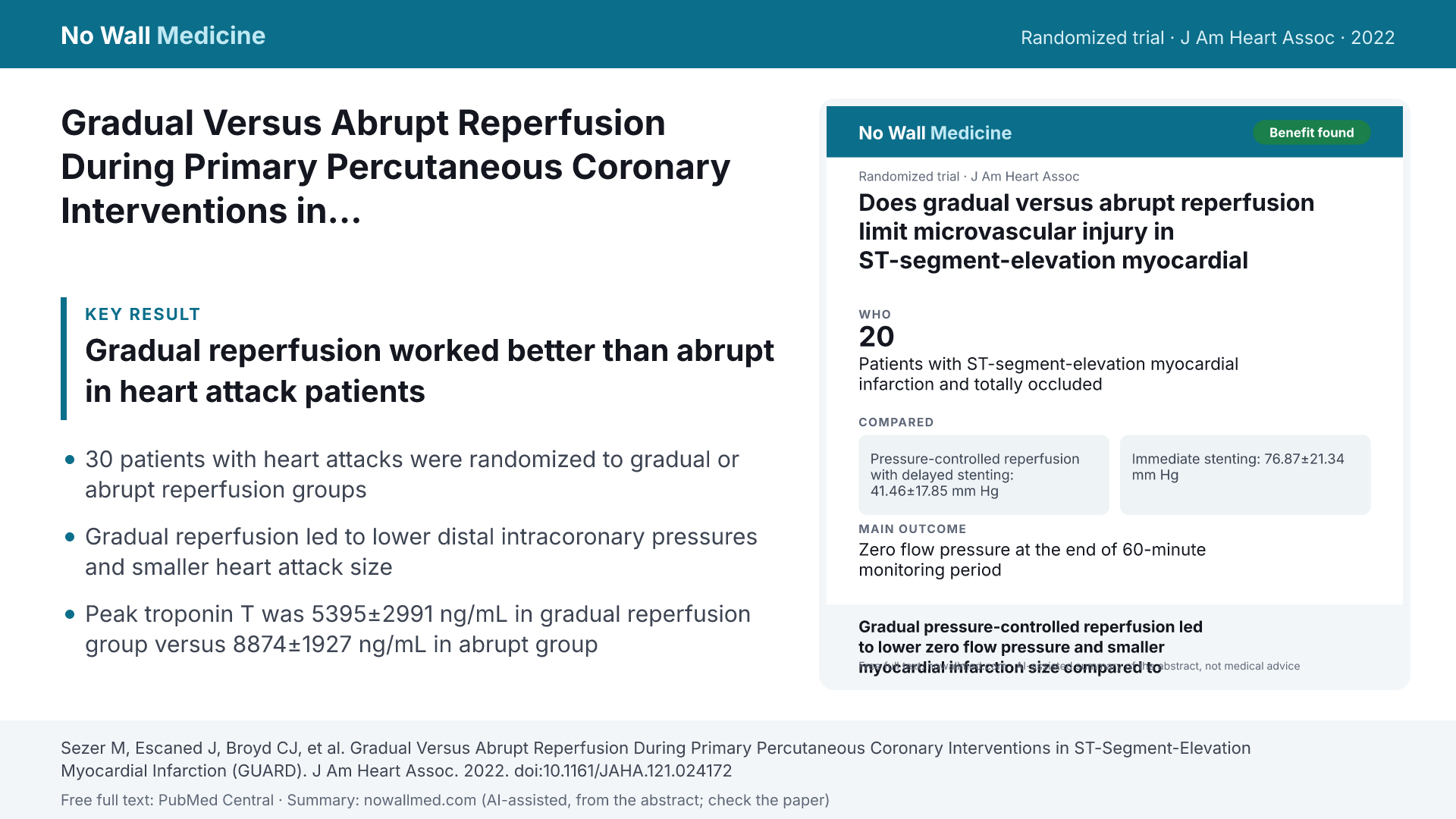
Gradual Versus Abrupt Reperfusion During Primary Percutaneous Coronary Interventions in ST-Segment-Elevation Myocardial Infarction (GUARD)
Key result: Gradual reperfusion worked better than abrupt in heart attack patients
Randomized trialBenefit found
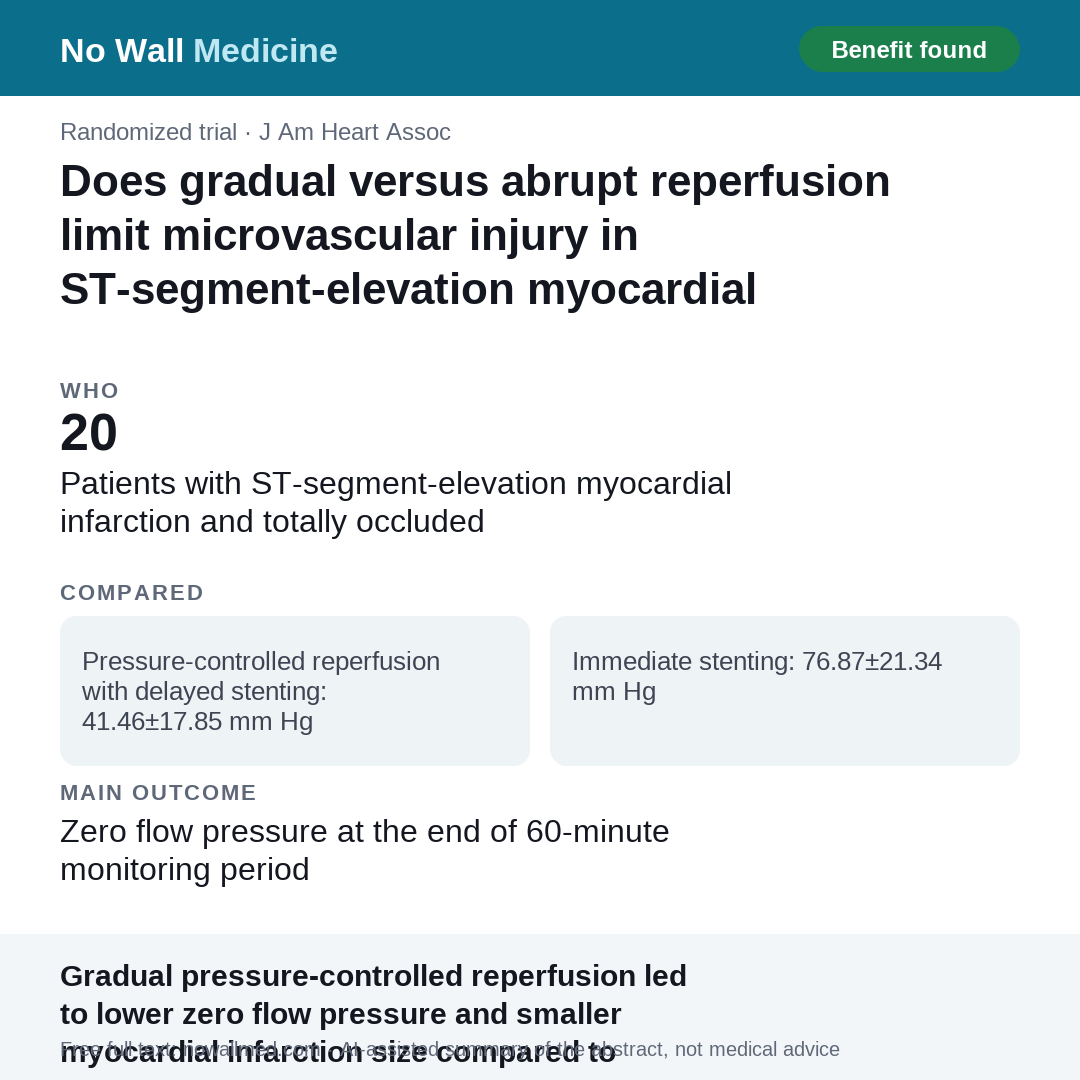
Does gradual versus abrupt reperfusion limit microvascular injury in ST-segment-elevation myocardial infarction?
Who
20
Patients with ST-segment-elevation myocardial infarction and totally occluded infarct-related artery
Compared
Pressure-controlled reperfusion with delayed stenting: 41.46±17.85 mm Hg
Immediate stenting: 76.87±21.34 mm Hg
Main outcome
Zero flow pressure at the end of 60-minute monitoring period
Result: 41.46±17.85 mm Hg versus 76.87±21.34 mm Hg, P=0.001
Bottom line: Gradual pressure-controlled reperfusion led to lower zero flow pressure and smaller myocardial infarction size compared to immediate stenting.
J Am Heart Assoc · 2022-05-16Download image
Key points
- 30 patients with heart attacks were randomized to gradual or abrupt reperfusion groups.
- Gradual reperfusion led to lower distal intracoronary pressures and smaller heart attack size.
- Peak troponin T was 5395±2991 ng/mL in gradual reperfusion group versus 8874±1927 ng/mL in abrupt group.
Why it matters: Optimal reperfusion strategy for heart attack patients was unknown
Discussion prompts
- Would these patients look like yours? Who was left out?
- Is the main outcome one that matters to patients?
- Is the difference large enough to change what you do?
Cite: Sezer M, Escaned J, Broyd CJ, et al. Gradual Versus Abrupt Reperfusion During Primary Percutaneous Coronary Interventions in ST-Segment-Elevation Myocardial Infarction (GUARD). J Am Heart Assoc. 2022. doi:10.1161/JAHA.121.024172
Free full text: PubMed Central · Summary and visual abstract: nowallmed.com/a/gradual-versus-abrupt-reperfusion-during-primary-percutaneous-182397y/ (AI-assisted from the abstract; check the paper before relying on it).