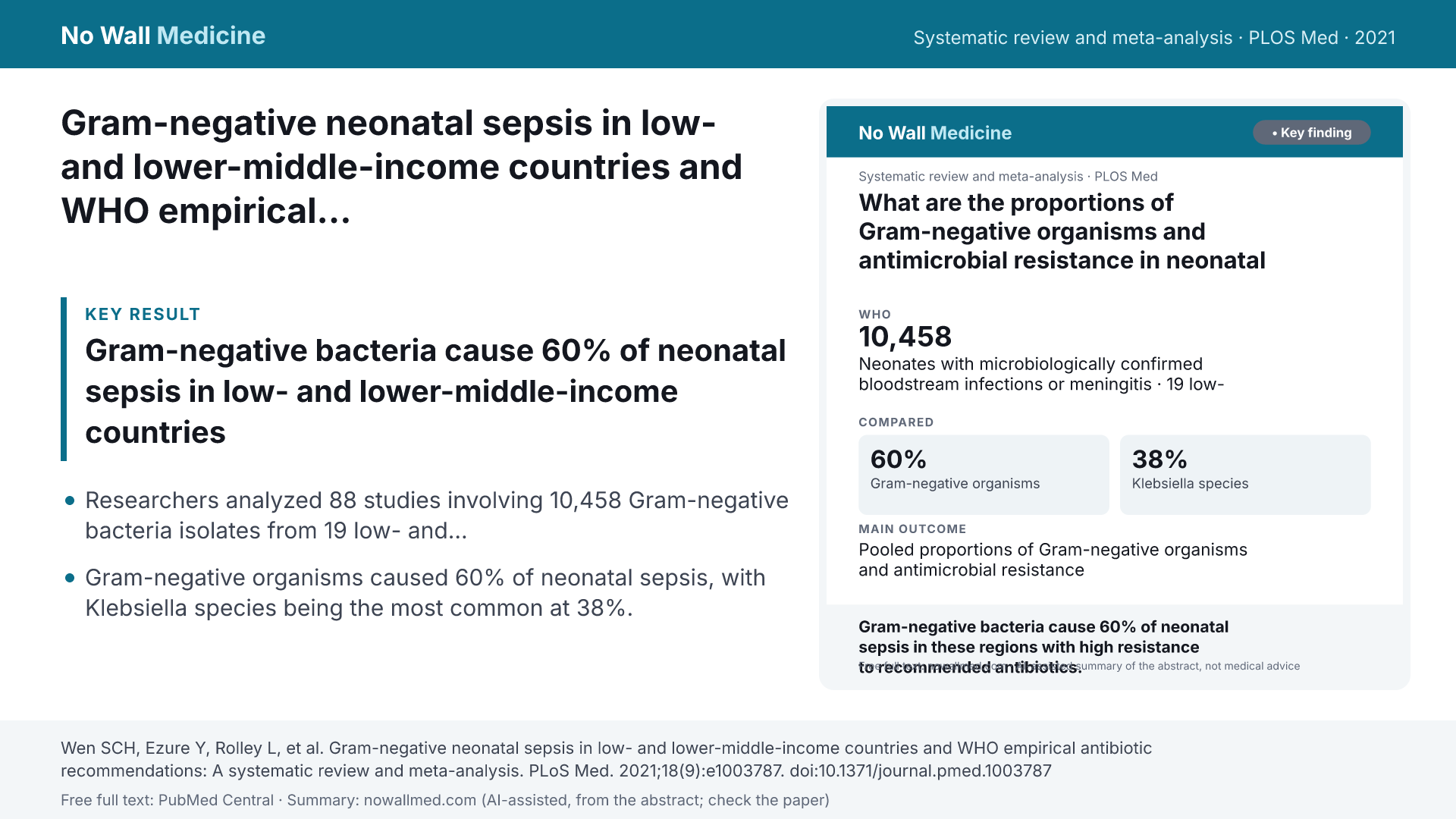
Gram-negative bacteria cause 60% of neonatal sepsis in low- and lower-middle-income countries
Gram-negative neonatal sepsis in low- and lower-middle-income countries and WHO empirical antibiotic recommendations: A systematic review and meta-analysis
Systematic review and meta-analysisKey finding
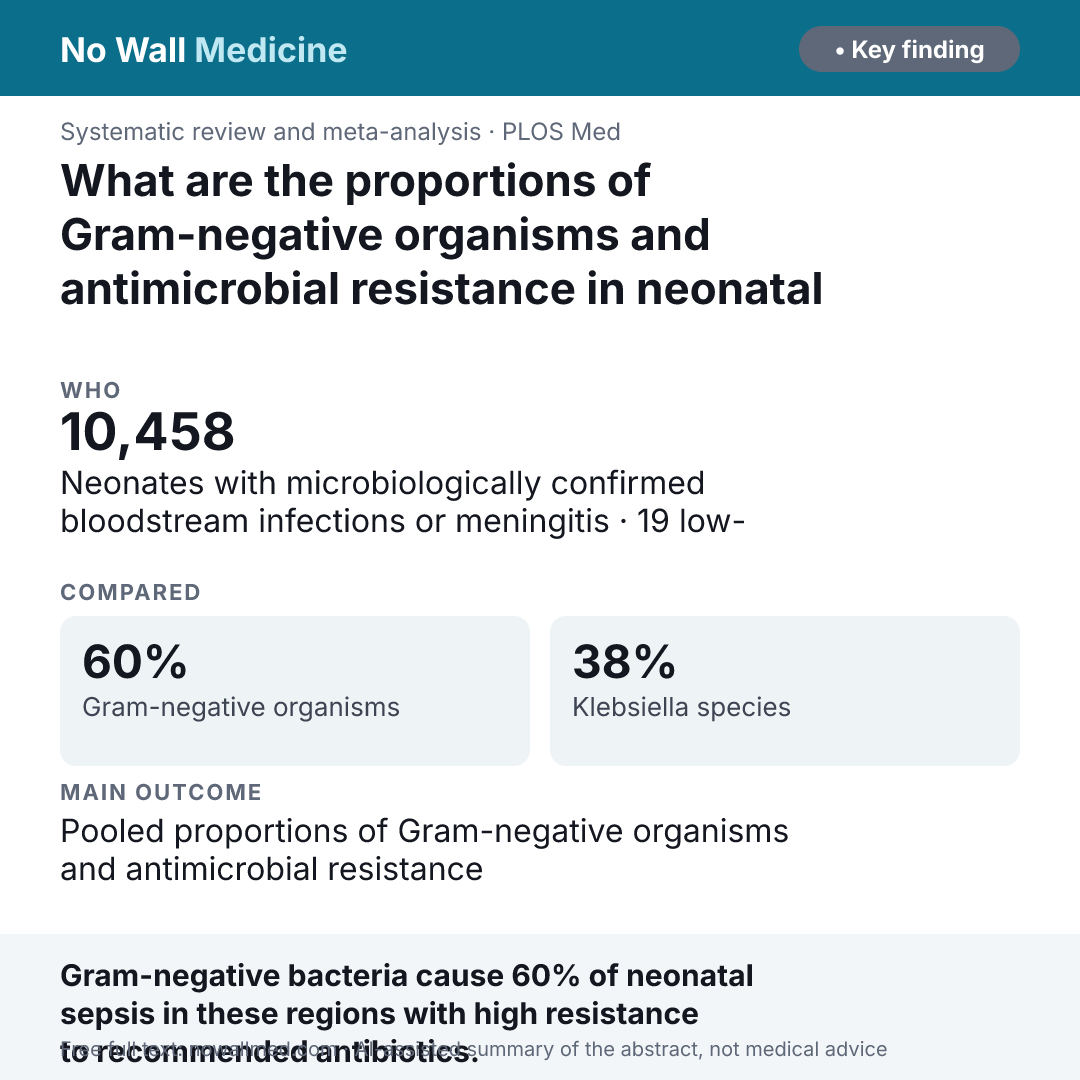
What are the proportions of Gram-negative organisms and antimicrobial resistance in neonatal sepsis?
Who
10,458
Neonates with microbiologically confirmed bloodstream infections or meningitis · 19 low- and lower-middle-income countries in Africa and Asia
Compared
60%Gram-negative organisms (95% CI 55% to 65%)
38%Klebsiella species (95% CI 33% to 43%)
Main outcome
Pooled proportions of Gram-negative organisms and antimicrobial resistance
Bottom line: Gram-negative bacteria cause 60% of neonatal sepsis in these regions with high resistance to recommended antibiotics.
Limitation: Significant heterogeneity, exclusion of upper-middle-income countries, and potential sampling bias from tertiary hospital settings.
PLOS Med · 2021-09-28 · Save PNG
Clinical question: What are the proportions of Gram-negative organisms and antimicrobial resistance in neonatal sepsis?
Why it matters: Existing World Health Organization empirical antibiotic recommendations may no longer be appropriate due to increasing antimicrobial resistance in Gram-negative organisms.
Key points
- Researchers analyzed 88 studies involving 10,458 Gram-negative bacteria isolates from 19 low- and lower-middle-income countries in Africa and Asia.
- Gram-negative organisms caused 60% of neonatal sepsis, with Klebsiella species being the most common at 38%.
- Resistance to third-generation cephalosporins, a type of antibiotic, ranged from 59% to 84%, while resistance to aminoglycosides ranged from 42% to 69%.
Limitation the authors note: The authors noted significant heterogeneity among studies, the exclusion of upper-middle-income countries, and potential sampling bias from tertiary hospital settings.
Headline and key points written with AI from the paper’s abstract, with every number checked against it. Read the paper before relying on them.
Was this summary helpful?
Subject terms
Headline, design, result, key points, caveat and citation as plain text.
Cite this article
Wen SCH, Ezure Y, Rolley L, et al. Gram-negative neonatal sepsis in low- and lower-middle-income countries and WHO empirical antibiotic recommendations: A systematic review and meta-analysis. PLoS Med. 2021;18(9):e1003787. doi:10.1371/journal.pmed.1003787
Spotted a mistake? Suggest a correction