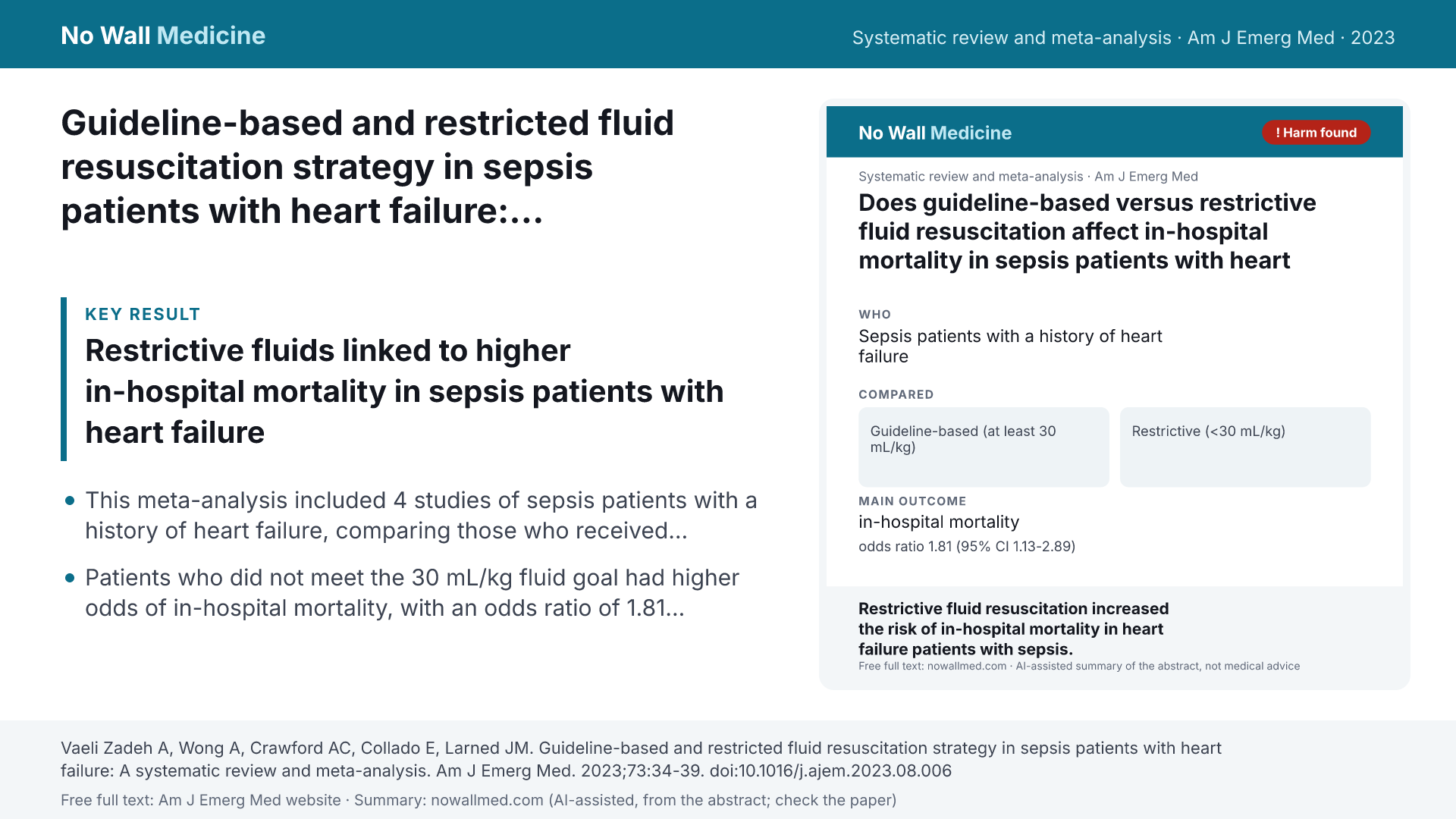
Guideline-based and restricted fluid resuscitation strategy in sepsis patients with heart failure: A systematic review and meta-analysis
Key result: Restrictive fluids linked to higher in-hospital mortality in sepsis patients with heart failure
Key points
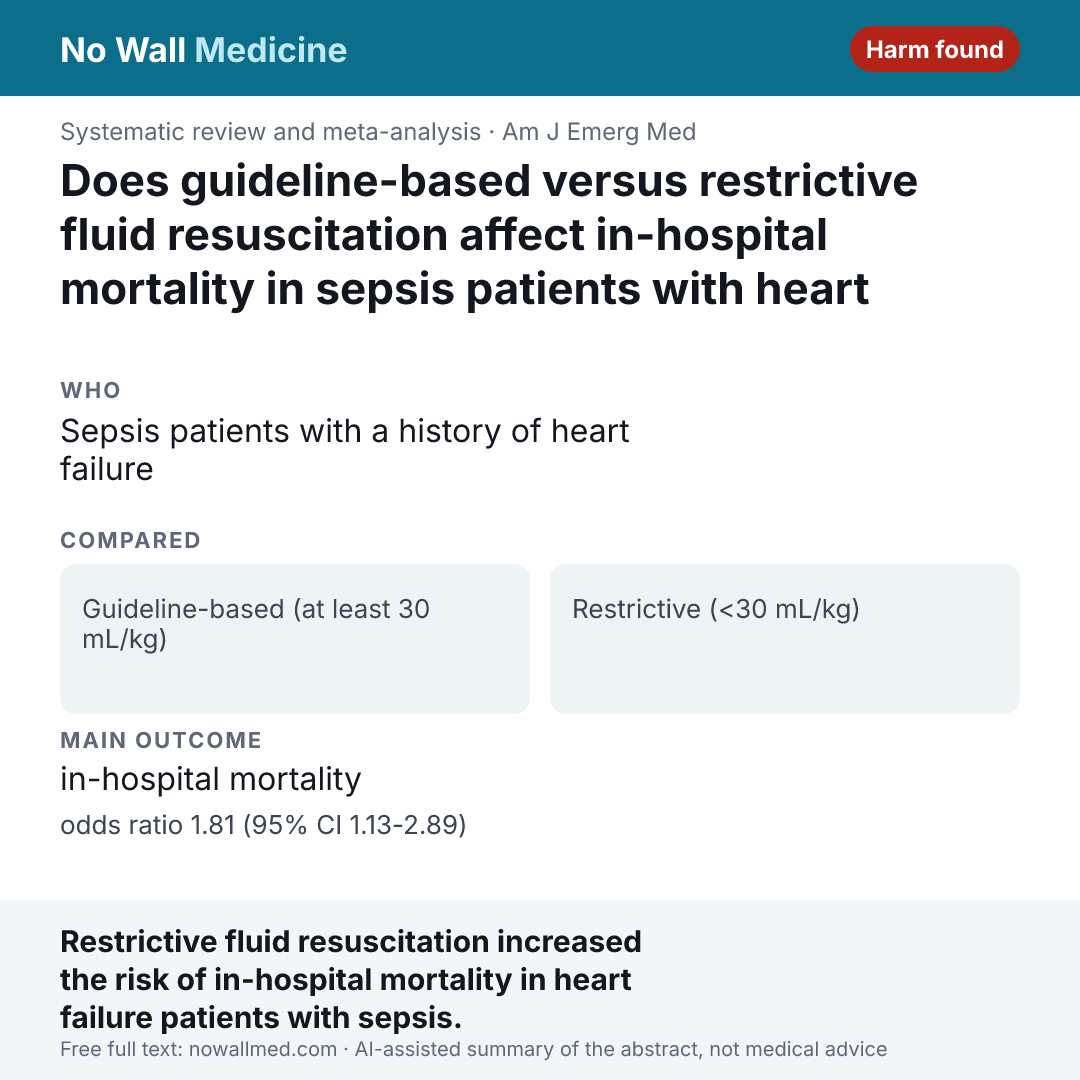
- This meta-analysis included 4 studies of sepsis patients with a history of heart failure, comparing those who received less than 30 mL/kg of IV crystalloids in the first 3 hours against those who met that goal.
- Patients who did not meet the 30 mL/kg fluid goal had higher odds of in-hospital mortality, with an odds ratio of 1.81 (95% CI 1.13-2.89, P = 0.01).
- The authors concluded that restrictive fluid resuscitation increased the risk of in-hospital mortality in this specific population.
Why it matters: Applies to sepsis patients with a history of heart failure; suggests that meeting the standard 30 mL/kg fluid goal may be associated with lower mortality than a restrictive approach.
Limitation the authors note: The meta-analysis included only 4 studies, and the authors state that more rigorous research is required to determine the optimal fluid resuscitation strategy.
Discussion prompts
- Would these patients look like yours? Who was left out?
- Is the main outcome one that matters to patients?
- Is the difference large enough to change what you do?
Cite: Vaeli Zadeh A, Wong A, Crawford AC, Collado E, Larned JM. Guideline-based and restricted fluid resuscitation strategy in sepsis patients with heart failure: A systematic review and meta-analysis. Am J Emerg Med. 2023;73:34-39. doi:10.1016/j.ajem.2023.08.006
Free full text: Am J Emerg Med website · Summary and visual abstract: nowallmed.com/a/guideline-based-and-restricted-fluid-resuscitation-strategy-in-sepsis-1t8we8b/ (AI-assisted from the abstract; check the paper before relying on it).