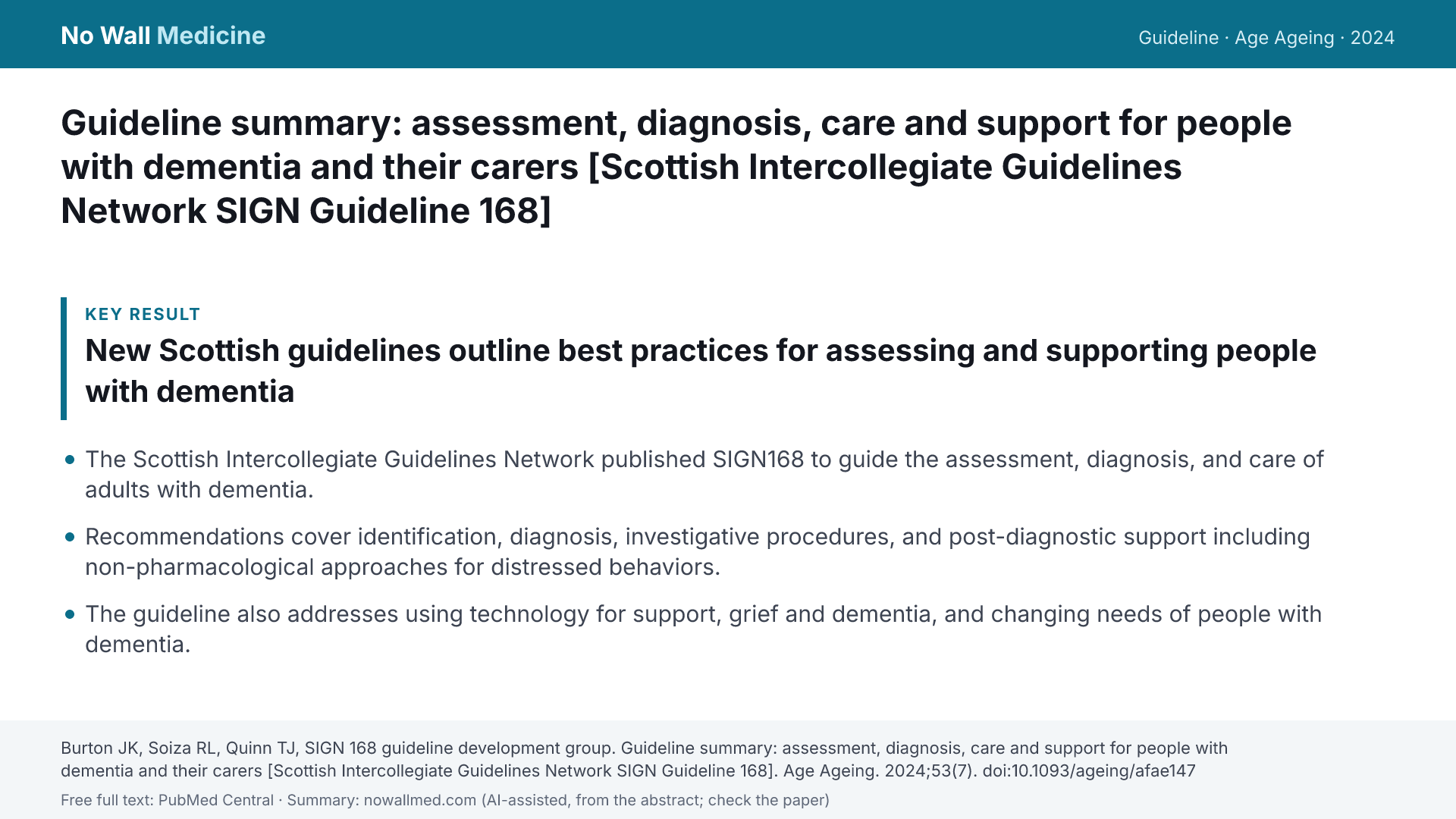
Guideline summary: assessment, diagnosis, care and support for people with dementia and their carers [Scottish Intercollegiate Guidelines Network SIGN Guideline 168]
Key result: New Scottish guidelines outline best practices for assessing and supporting people with dementia
Key points
- The Scottish Intercollegiate Guidelines Network published SIGN168 to guide the assessment, diagnosis, and care of adults with dementia.
- Recommendations cover identification, diagnosis, investigative procedures, and post-diagnostic support including non-pharmacological approaches for distressed behaviors.
- The guideline also addresses using technology for support, grief and dementia, and changing needs of people with dementia.
Why it matters: Previous guidance did not adequately cover topics prioritized by stakeholders, such as non-pharmacological approaches and technology support for dementia.
Discussion prompts
- Would these patients look like yours? Who was left out?
- Is the main outcome one that matters to patients?
- Is the difference large enough to change what you do?
Cite: Burton JK, Soiza RL, Quinn TJ, SIGN 168 guideline development group. Guideline summary: assessment, diagnosis, care and support for people with dementia and their carers [Scottish Intercollegiate Guidelines Network SIGN Guideline 168]. Age Ageing. 2024;53(7). doi:10.1093/ageing/afae147
Free full text: PubMed Central · Summary and visual abstract: nowallmed.com/a/guideline-summary-assessment-diagnosis-care-and-support-for-people-qt0q43/ (AI-assisted from the abstract; check the paper before relying on it).