Gut bacterial curli linked to cognitive decline in Alzheimer's mouse and human models
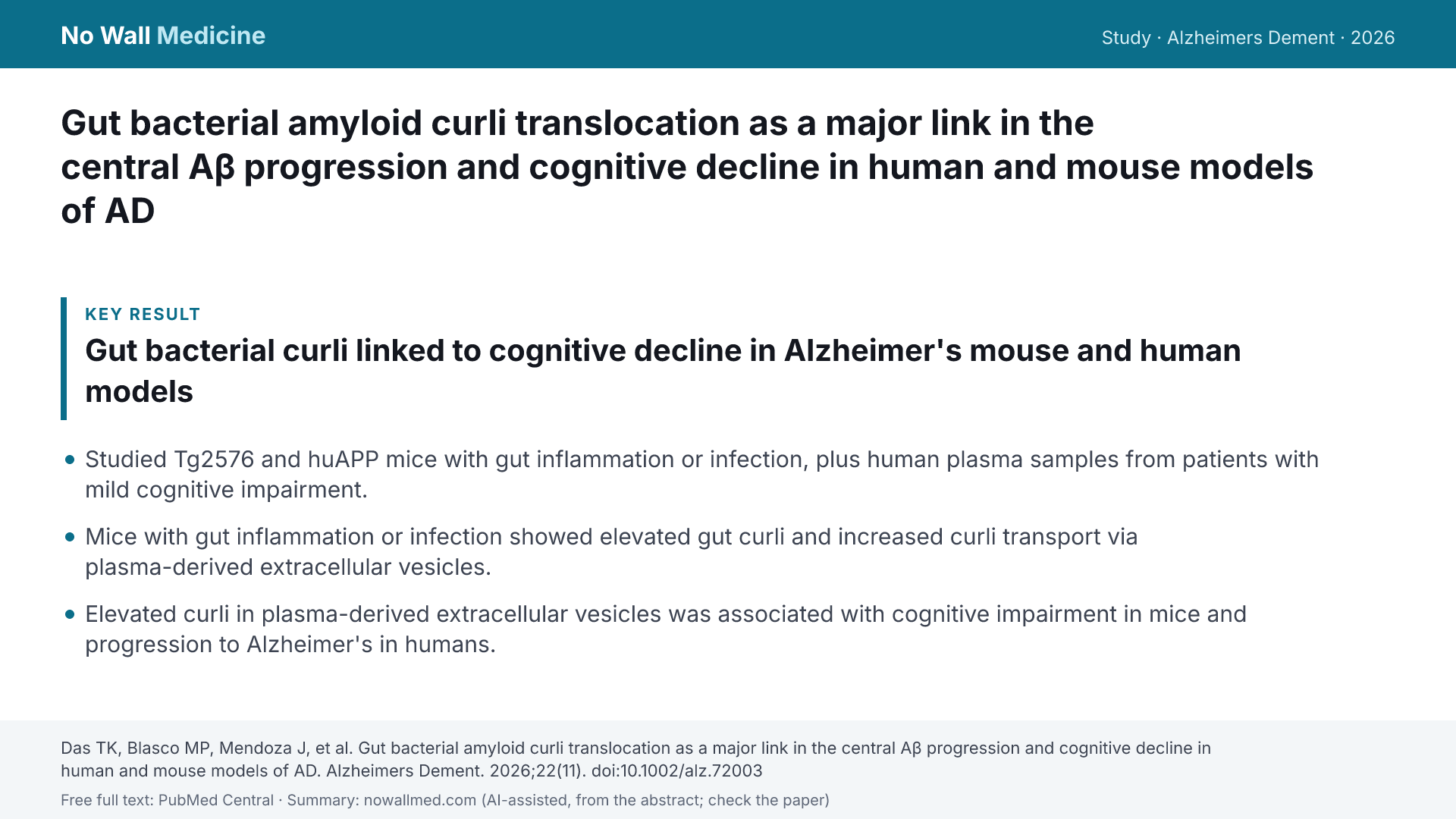
Gut bacterial amyloid curli translocation as a major link in the central Aβ progression and cognitive decline in human and mouse models of AD
Why it matters: Applies to understanding gut-brain links in Alzheimer's; suggests curli in plasma-derived extracellular vesicles may serve as an early biomarker.
Key points
- Studied Tg2576 and huAPP mice with gut inflammation or infection, plus human plasma samples from patients with mild cognitive impairment.
- Mice with gut inflammation or infection showed elevated gut curli and increased curli transport via plasma-derived extracellular vesicles.
- Elevated curli in plasma-derived extracellular vesicles was associated with cognitive impairment in mice and progression to Alzheimer's in humans.
Study type: Laboratory or animal research: results may not apply to people yet.
Headline and key points written with AI from the paper’s abstract, with every number checked against it. Read the paper before relying on them.
Was this summary helpful?
Subject terms
Headline, design, result, key points, caveat and citation as plain text.
Cite this article
Das TK, Blasco MP, Mendoza J, et al. Gut bacterial amyloid curli translocation as a major link in the central Aβ progression and cognitive decline in human and mouse models of AD. Alzheimers Dement. 2026;22(11). doi:10.1002/alz.72003
Spotted a mistake? Suggest a correction