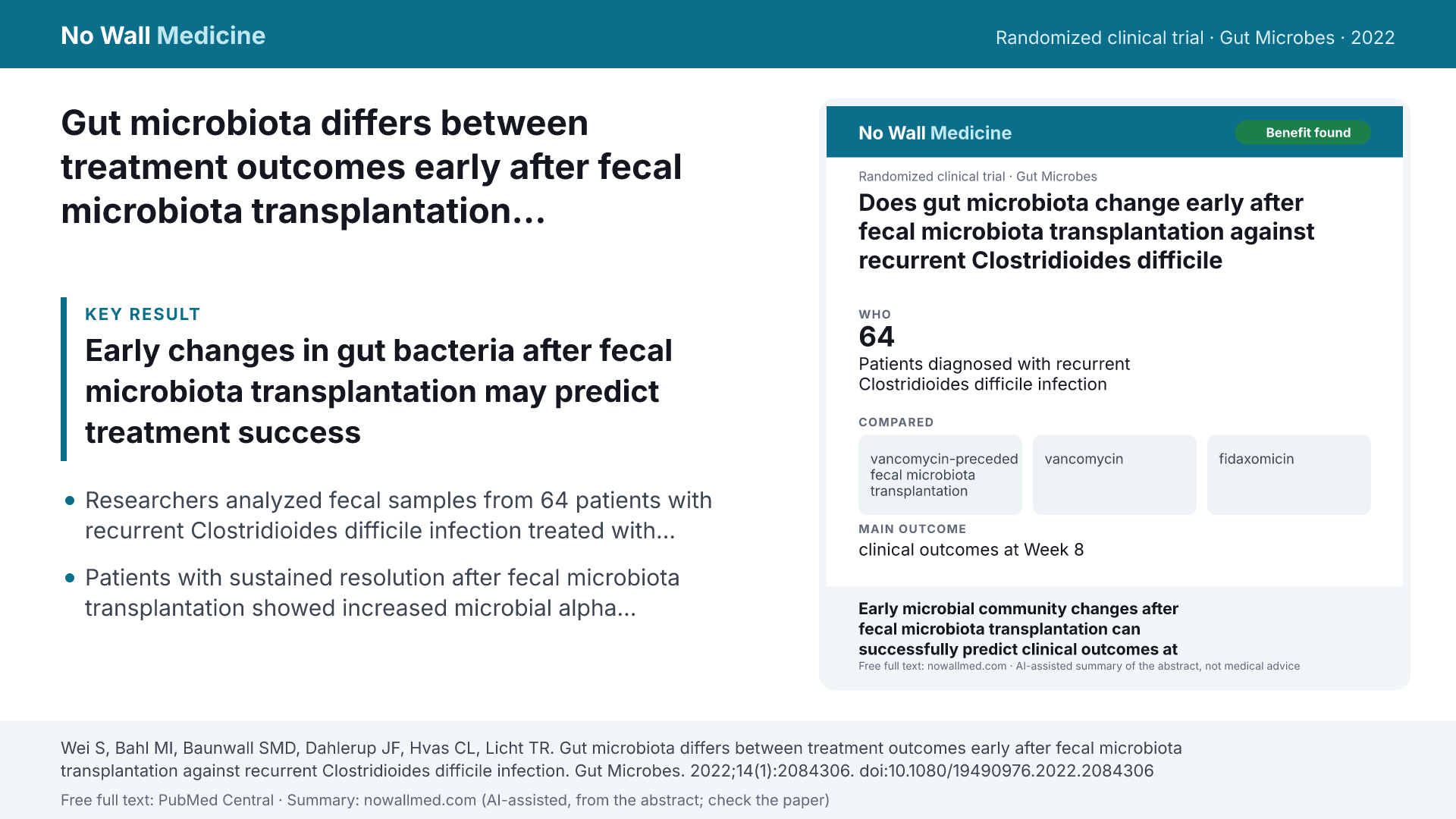
Early changes in gut bacteria after fecal microbiota transplantation may predict treatment success
Gut microbiota differs between treatment outcomes early after fecal microbiota transplantation against recurrent Clostridioides difficile infection
Randomized clinical trialBenefit found
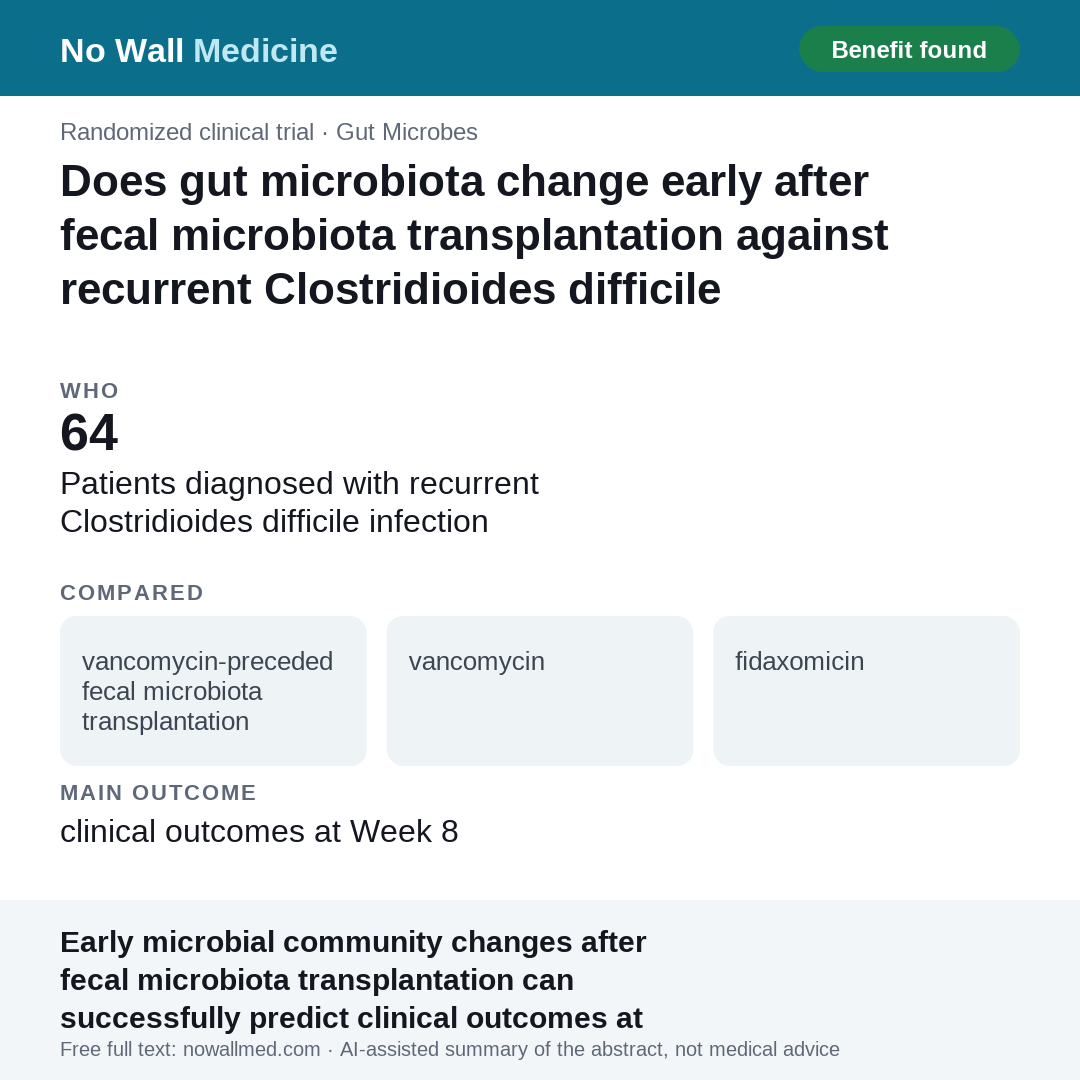
Does gut microbiota change early after fecal microbiota transplantation against recurrent Clostridioides difficile infection?
Who
64
Patients diagnosed with recurrent Clostridioides difficile infection
Compared
vancomycin-preceded fecal microbiota transplantation
vancomycin
fidaxomicin
Main outcome
clinical outcomes at Week 8
Bottom line: Early microbial community changes after fecal microbiota transplantation can successfully predict clinical outcomes at week 8.
Gut Microbes · 2022-12-15Download image
Clinical question: Does gut microbiota change early after fecal microbiota transplantation against recurrent Clostridioides difficile infection?
Why it matters: It was unknown if intestinal microbiota changes occur early enough after fecal microbiota transplantation to predict whether a patient will respond to treatment.
Key points
- Researchers analyzed fecal samples from 64 patients with recurrent Clostridioides difficile infection treated with fecal microbiota transplantation preceded by vancomycin, vancomycin alone, or fidaxomicin.
- Patients with sustained resolution after fecal microbiota transplantation showed increased microbial alpha diversity, more donor bacteria, and higher levels of Ruminococcaceae and Lachnospiraceae compared to non-responders.
- A constructed index using Escherichia and Blautia markers successfully predicted clinical outcomes at Week 8.
Headline and key points written with AI from the paper’s abstract, with every number checked against it. Read the paper before relying on them.
Was this summary helpful?
Subject terms
Cite this article
Wei S, Bahl MI, Baunwall SMD, Dahlerup JF, Hvas CL, Licht TR. Gut microbiota differs between treatment outcomes early after fecal microbiota transplantation against recurrent Clostridioides difficile infection. Gut Microbes. 2022. doi:10.1080/19490976.2022.2084306
Spotted a mistake? Suggest a correction
Top studies every Monday
The week’s key trials and guidelines in your specialties, plus any topics you follow. By email, free.
Get the weekly digest