Probiotic consumption was associated with increased indole-3-propionic acid and higher brain-derived neurotrophic factor in elderly
Gut microbiota indole-3-propionic acid mediates neuroprotective effect of probiotic consumption in healthy elderly: A randomized, double-blind, placebo-controlled, multicenter trial and in vitro study
Randomized, double-blind, placebo-controlled, multicenter trialBenefit found
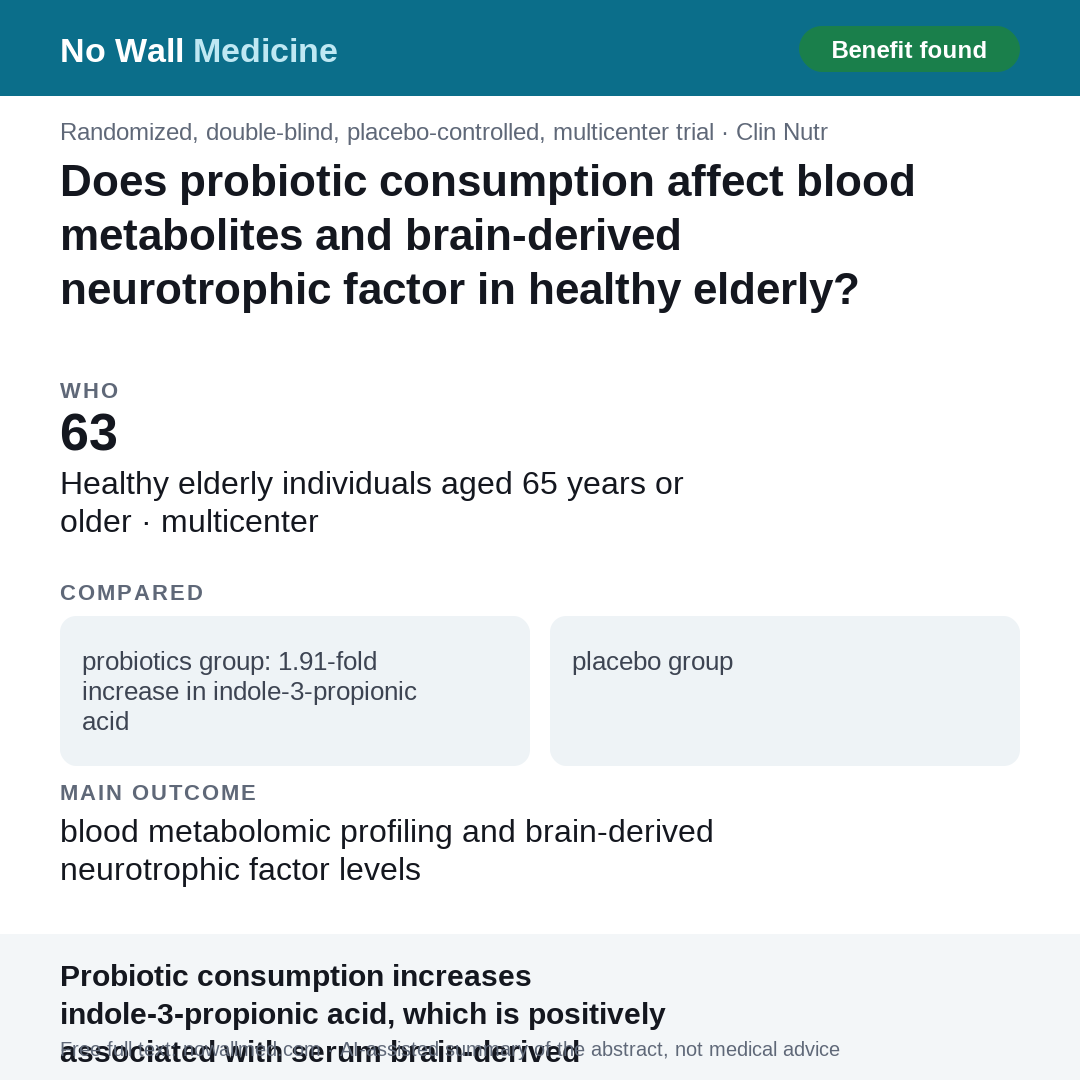
Does probiotic consumption affect blood metabolites and brain-derived neurotrophic factor in healthy elderly?
Who
63
Healthy elderly individuals aged 65 years or older · multicenter
Compared
probiotics group: 1.91-fold increase in indole-3-propionic acid
placebo group
Main outcome
blood metabolomic profiling and brain-derived neurotrophic factor levels
Result: r = 0.28, P < 0.05
Bottom line: Probiotic consumption increases indole-3-propionic acid, which is positively associated with serum brain-derived neurotrophic factor in healthy elderly.
Clin Nutr · 2023-05-02Download image
Clinical question: Does probiotic consumption affect blood metabolites and brain-derived neurotrophic factor in healthy elderly?
Why it matters: The mechanistic link between gut and brain interactions through gut microbiota-derived metabolites has not yet been fully elucidated.
Key points
- Researchers studied 63 healthy individuals aged 65 years or older who received either a placebo or probiotic capsules for 12 weeks.
- Probiotic consumption was associated with a 1.91-fold increase in indole-3-propionic acid, a metabolite produced by gut bacteria, and higher levels of brain-derived neurotrophic factor.
- In laboratory cell tests, indole-3-propionic acid was associated with lower concentrations of the inflammatory marker TNF-α and increased production of nerve growth factor.
Headline and key points written with AI from the paper’s abstract, with every number checked against it. Read the paper before relying on them.
Was this summary helpful?
Subject terms
Cite this article
Kim CS, Jung S, Hwang GS, Shin DM. Gut microbiota indole-3-propionic acid mediates neuroprotective effect of probiotic consumption in healthy elderly: A randomized, double-blind, placebo-controlled, multicenter trial and in vitro study. Clin Nutr. 2023. doi:10.1016/j.clnu.2023.04.001
Spotted a mistake? Suggest a correction
Top studies every Monday
The week’s key trials and guidelines in your specialties, plus any topics you follow. By email, free.
Get the weekly digest